Category: University News
Title: Eduardo Peñalver Inaugurated as Georgetown’s 49th President
Date Published: October 9, 2026
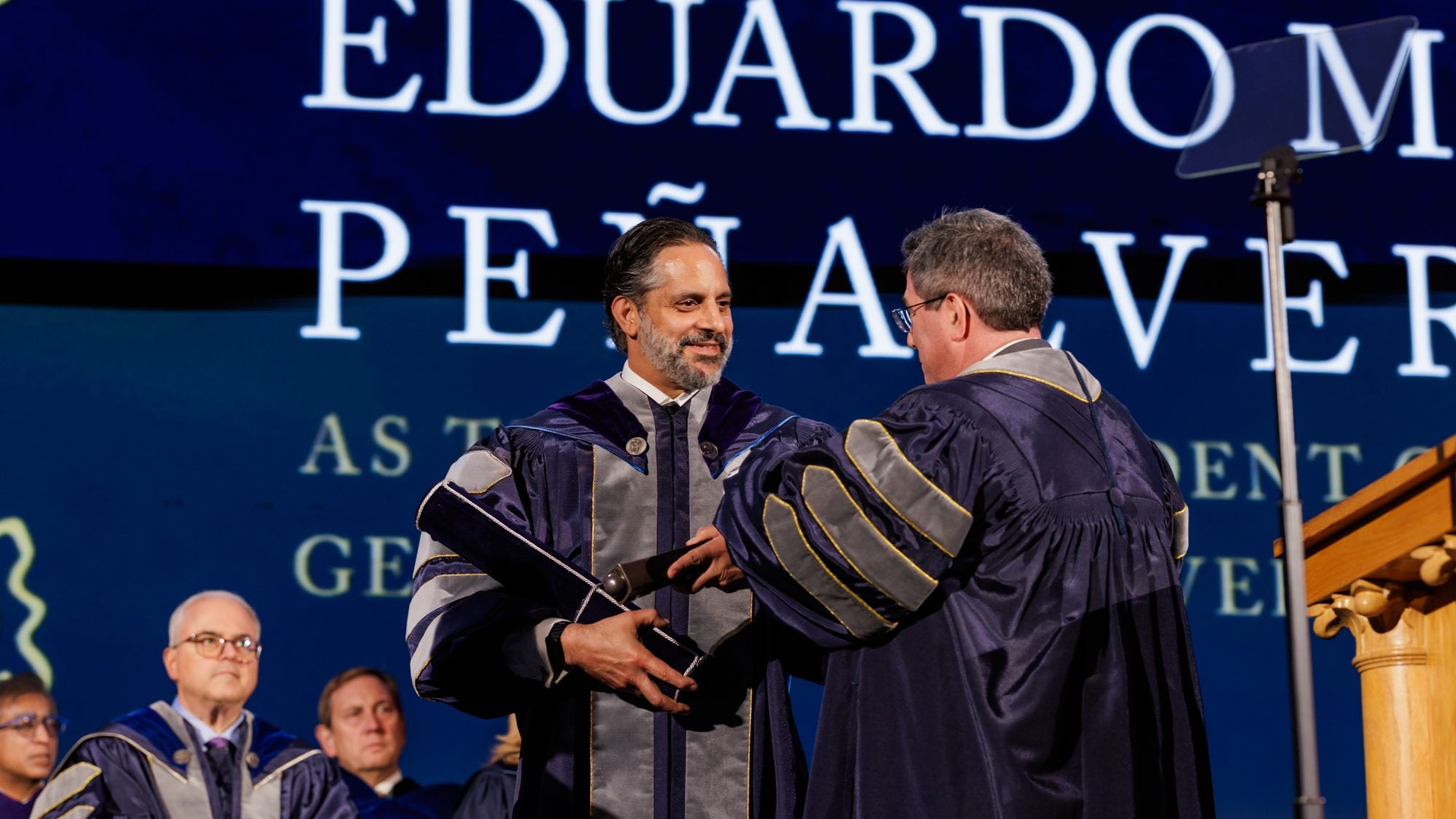
Standing in front of his loved ones, the Hoya community, Jesuits and university leaders, and beneath the American flag and Georgetown seal, Eduardo Peñalver was officially inaugurated as Georgetown University’s new president.
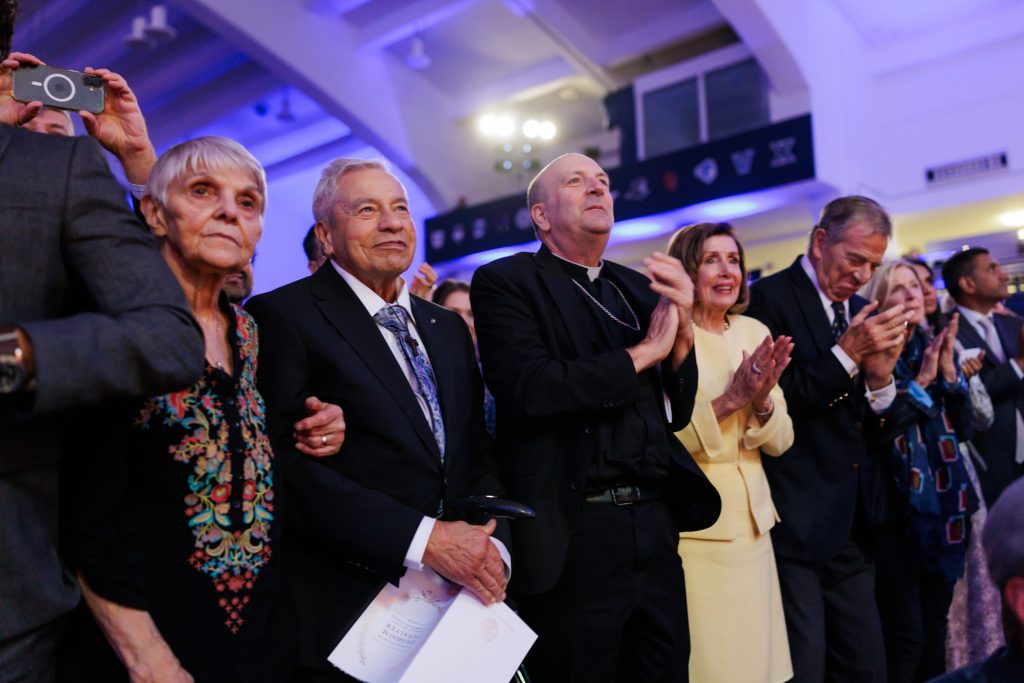
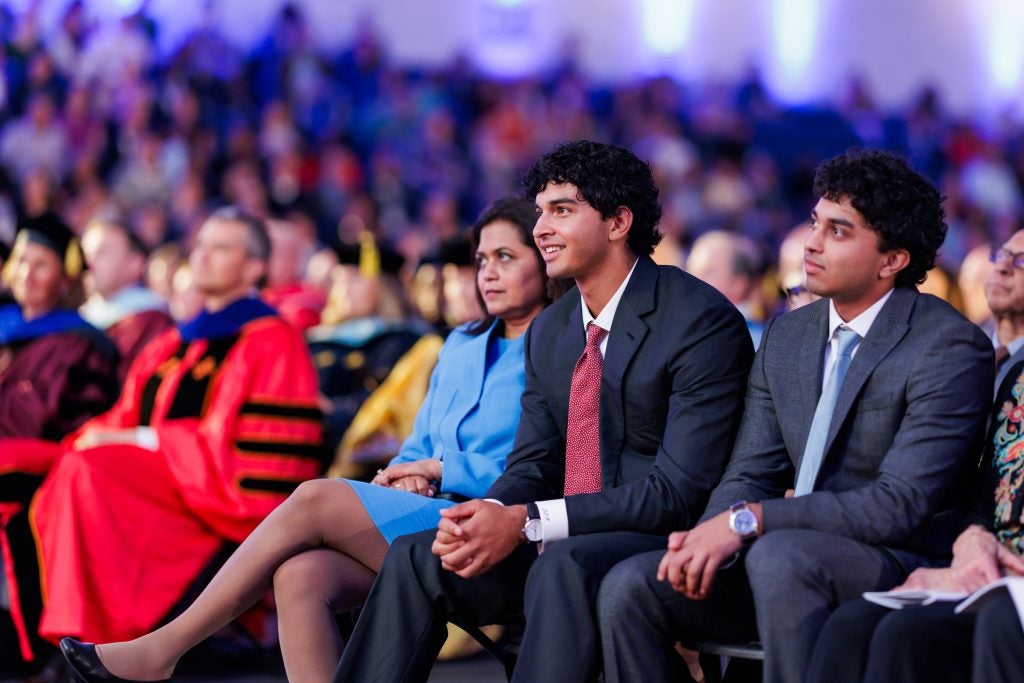
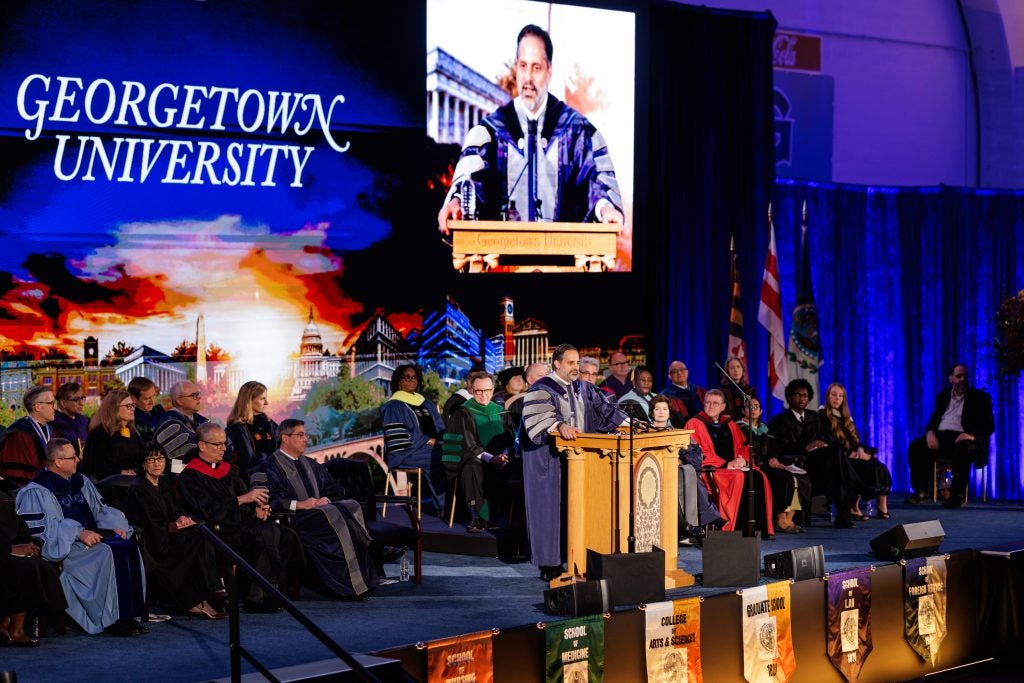
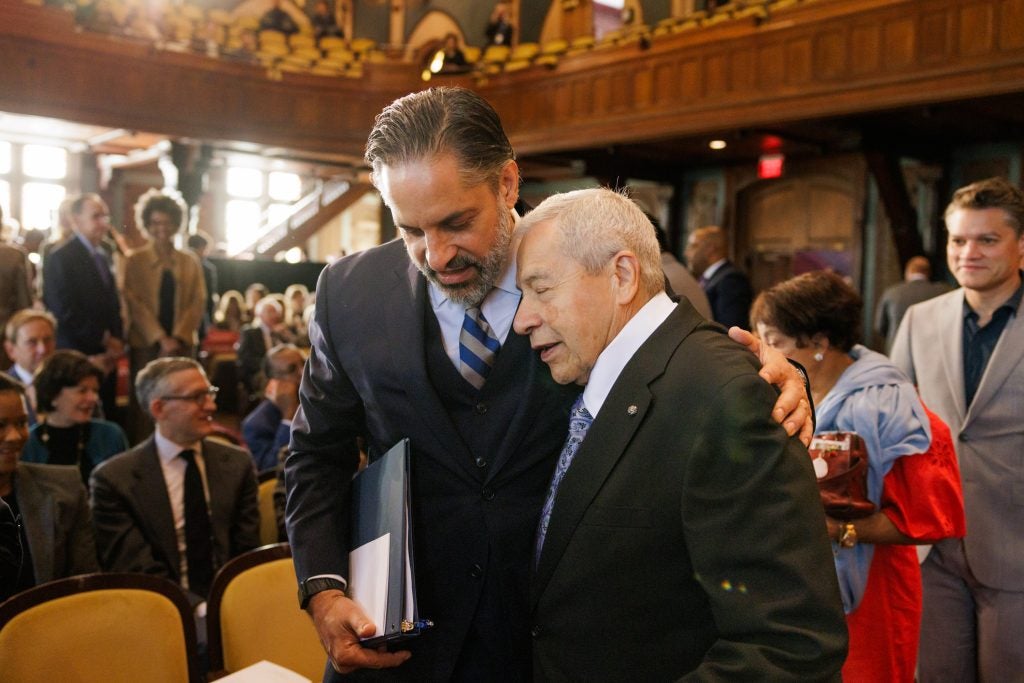
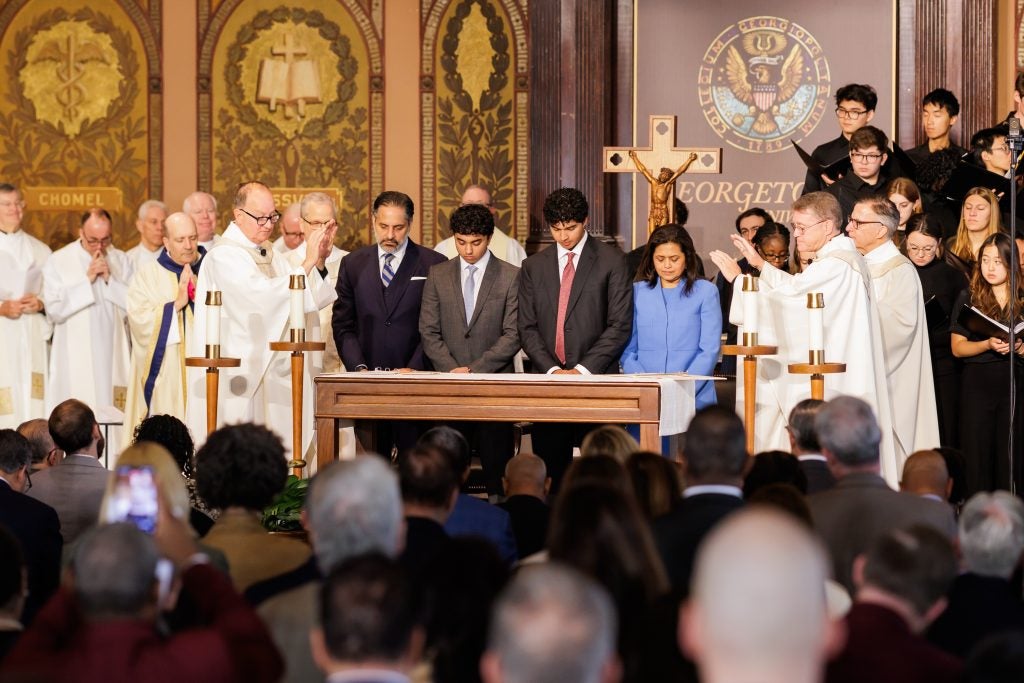
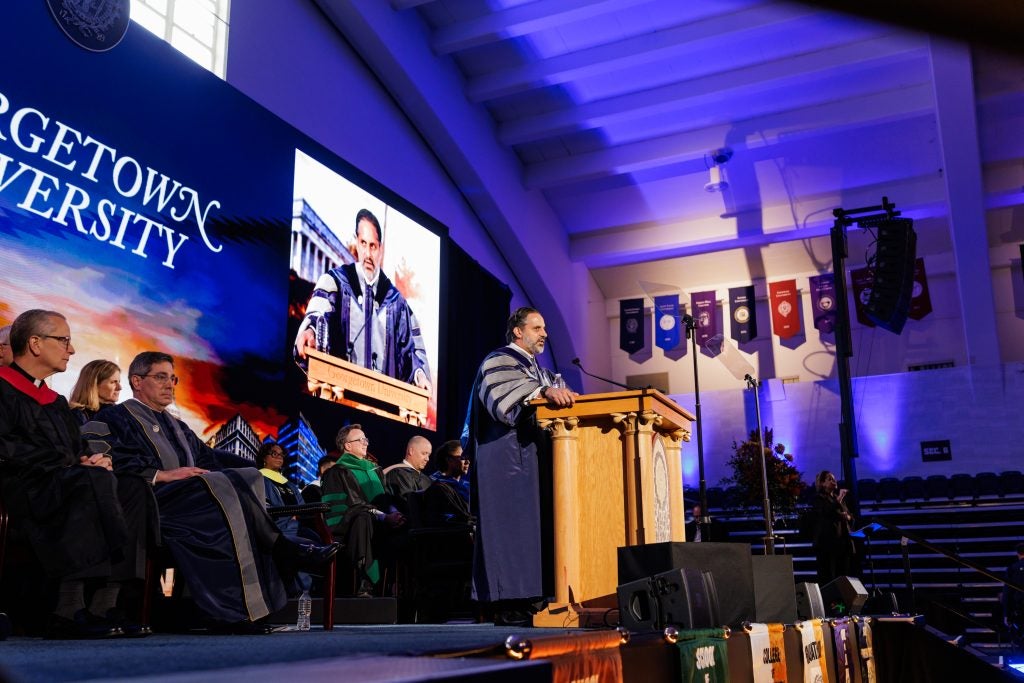
Peñalver accepted the office of the presidency on Oct. 9 in McDonough Arena. He was surrounded by his wife, two sons and parents, dignitaries including Nancy and Paul (SFS’62) Pelosi, university presidents, and community members watching online.
“It is with tremendous gratitude that I assume my duties as Georgetown’s 49th president,” Peñalver said in his inaugural address.
Peñalver is the 49th president to lead Georgetown in its 237-year history. He joined the university in July, succeeding Interim President Robert M. Groves, who led Georgetown after President John J. DeGioia stepped down in 2024.
Prior to Georgetown, Peñalver served as the president of Seattle University, a Catholic, Jesuit institution. He was the first layperson to lead Seattle since its founding in 1891.
An Inaugural Mass
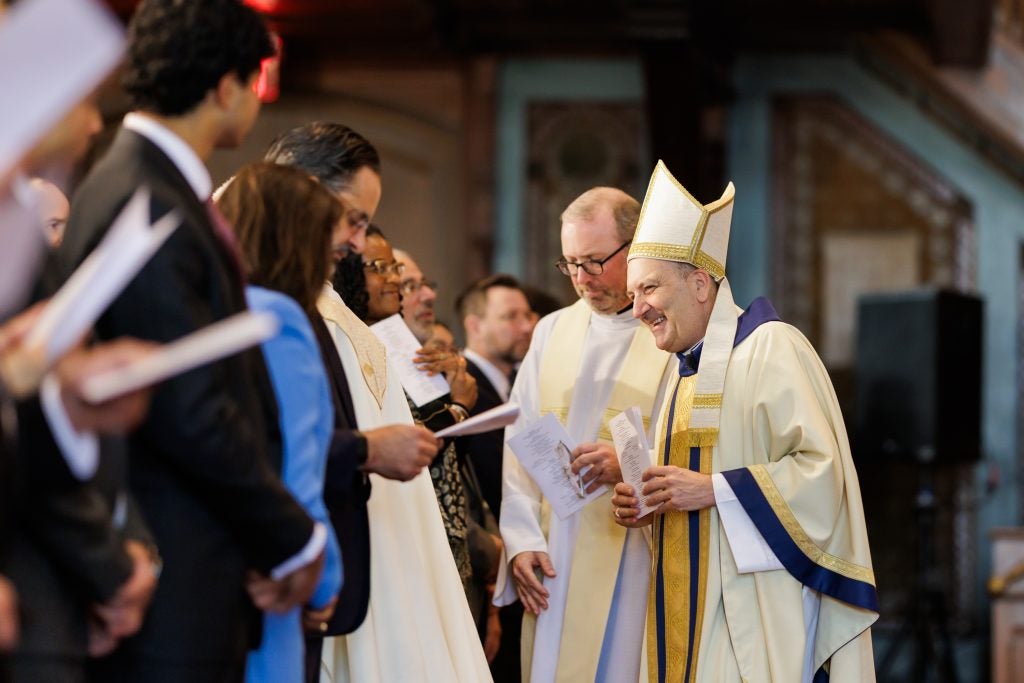
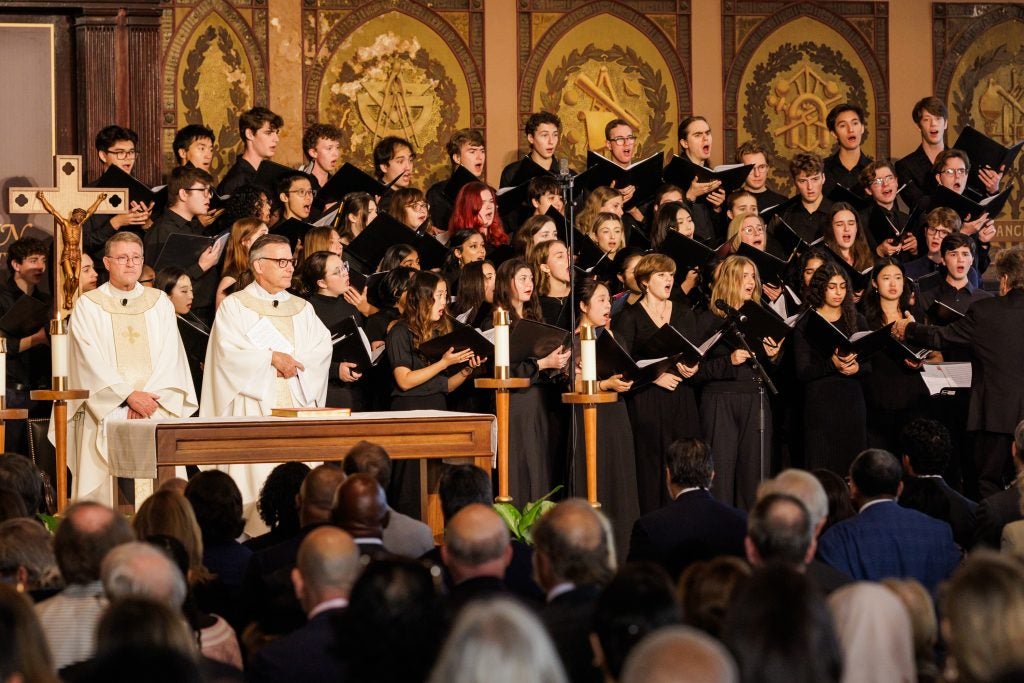
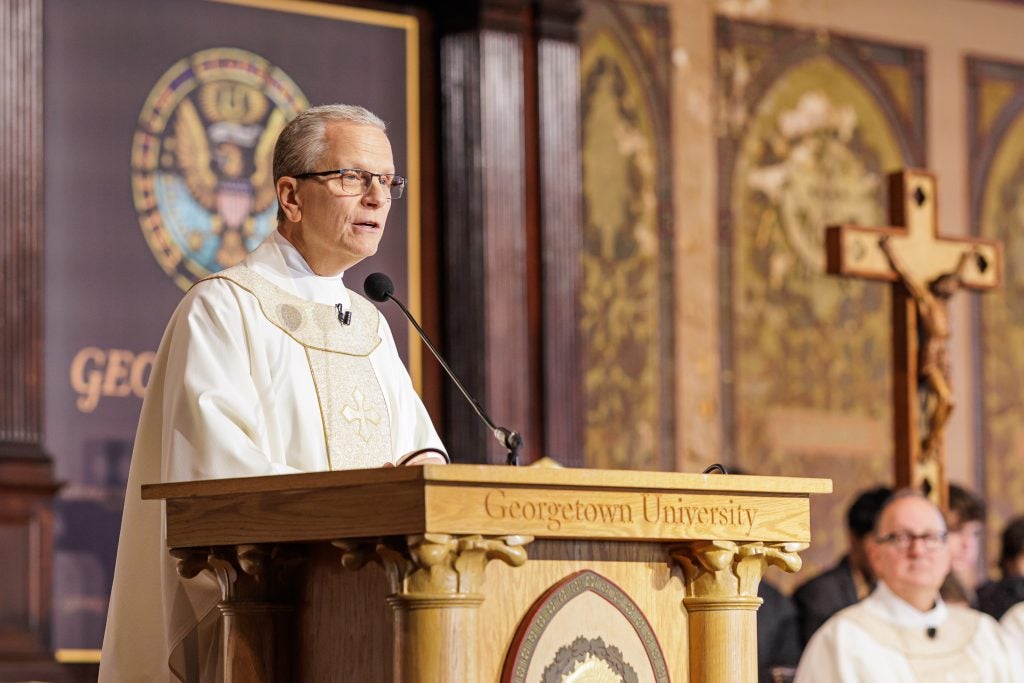
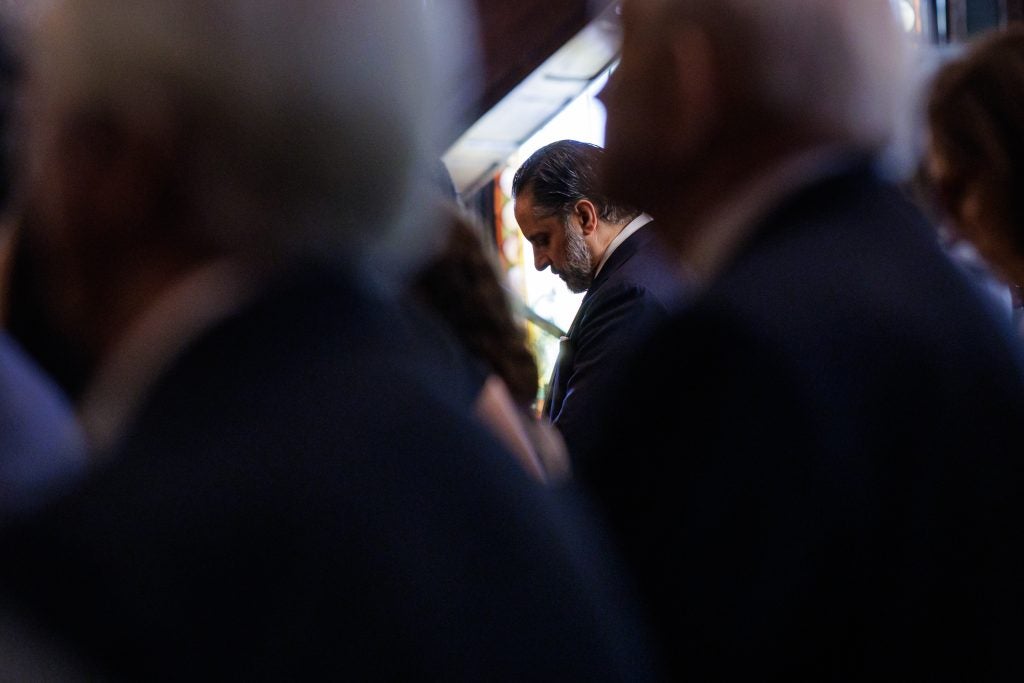
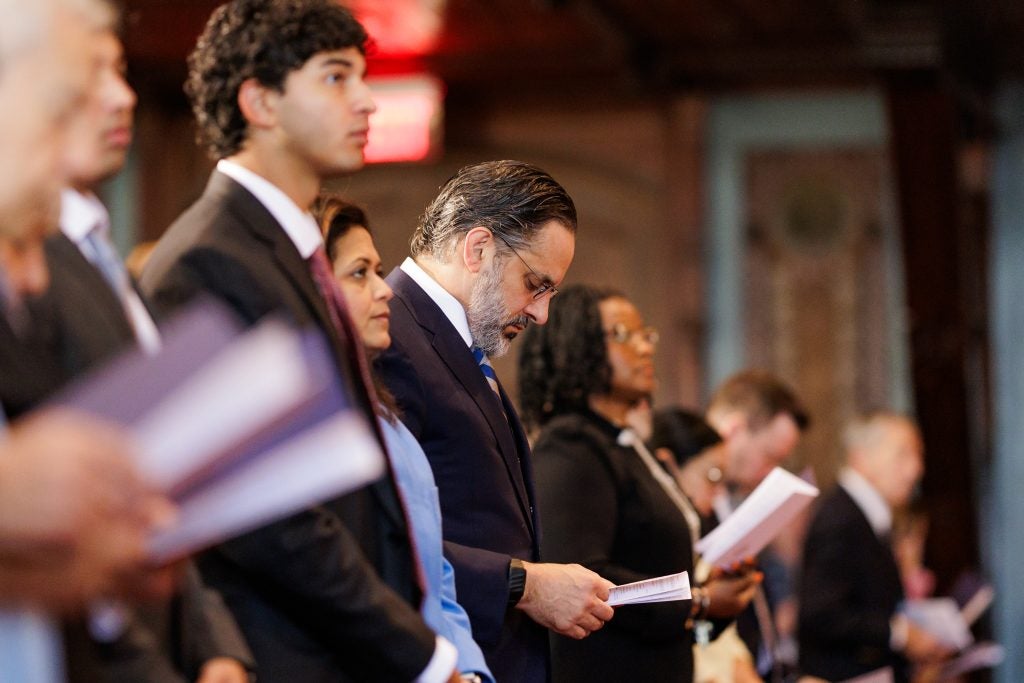
The inauguration events began on a sunny fall day with a Mass in Gaston Hall.
Bishop Michael Castori, S.J., of the Diocese of Honolulu, presided over a special liturgy that honored Georgetown’s Jesuit and Catholic traditions and celebrated the inauguration.
He was joined by Rev. Robert Reiser, S.J., provincial of the USA East Province of the Jesuits, who gave the homily.
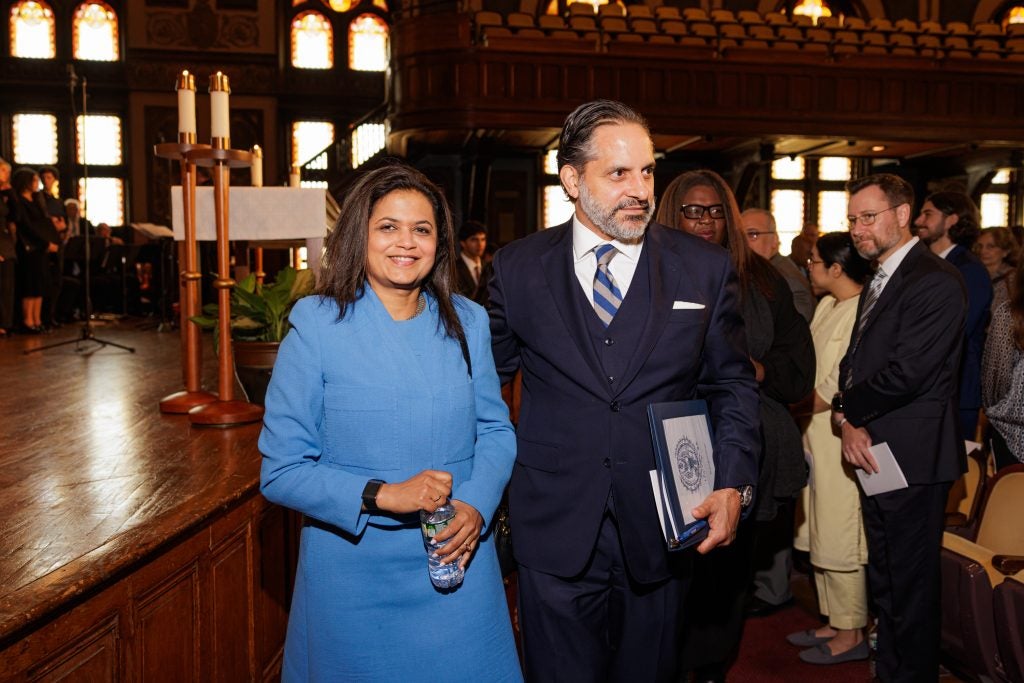
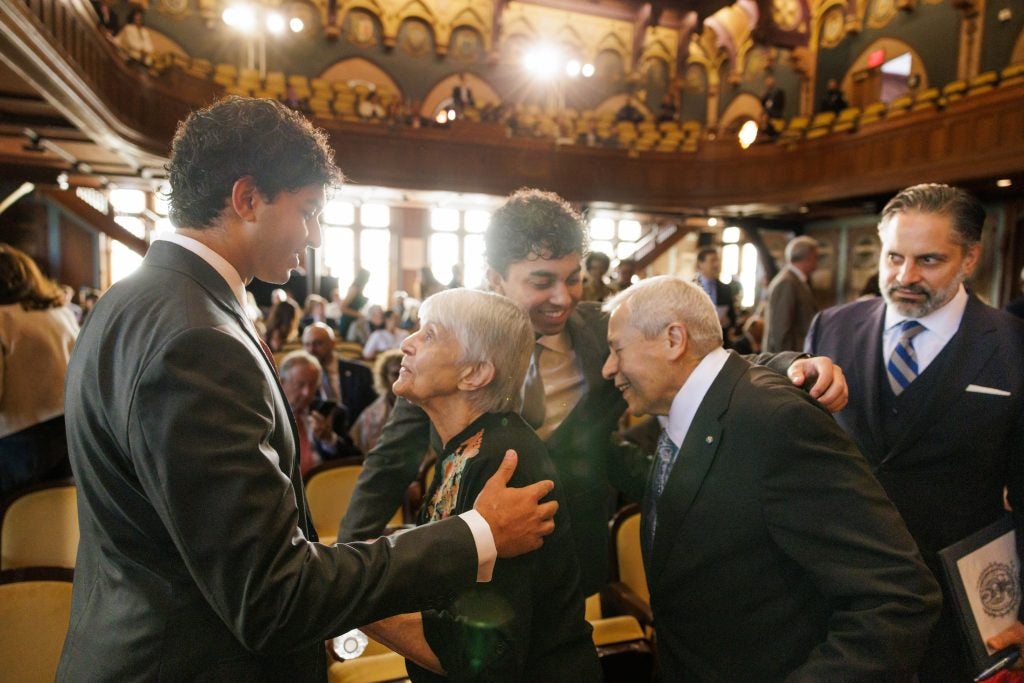
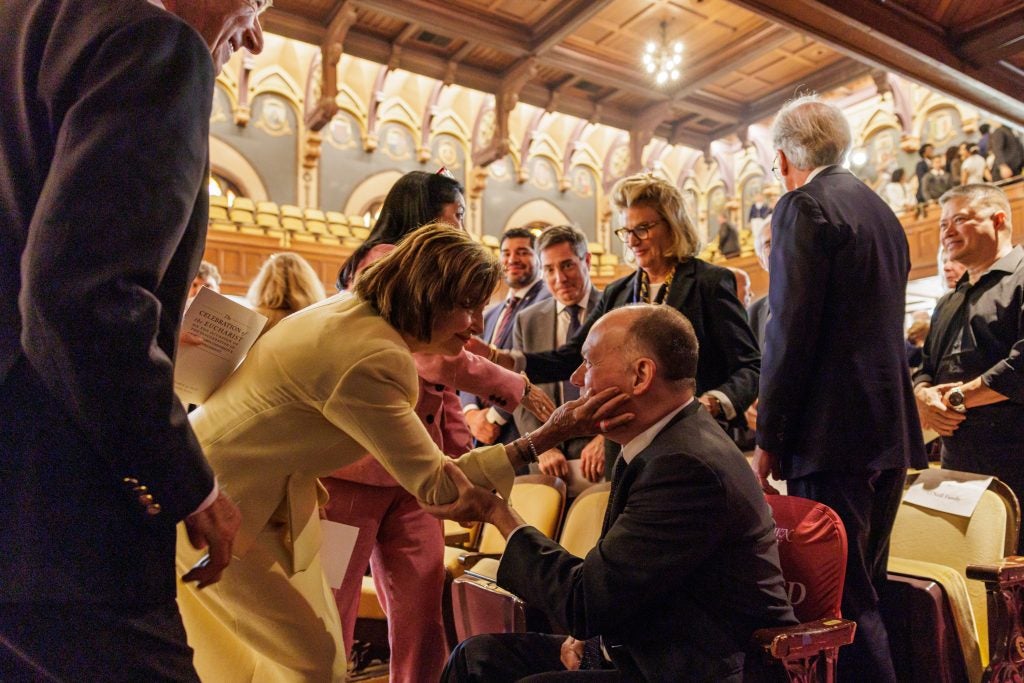
Later that afternoon, Georgetown’s full faculty, college and university presidents, Georgetown leaders, the provincial of the Jesuits’ USA East Province, and the board of directors processed into McDonough Arena as the Georgetown Inauguration Orchestra performed.
Drums sounded and the crowd stood and clapped as Peñalver and the chair of the board of directors walked down the aisle.
The Inauguration Ceremony
The ceremony began with representatives of undergraduate and graduate students, staff, alumni and faculty welcoming President Peñalver.
“Mr. President, today you are making history as our 49th president,” said Darius Wagner (C’27), president of the Georgetown University Student Association. “You will face many challenges, but you will experience much joy. But know that all 7,800 undergraduates will be with you. We are collectively rooting for your success, because your success is our success, and the future of this university that you now lead.”
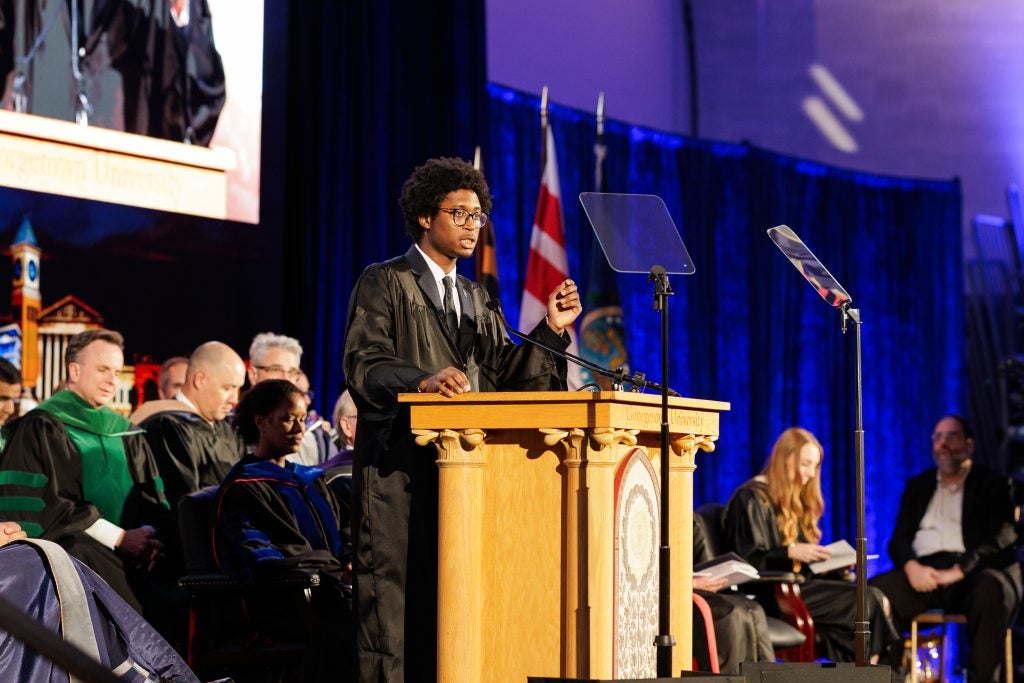
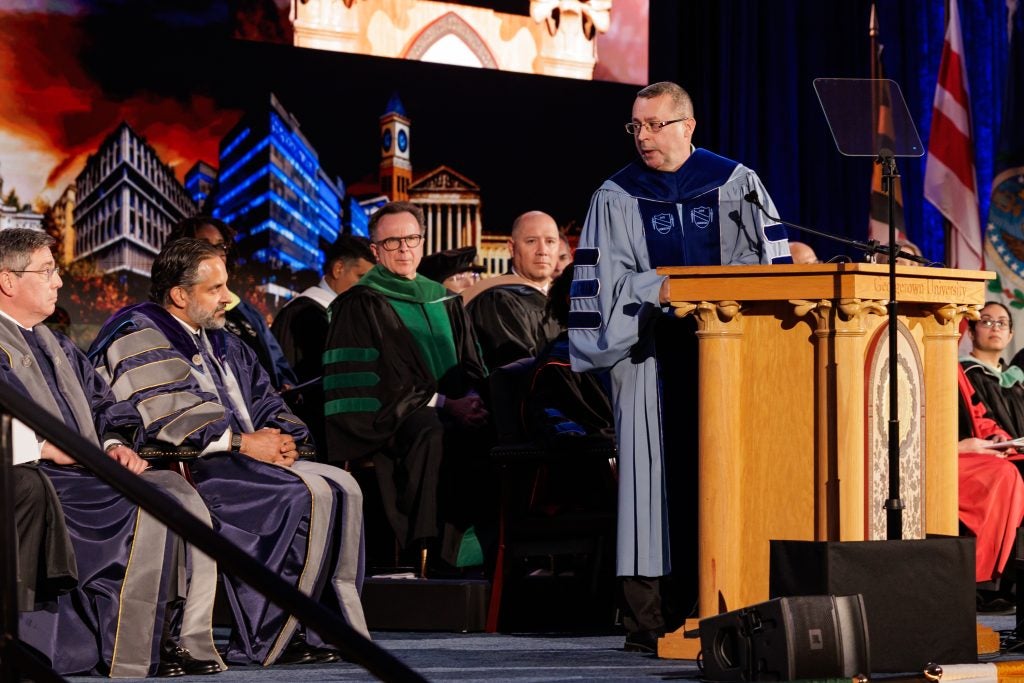
In his remarks, George Luta, professor of biostatistics in the School of Medicine and president of the Faculty Senate, noted that the inauguration ceremony was taking place almost 25 years to the day of Degioia’s inaugural address in 2001, one month after Sept. 11.
“Today, there is again much global uncertainty, which only reinforces the significance of Georgetown University,” Luta said. “President Peñalver, our entire faculty is with you as you begin your tenure here … There is nothing more important than educating our students and advancing our research with our mission in mind, in order for all of us to live and work generously in service to others.”
Rev. Robert Reiser, S.J., provincial of the USA East Province of the Society of Jesus, echoed speaker sentiments that Peñalver is not alone and has the full support of the Jesuits.
“Let me encourage you with an assurance that you do not do this alone. We Jesuits stand with you, in particular, the Jesuit community here at Georgetown,” Reiser said. “On behalf of the USA East Province … I personally pledge our support, along with that of the entire Society of Jesus.”
The Installation of the New President
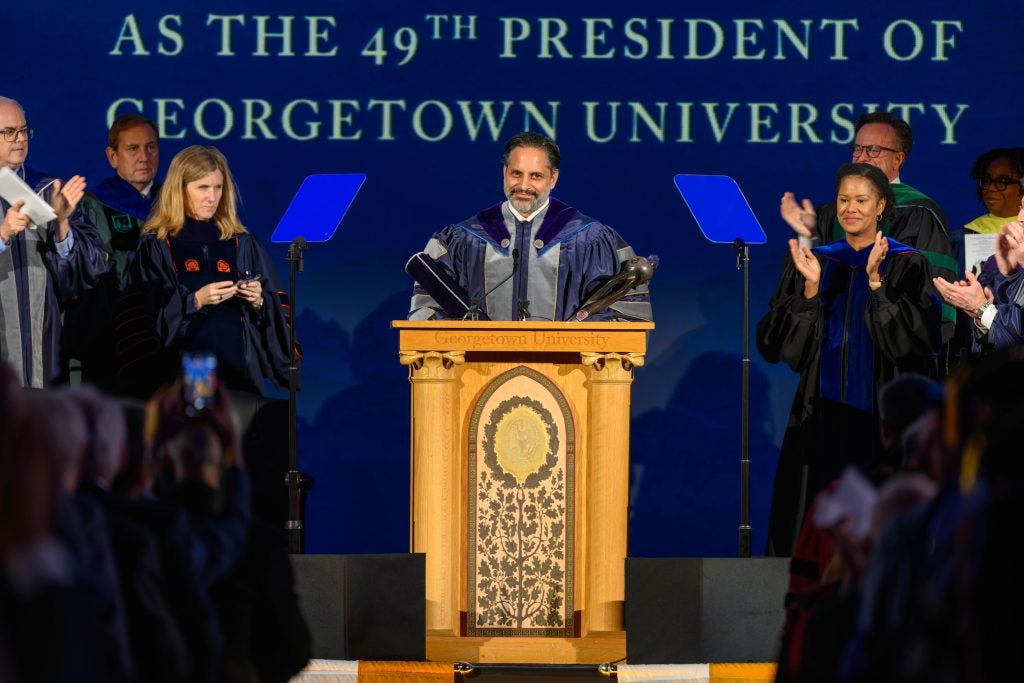
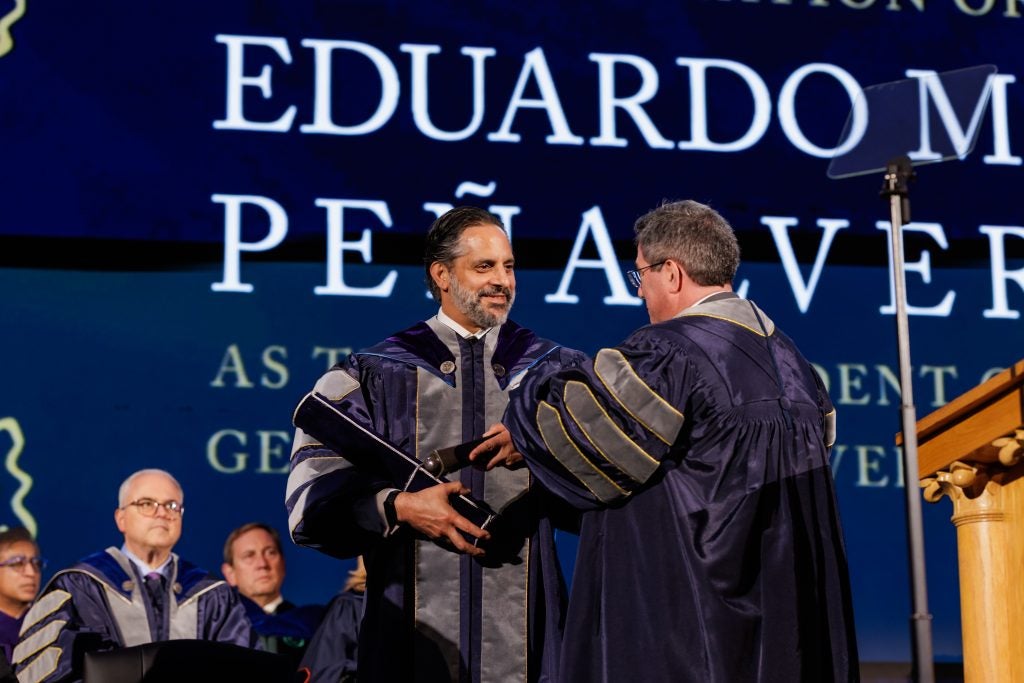
After a presentation of the university’s 1815 charter, Board Chair W. Robert Berkley, Jr. (B’95) presented Peñalver with the Georgetown mace, the symbol of the university’s academic authority.
Peñalver accepted the seal and mace and, at 4:00 p.m., officially accepted the office of president as the crowd clapped and cheered.
“President Peñalver, it is with the warmest personal pleasure that I congratulate you on this office,” Berkley said.
Peñalver’s Inaugural Address
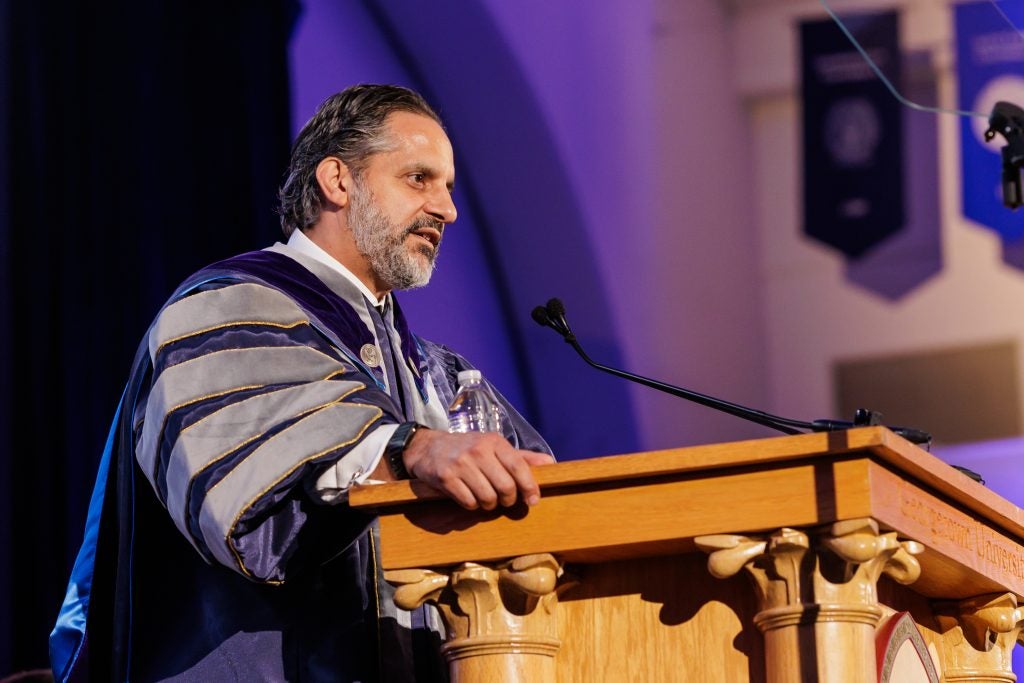
In his keynote address, Peñalver began with an argument.
He cautioned that many Americans have forgotten how to argue — or how to argue in a civil, productive way. Argument, he said, is crucial for the country and especially at universities.
“Founded by John Carroll as a Catholic university in what at the time was an overwhelmingly Protestant country, Georgetown has always welcomed people of all religious faiths,” he said. “Georgetown’s original embrace of pluralism was at the same time an embrace of argument. … My contention is that argument, understood as a species of dialogue, is a good thing. In fact, it’s an essential thing for a pluralist society and for a university,” he said.
Peñalver noted that civility, diversity of identity and perspectives, and a sense of purpose are necessary ingredients for healthy arguments. With these foundations, a Jesuit educational institution should be fertile ground for arguing well, he said.
“As a Jesuit, Catholic university, Georgetown understands truth as a unified reality toward which the many disciplines tend, each in their own partial and distinctive ways,” he said. “As a Jesuit, Catholic university – committed to the belief that all human beings are created in God’s image – Georgetown welcomes and embraces the many diversities of the human community.
“And as a Jesuit, Catholic university, Georgetown excels in the search for meaning – and in kindling the excitement of that search among our students, who go on to put their learning to work in the service of others.”
Overcoming Challenges to Higher Education
Peñalver outlined the challenges that threaten Georgetown’s tradition of argument and ability to thrive – and how he plans to overcome them.
The first, he said, is political polarization and a failure to engage with, be curious or assume best intent about opposing points of view.
“For as much attention as we give to the disrupted or disinvited speakers, we should be just as concerned about the speakers who were never invited in the first place, the arguments that never happened,” he said. “These missing arguments are the dogs that fail to bark, every day, on university campuses across this country.”
Peñalver also spoke about the threat AI can pose to learning and human flourishing, and the perception and reality that higher education is unaffordable – two fronts he is charging into.
Finally, Peñalver underscored the need to nurture both the intellect and the soul.
“By remaining firmly rooted in our Jesuit, Catholic tradition, Georgetown will help our students in that essential human search for purpose and fulfillment,” he said. “Georgetown will continue to encourage students of every faith tradition – and even those not connected to any faith tradition – to attend to their spiritual lives and to cultivate their search for the transcendent.”
As the ceremony concluded, Peñalver walked to the front row and hugged his wife and two sons. He processed back down the aisle, this time, as Georgetown’s 49th president.