Category: Georgetown Faces, Spirit of Georgetown
Title: The Professional Archivist Who Preserves Georgetown’s Past to Prepare for Its Future
Date Published: July 23, 2026
This story is part of Georgetown Faces, a storytelling series that celebrates the beloved figures, unsung heroes and dedicated Hoyas who make our campus special.
By Sarah Adler
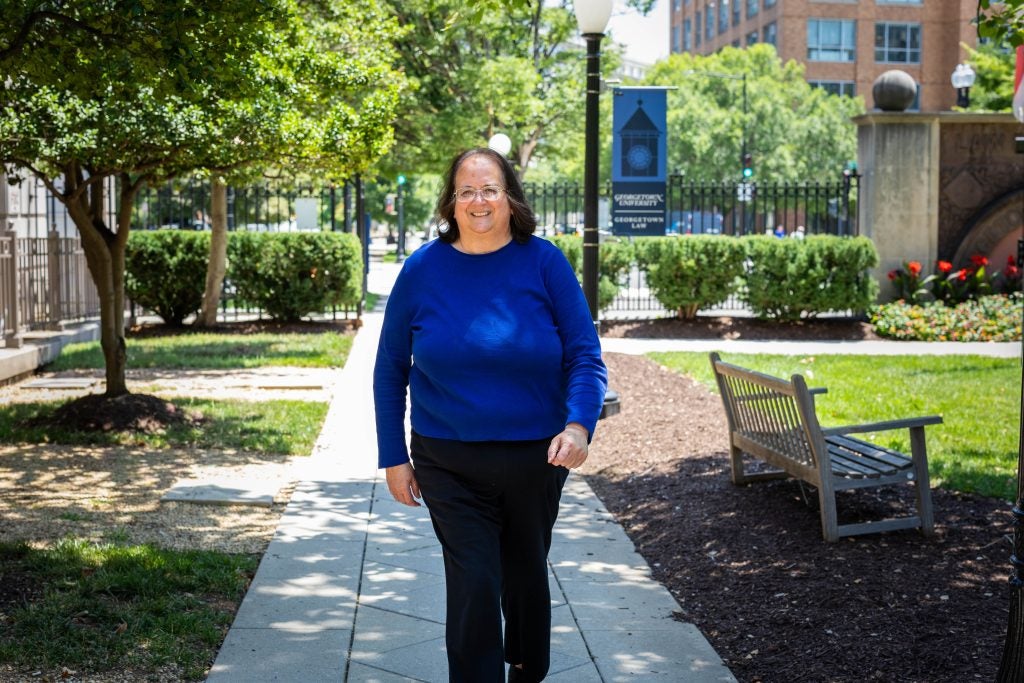
Over the last four decades, archivist Carole Prietto has witnessed her profession’s evolution from analog to digital.
“When I started my first full-time archives job in 1986, it was a completely paper-based world,” said Prietto of her role at the University of California, Los Angeles (UCLA). “I would literally push a cart to offices all over campus, box that material up and push it all back to the archives.”
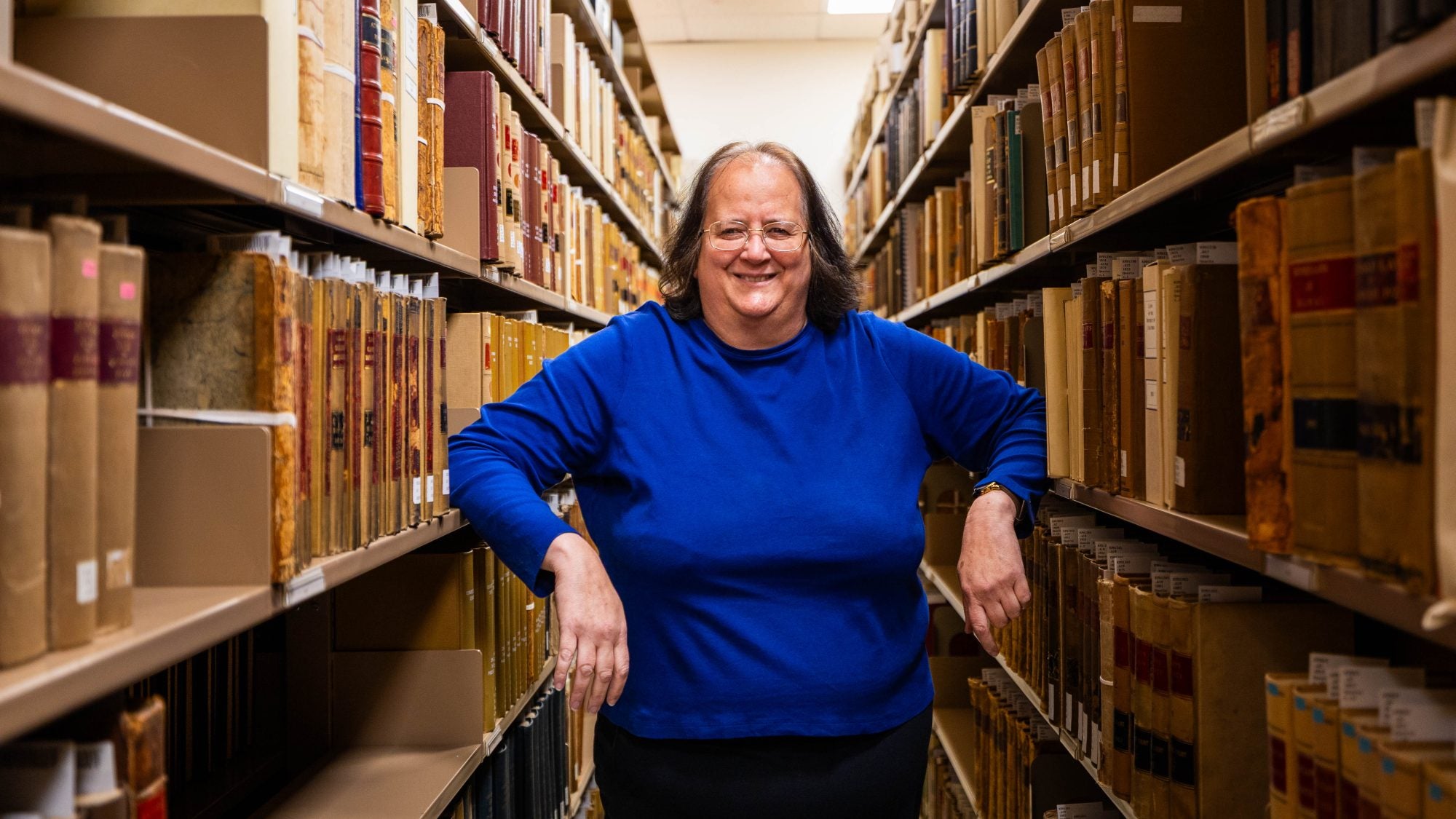
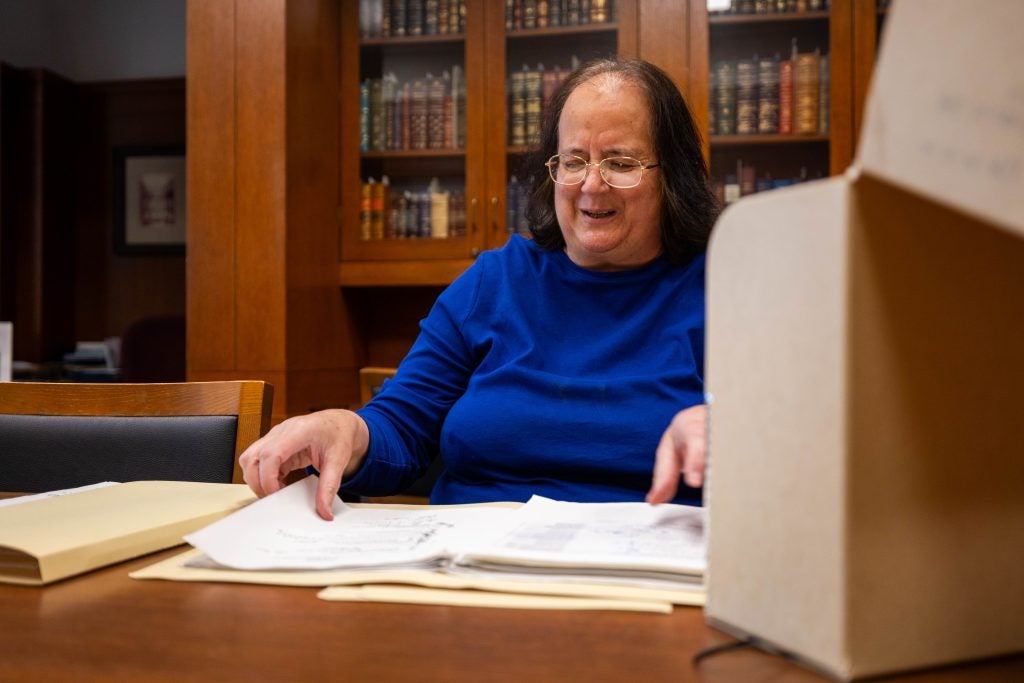
Today, Prietto oversees the Law Center Archives in Georgetown Law’s Williams Law Library, where records are stored in both print and digital collections. As an archivist, she manages the archives’ millions of records, which range from campus publications and student group records to historic photographs and lecture recordings. She also manages a collection of digital data and materials that contains hundreds of thousands of items.
And while technology may have transformed her work over the years, Prietto’s commitment to preserving institutional memory remains the same.
“Archival appraisal is an art and a science,” she said. “We look at a record to see not only how it is valuable now, but how it might be valuable in the future, for the long term.” 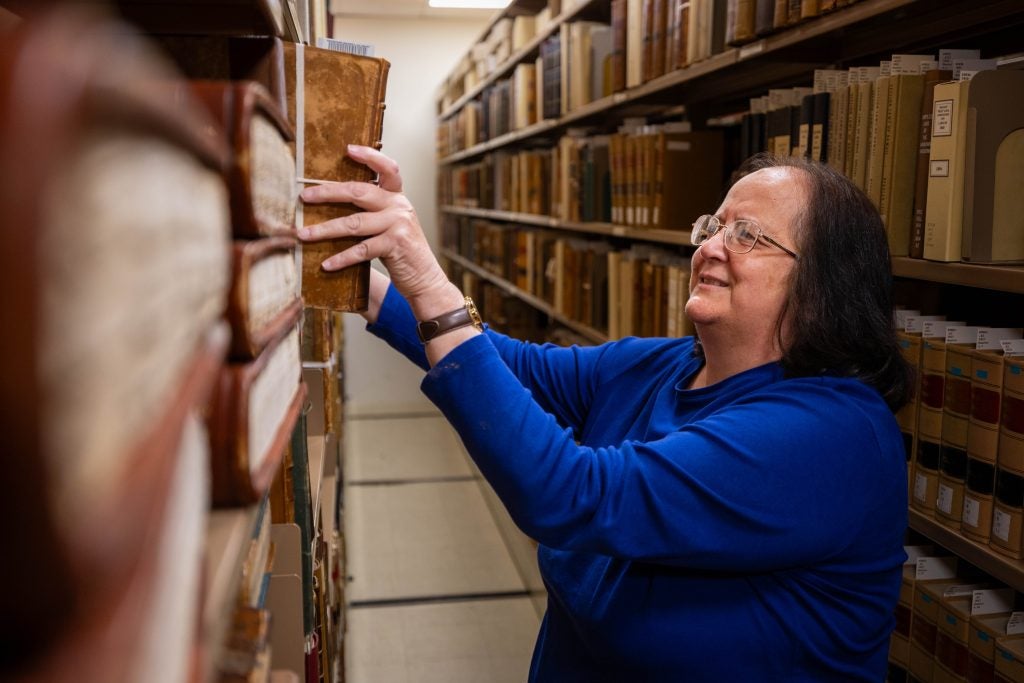
Prietto discovered a love of archival work while earning her master’s in history at UCLA and working in its archives as a student worker. She went on to work there full-time before serving as an archivist at Washington University in St. Louis for 14 years. She then managed the archives for the Daughters of Charity, a Catholic order of women religious who serve the poor and marginalized.
After more than a decade in that role, Prietto found she missed working in academia. In 2016, armed with a master’s degree in library science from San José State University, she joined Georgetown.
In November, Prietto will celebrate 10 years managing the Georgetown Law Archives, which collects, preserves and provides access to records that document Georgetown Law’s history from its founding in 1870 to the present day.
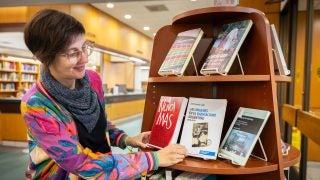
In addition to its historical and administrative value, the archives serve as a “memory lane” for staff, students, alumni and members of the campus community, Prietto said. She particularly enjoys finding archival treasures to feature in special projects and historical displays for law student orientation, reunion weekend and other celebrations, she said.
“In a lot of ways, my job is to be a professional student of the history of Georgetown Law,” she said.
Learn more about Prietto, the Georgetown Law motto mystery she’s hoping to solve and her passion for arranging barbershop music, a four-part vocal harmony.
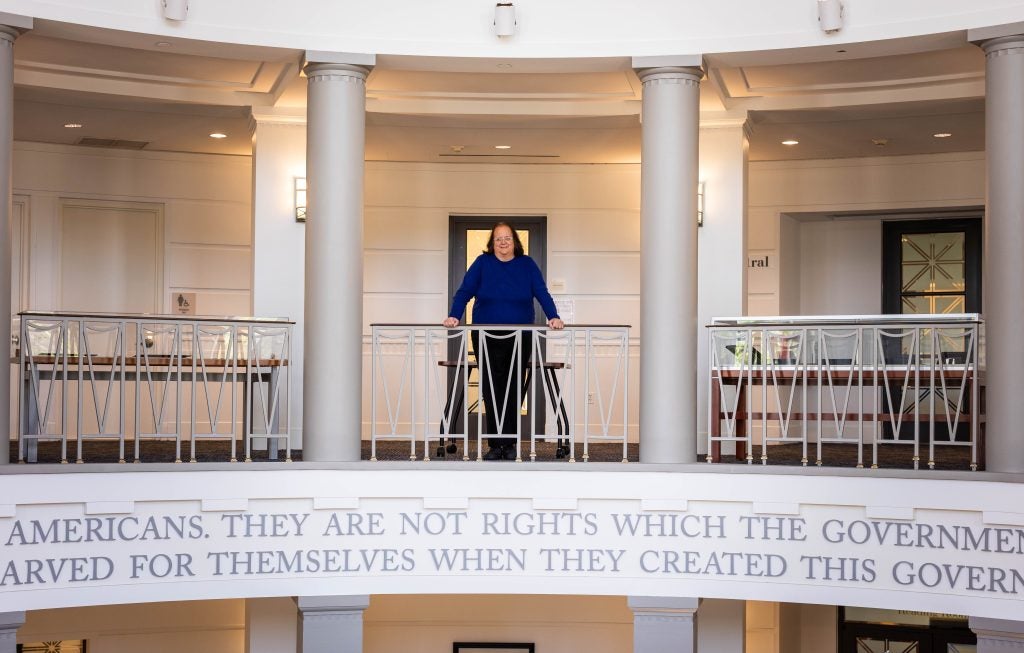
What archivists do: We find the history of an institution, we collect it, we organize it and then we make it available, either in print or digitally. Our job is to provide historical information for people who need it, and that can take all kinds of different forms.
I moved from academic history to archives because: Ancient Greece and Rome were something I got interested in in high school. When I started graduate school, my career goal was university teaching and getting a Ph.D. I needed a job, and by luck of the draw, my student job was in the university archives at UCLA. I found immediately that I really, really liked the work, and so I took a bit of a left turn away from academic history and into archival work.
What I wish everyone knew about my job: People don’t always appreciate how much my job lives in the present day. Today’s news story is tomorrow’s history, so I’m always on the lookout for things that are going to be important 5, 10, 20 years down the road. I also want students to know how genuinely interested I am in documenting their experience outside the classroom. We don’t have a law school without law students. Documenting all the things that make up their law school experience is important.
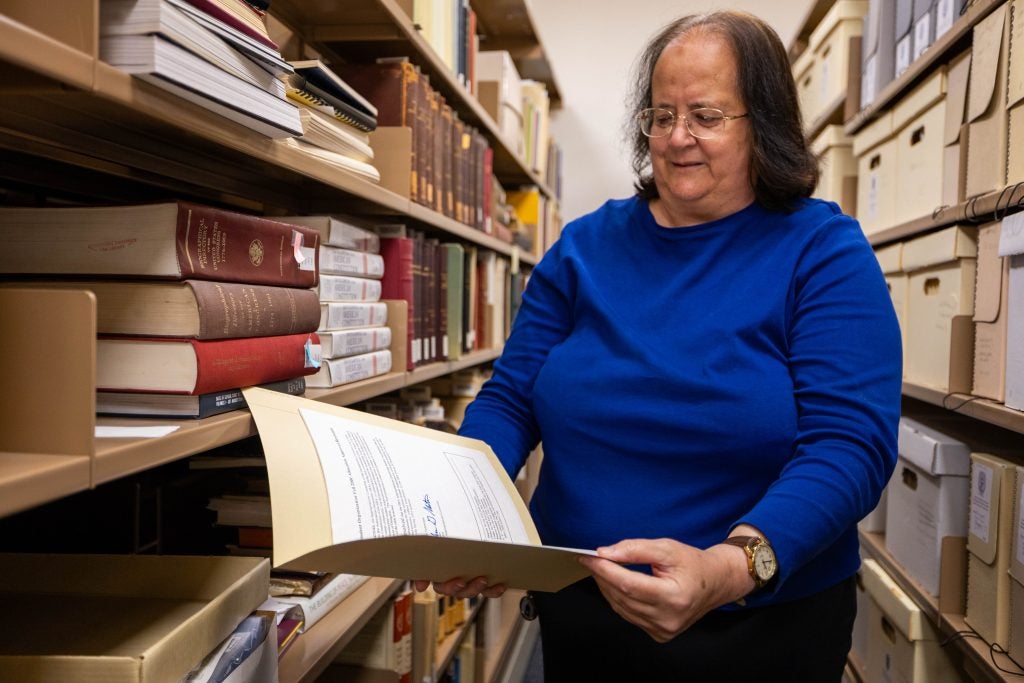
An archival mystery: One of my little missions is uncovering the history behind the Georgetown Law motto. Most people don’t know that our motto, “Law is but the means; justice is the end,” comes from a speech by a law student in the 1920s. It became the official motto of the school in the early 1960s, but we don’t know how. Paul R. Dean was the dean at that time, and I strongly suspect that he or somebody who worked for him had something to do with it. It would be wonderful if I could find a document that would nail it down.
My favorite place on campus: One of them is the Paul R. Dean Green and archway in front of the Law Library, which is all that remains of our former campus, located at 506 E Street NW from 1891 to 1971. The archway was transferred from the original campus to its current location. I always think, Wow, if that little archway could talk. One of my favorite collections from the archives is actually our campus planning collection, because it shows how the campus grew bit by bit into what we experience today as the Law Center.
Outside of work, I sing and arrange barbershop music: I’ve been doing barbershop for about as long as I’ve been doing archives. I joined what was then called Sweet Adelines International, now SingUnited International, in 1991. Thirty-five years later, I’m still a member. In 2016, I joined the Barbershop Harmony Society. I’m not as active a singer as I used to be; the main thing that I do now is arrange four-part, barbershop-style harmony for choruses and quartets.
Finding a passion for barbershop: Both my parents were musicians. My mother was a very fine pianist, and my father loved music and took singing lessons. I did music all through school growing up. When my friend invited me to come along to a Sweet Adelines rehearsal, I had just moved to St. Louis and didn’t know a lot of people. It sort of changed my life. I have participated in the hobby every place that I’ve ever lived. That’s one of the cool things about it: anywhere you go, you can find other people who sing and who participate in the hobby.
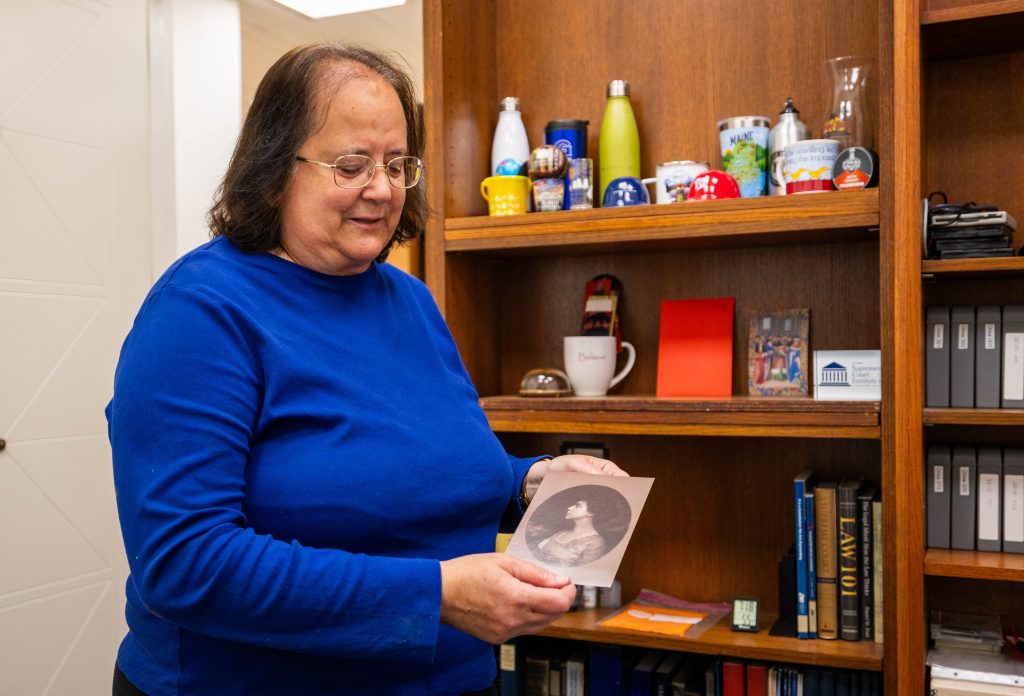
The arrangement I’m most proud of: If you ask an arranger what their favorite song is, they’ll probably tell you it’s whatever they’ve just worked on. One of my recent favorites is the song “What Is This Feeling” from “Wicked,” which will premiere on the contest stage at the annual SingUnited International competition in Columbus in the fall. I’ve also arranged “Dear Theodosia” from “Hamilton.” It’s my favorite song in the entire show.
One word that comes to mind when I think of Georgetown: Historic, because Georgetown has been around as long as the country has been around. Georgetown was founded in 1789, the year our Constitution went into effect. That’s a really long, rich history.
What brings me joy in my role: Watching people’s faces light up when they see something historical that they didn’t know, or when they learn something about their past or the school’s past. I spend a lot of my time thinking about history. I love history, and I want other people to appreciate the history of Georgetown Law, too.