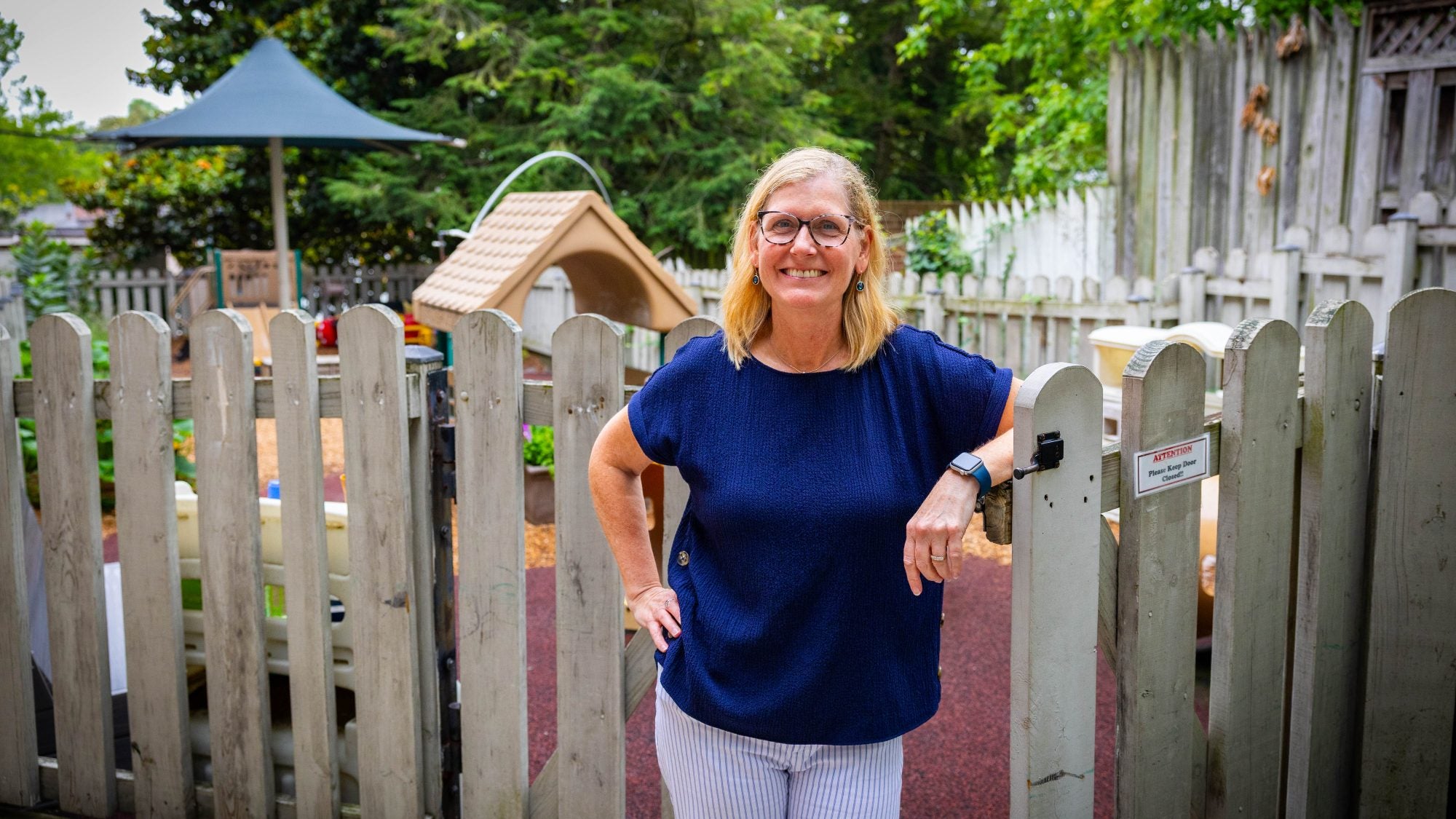
A woman in a navy shirt leans on a fence with a playground behind her
Category: Georgetown Faces, Spirit of Georgetown

Title: Hoya Kids’ Director on Finding Joy in Children’s Mini Aha Moments

A blonde-haired woman with glasses smiles
Jane Banister is the director of the Hoya Kids Learning Center.

This story is part of Georgetown Faces, a storytelling series that celebrates the beloved figures, unsung heroes and dedicated Hoyas who make our campus special.

To get to her office, Jane Banister walks past a troop of toddlers balancing on one leg. 

“1, 2, 3, 4, 5!” A teacher calls as kids wobble.

She passes mini chairs and shoes before arriving at her desk, which is decorated with photos of her own children and a sign that says “Head Honcho” — a “joke gift,” she laughs.

For 26 years, Banister has served as the director of Hoya Kids Learning Center, an early childhood program that primarily serves young children of Georgetown faculty, staff and students. She manages a staff of teachers and makes sure classrooms are staffed, families are enrolled, and licensing and compliance requirements are met. 

“I’m never bored,” she says. “It’s kind of like running a very large household. I walk in, and it’s different every day.”
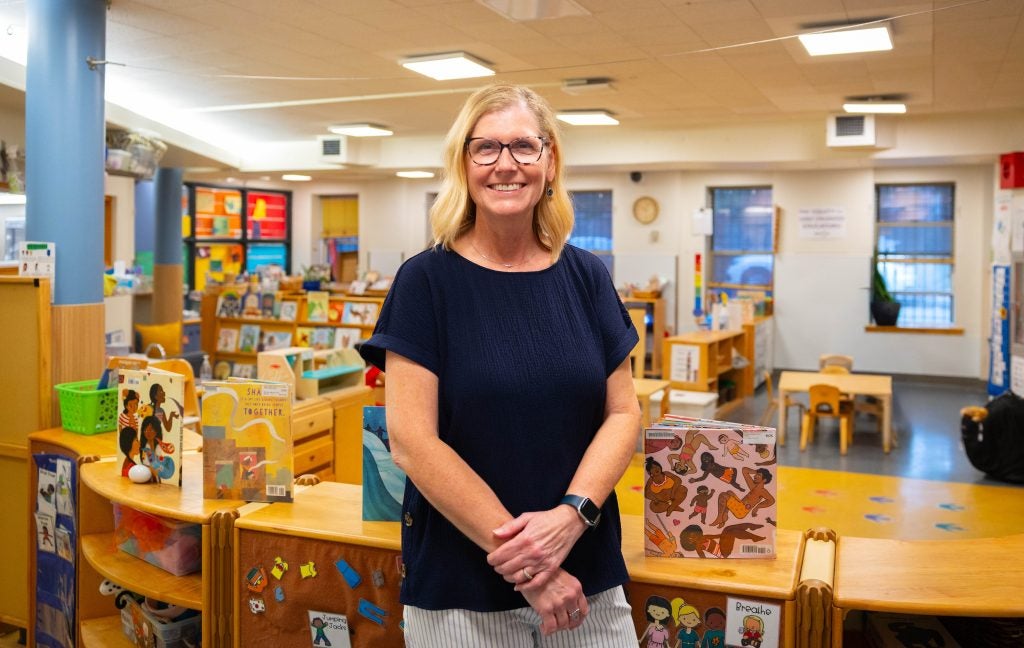
A woman stands in front of a children's play area
Banister in one of the main play areas at the Hoya Kids Learning Center.

Banister thrives on being busy, but most of all, she lights up watching children hit milestones, no matter how big or small.

Child development has fascinated Banister since she studied the subject at the University of North Carolina at Greensboro. After graduating, the Eastern Shore native worked as a live-in nanny and then a teacher at an employer-sponsored child development center just outside  Washington, DC. She realized she wanted to have an impact beyond her own classroom and earned her master’s in early childhood program administration at Mount Vernon College, now part of George Washington University. 

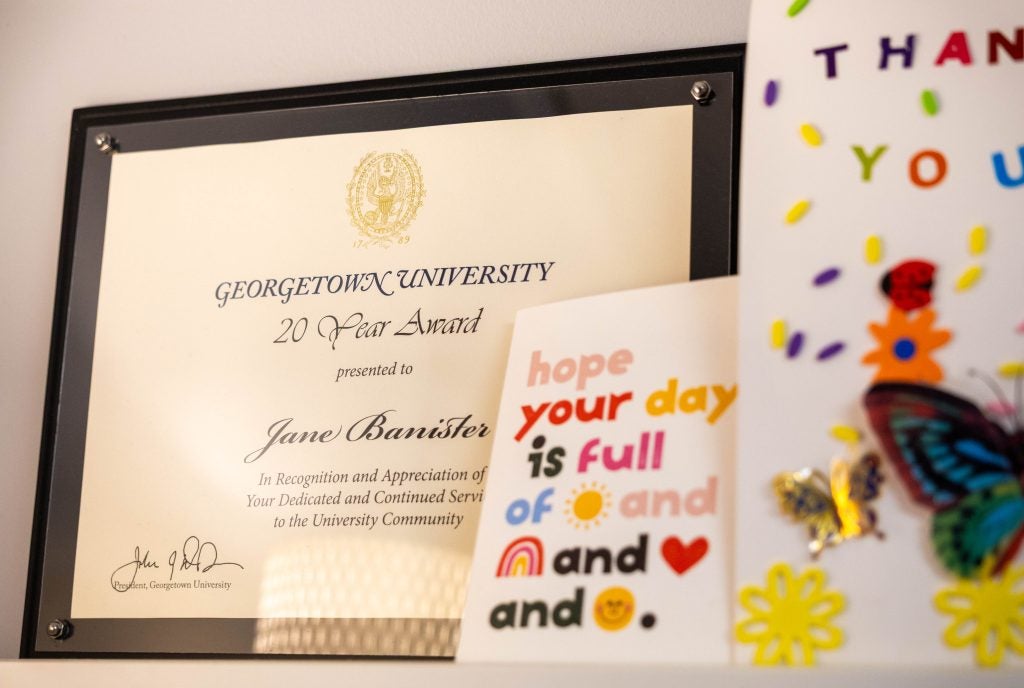
Banister joined Georgetown in 2000 after working as the assistant director at the National Science Foundation’s child development center. In the years since, she’s worked with hundreds of children, including her own, who graduated from the program. Along the way, Banister has earned the Scholastic Early Childhood Professional of the Year Award, Director of the Year Award from the National Coalition for Campus Children’s Centers and Georgetown’s President’s Excellence Award.  
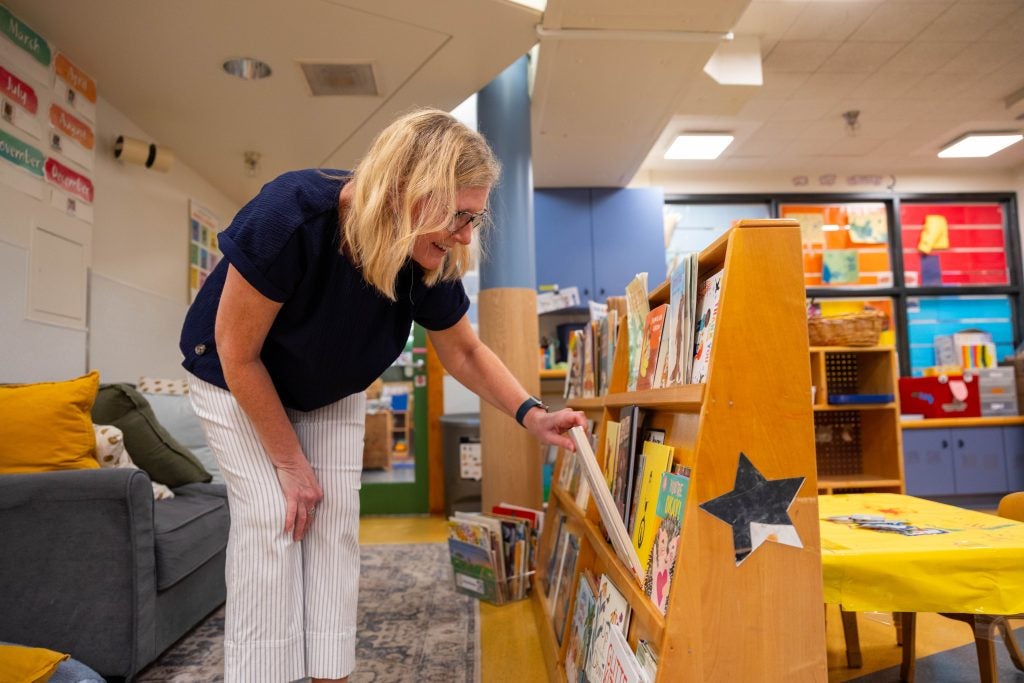
After two decades, Banister still finds joy in the everyday aha moments of Hoya Kids and in the center’s broader mission.

“We help lay the foundation for a lifelong love of learning, confidence and resilience, while creating a place where families feel supported and cared for during an important chapter of their lives,” she said. “Our ultimate goal is to have happy kids, happy parents and satisfied teachers. That [kids] all go home happy and sometimes even dirty,” she laughs. “We like to get into messy things.”

Learn how Banister found her calling, neuroscience and children’s brains, and what keeps her happy.

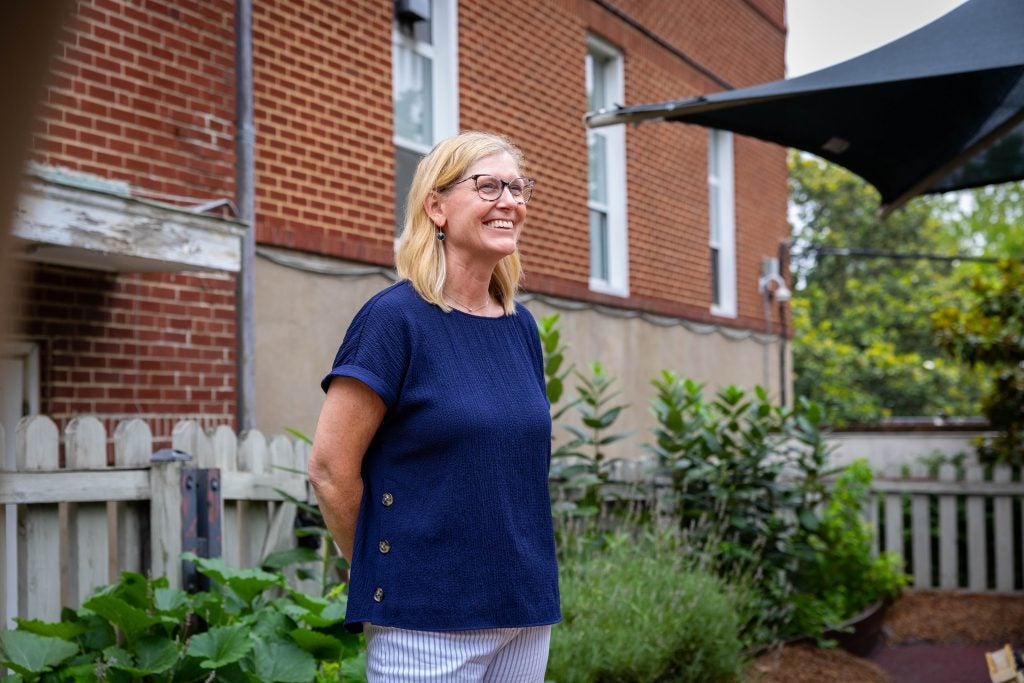
A woman in a navy shirt smiles in front of a brick building and a garden
Banister in one of the Hoya Kids’ playgrounds, which has a garden.

From a very young age: I loved caring for my dolls. I’ve always been a nurturer. In my teenage years, I was a mother’s helper and babysat. Then it was just a fun job; I never thought about it as a career. Honestly, at that age, I just wanted to be a mom. I felt like I had a natural ability with little kids, and I connected with them. 

But in college, I found child development theory and research fascinating: just the magic that happens in the first five years of life. Ninety percent of the brain is developed in the first five years, and a huge portion of that is in the first three years. That’s what drew me to the importance of that age range, because it’s so crucial in the first five years to optimize those experiences, and it’s a privilege to be a part of it.

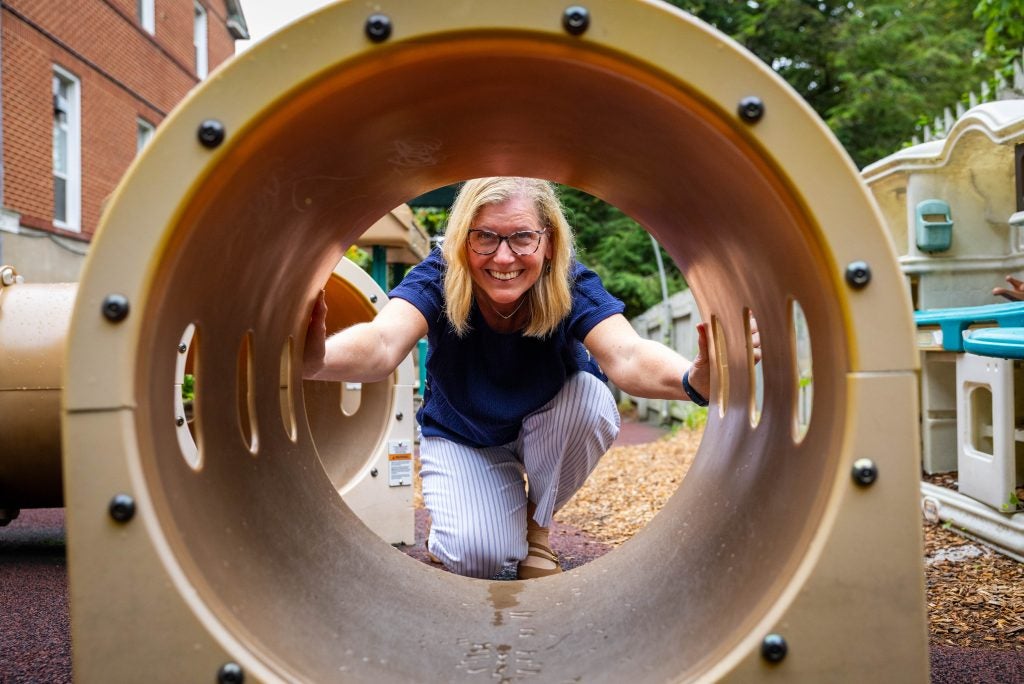
A woman looks through a toy tunnel on a playground

I made it my career because: It was so satisfying to know that you have a part in a person’s life in the most formative years. And the immediate reward you get from children and the relationship you build with them, and the funny and really intuitive things they say – all those aha moments when you realize they hit a developmental milestone. Even a tiny milestone is still an important piece of their development. It’s continually rewarding. 

Twenty-six years later, I’m still here: I have felt well-cared for at Georgetown. There is a true culture of care. When I had my first child, I got a letter from President DeGioia congratulating me on her arrival. And the community is great. I love the people I work with. I love that we see a broad swath of the university, because the common thread everyone has is that they’re a parent. Some of our Hoya Kids are now Georgetown students, and I love it when they ring the doorbell to say hi or even want to come and work here. They’re lasting relationships and connections. 

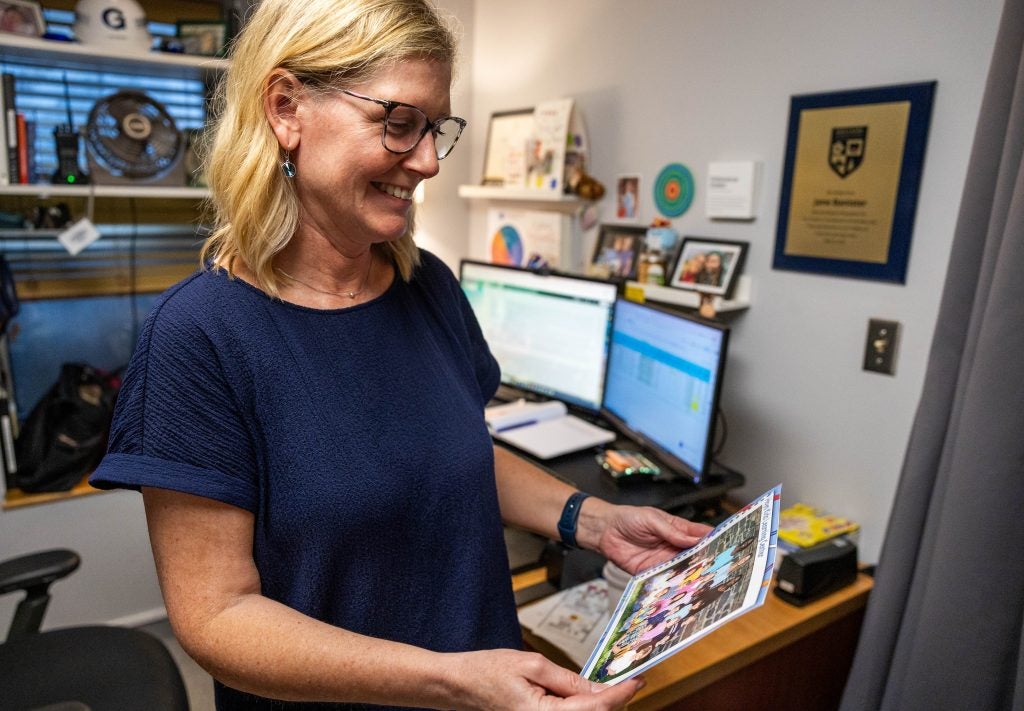
A blonde-haired woman in a navy shirt smiles while looking at a photo
Banister looks at a photo of a former class of Hoya Kids, including her own son, who’s now in college.

Hoya Kids is a play-based program: We have what’s called an emergent curriculum, and it’s driven by the children’s interests and the things in their lives that are relevant and meaningful to them. This is what keeps them engaged. We also want children to learn how to be a good friend. We want them to learn how to regulate their emotions. We want them to learn how to be curious and follow up on those curiosities. We want them to feel loved and respected. 

“We want them to do all of the things that are part of developing into a good and successful human. Our job is to provide the environment, tools and supports to help facilitate that process.”

Jane Banister

The greatest evidence of our success: is when families come back to visit years later. They tell us about how well their children are doing, the young people they’ve become, and how grateful they are for the care, encouragement and foundation they received at Hoya Kids. Those moments are incredibly rewarding because they remind us that what we do extends far beyond preparing children for kindergarten. Knowing that our work leaves such a lasting impression is one of the most meaningful outcomes I can imagine.

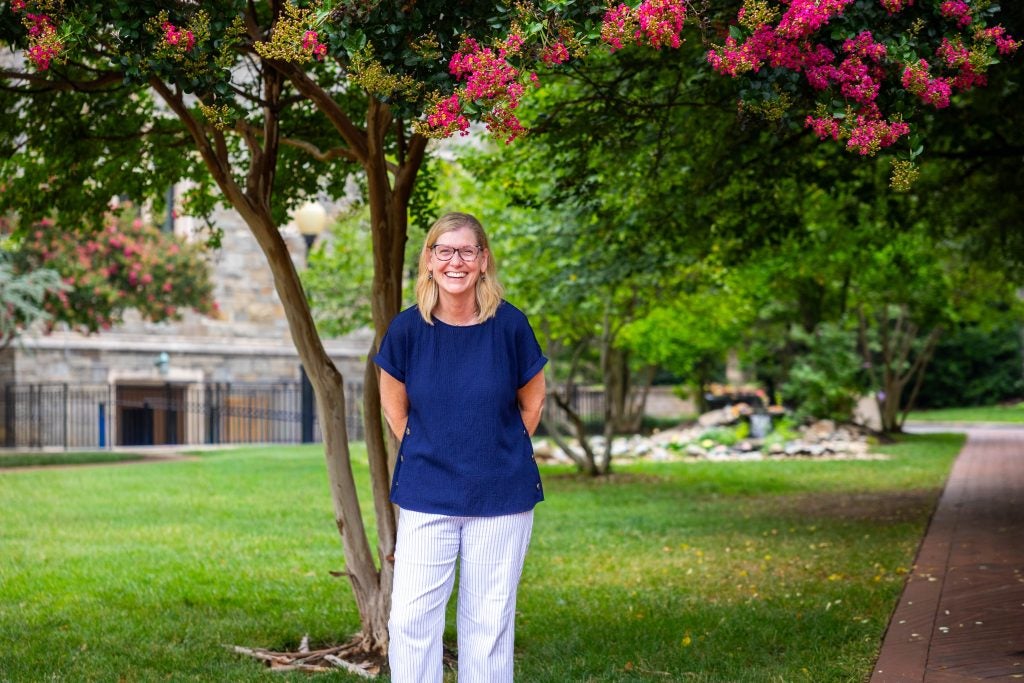
A woman smiles in front of a tree with pink blossoms
Banister helped plant the tree on Georgetown’s Hilltop Campus to celebrate the third anniversary of Hoya Kids in 2000.

When I’m not working: I’m in Loudoun County, so we like to go to wineries with friends and neighbors and on hikes where I can be my geocaching husband’s “assistant.” We are foodies. My husband and I like to cook and explore new restaurants. We have also had this friend group for almost 25 years called “Supper Club” where we take turns hosting meals at our homes. 

I’m also a DIY person: I can be pretty handy. I like to fix things rather than throw them out and buy new ones. I like to make old things new again, whether it be an antique or something that’s just broken. It’s kind of ironic, right? I want to make those old things young again. 

What keeps me coming back to Georgetown: The high-quality early childhood care and education we provide is at the heart of what we do, but equally important is the service we provide to our families. By supporting them, we’re also supporting the broader mission of Georgetown. Knowing that the work we do has that kind of ripple effect is a big part of what keeps me coming back every day.


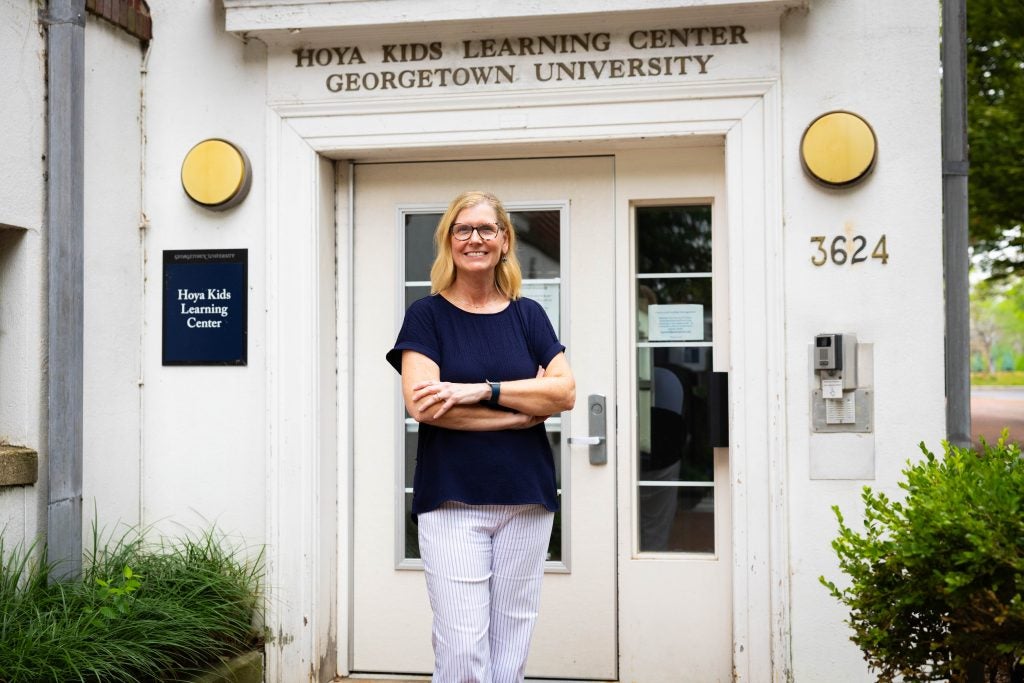
A woman smiles in front of a white building that says Hoya Kids Learning Center above the door