
Juliette Robinson (SFS’28) is a second-year student in the School of Foreign Service. She plans to major in international politics and pursue a certificate in international business diplomacy. She conducts research as a Mortara Undergraduate Research Fellow and consults at Georgetown Global Consulting. For fun, she captains the Georgetown Women’s Rugby team and enjoys exploring DC (especially the different food options) with friends.
People talk a lot about the excitement of freshman year: the rush of independence, the avalanche of new friendships and the sense that everything is just beginning. What people talk about far less is the quiet shift that happens in year two, when the novelty wears off and the routines set in. Sophomore year is supposed to feel familiar, grounded, maybe even easier. But for many students, including me, it becomes a slump. 
Coming back to campus after the summer, I thought life would pick up where it left off. But something was different. Some of the friends I relied on as a freshman had naturally reshuffled. Some people drifted, others grew closer to different circles, and a few friendships quietly faded without any dramatic ending, a slow, subtle distance that comes with time. It wasn’t anyone’s fault. Sometimes people evolve in separate directions, sometimes schedules don’t match, and sometimes different people are necessary for the next chapter of your life.
But that shift still hit me harder than I expected. Everything felt more settled, but also more demanding. My academics intensified, and the expectations rose in ways I hadn’t quite anticipated. On top of that, the commitments I had been so excited about as a freshman now piled up all at once: research deadlines, club responsibilities, meetings squeezed between classes, emails that needed thoughtful replies and leadership roles that I cared about but consumed more emotional energy than I expected.
Some days, I would go straight from a morning class to a meeting, then to another class, then to practice, then to a late-night study session, without even realizing I hadn’t taken a moment to eat or breathe. I felt stretched thin: not because I didn’t love what I was doing, but because suddenly everything seemed to matter. Whether it was teammates counting on me, professors expecting my best work or clubs trusting me with leadership tasks, every commitment carried weight. That sense of responsibility made everything feel urgent, important.
However, what surprised me most was how emotionally inconsistent sophomore year felt. Some days I was confident and grounded, while on other days I was overwhelmed by uncertainty. It’s a strange thing to feel both more established and more lost at the same time. But I’ve come to realize that the slump isn’t a sign that something is wrong. It’s a sign that something is changing. You grow. Your circle grows or contracts. Your sense of self deepens, sometimes uncomfortably. And that discomfort doesn’t mean you’re failing, it means you’re transitioning.
Getting Through the Slump
For me, the slump hit early in the fall: right after the excitement of returning to campus faded, and the rhythm of classes, practices and commitments started to feel heavier than I expected. I kept waiting for sophomore year to magically “click,” the way everyone said it would. It didn’t. Not at first. The turning point came sometime around mid-October, when I finally admitted that this year wasn’t going to transform on its own. I had to meet it where it was.
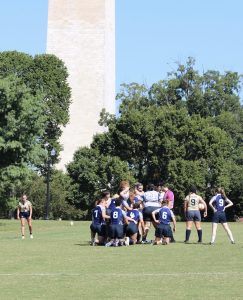
Part of getting through the slump was learning to move again. Literally. In September, I kept telling myself I was too tired, too busy or too behind to be active. But when October rolled around, I realized that staying still was making everything feel worse. Moving gave me the momentum I needed to start feeling like myself again. It was momentum toward each day feeling a little lighter than the last. Even when I didn’t feel like doing anything, showing up to rugby practice, walking across campus instead of hiding in my room or playing in an intramural league game helped break the monotony and reminded me that I was still capable of moving forward.
The other part was being intentional about the people in my life. Freshman-year friendships often happen by accident: a shared class, a common floor, a random orientation group. Sophomore-year friendships happen by choice. So I made myself reach out. I texted people even when I worried I was bothering them. I asked friends to grab a meal instead of assuming they were too busy. I planned small things (study sessions, coffee runs, dinners in the dining hall) just to keep connections alive. Reaching out didn’t solve everything, but it made my world feel a little less closed in.
By late fall, the slump hadn’t “vanished,” but it loosened. I learned that it isn’t permanent, and you don’t escape it through one dramatic breakthrough. You get through it by showing up: for your friends, for your commitments and also for yourself. Bit by bit, rhythm returns. So does confidence. And so do you.