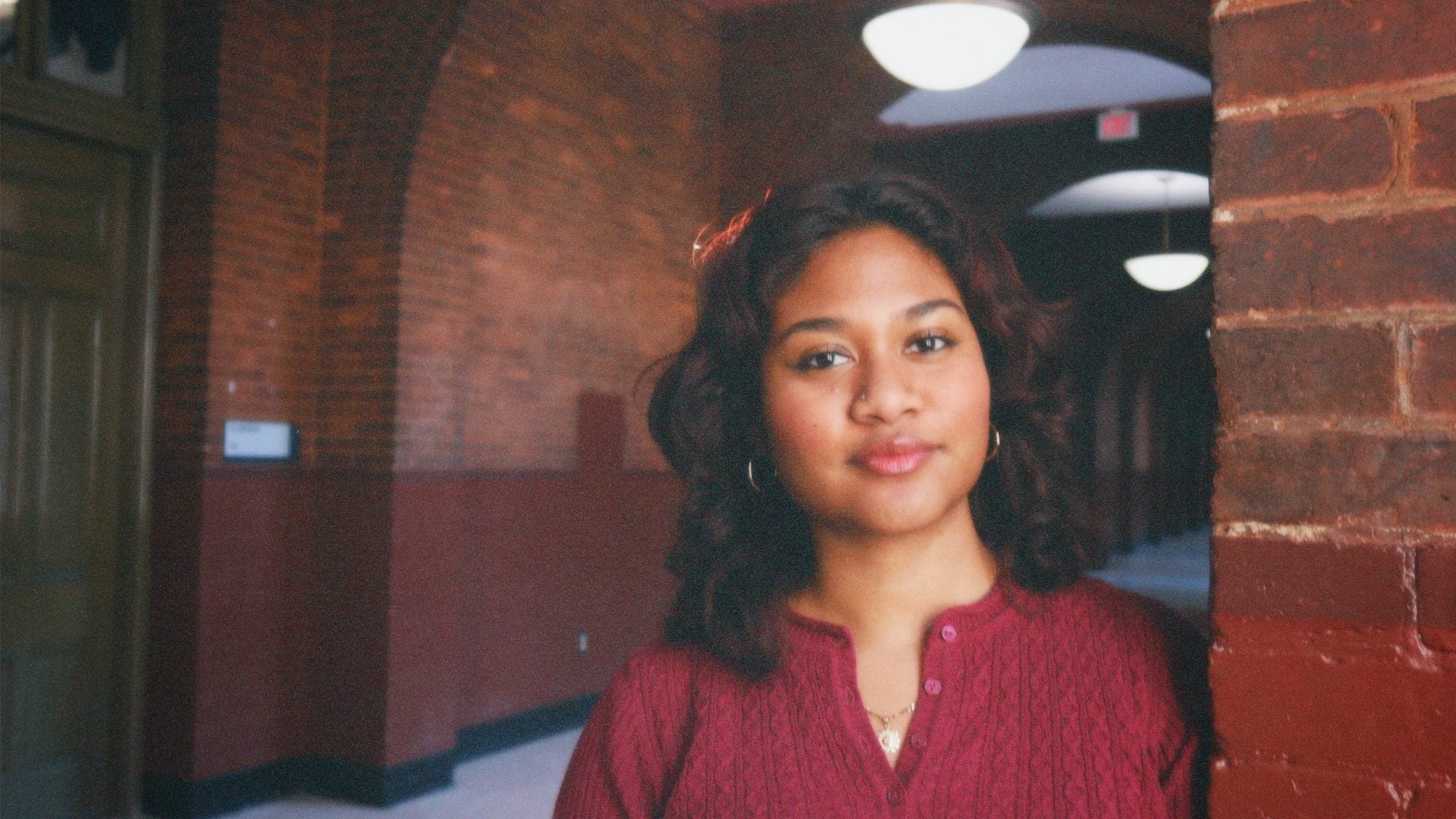
Mariela Cruz-Suarez (SFS’28) is a Georgetown Storyteller from Los Angeles, California. She enjoys drawing, spending time with friends and listening to music. Her favorite insect is a ladybug.
If you know me, you know how much I love Georgetown. I’m committed to creating a welcoming environment as an RA. I’m currently taking a class on the origins of Georgetown’s Jesuit values, and you definitely know that I create written and video content showcasing what it’s like to be a student here.
Because of all this, it often surprises people when I share that, at one point, I genuinely considered transferring out of Georgetown.
I arrived on campus certain of who I was. In high school, I thrived. I was a top student, confident in classrooms and deeply involved in my community. I entered college believing that this version of myself would carry me forward without disruption.
Instead, my first semester unraveled that certainty. The breakdown began with a wave of club rejections. In high school, I was used to success. At Georgetown, I stayed up late pouring myself into essays and interviews, only to receive rejection after rejection. Each one felt as if my experiences and identity were being dismissed.
At the same time, my confidence in the classroom began to erode. I initially felt out of place in an environment coming from a Title I high school in a low-income community. I became afraid to speak, unsure if I belonged, and frustrated by a discussion-based style of learning that I did not yet know how to value. For the first time, the space that had always empowered me, the classroom, became a source of self-doubt. For a while, I believed these feelings meant Georgetown was not the right place for me.
So How Did I Fall in Love With Georgetown?
Falling in love with Georgetown didn’t happen in a single moment. It began when I admitted that something had to change because I didn’t want my spring semester to look like my fall. This shift unexpectedly started at Loyola, a first-year retreat I attended mostly to escape campus. There, I was introduced to the Examen, a reflective practice centered on slowing down and paying attention.
In the quiet of those two days, I realized I had been more closed-minded and, honestly, more immature than I wanted to admit. I was not fully open to my peers, to this new educational environment or even to myself. I had arrived with a rigid, unexamined idea of what success was supposed to look like, and I resisted anything that did not immediately fit into it.
I was so afraid of being judged because of my low-income background that I did not see how, in that fear, I was judging all of us. By assuming others would look down on me, I was also passing judgment on them and diminishing myself in the process. I projected my own insecurities onto others simply because our backgrounds were different.
That same closed-mindedness shaped how I approached my academics. I struggled to appreciate the value of discussion classes because I was fixated on whether I was gaining hard skills I could list on a resume, rather than recognizing the growth and perspective I was developing through conversation. I treated club rejections as proof that I did not belong, instead of as part of a learning process I had never really had to navigate before. Instead of allowing setbacks to challenge and refine me, I let them define my sense of worth.
The Examen forced me to sit with those moments honestly and recognize how fear had been shaping my expectations and confidence.
From that point on, I committed to being more open. I made an effort to start conversations, say hello more often, reach out and invite others in and fully participate in Georgetown life.
My First Taste of Community
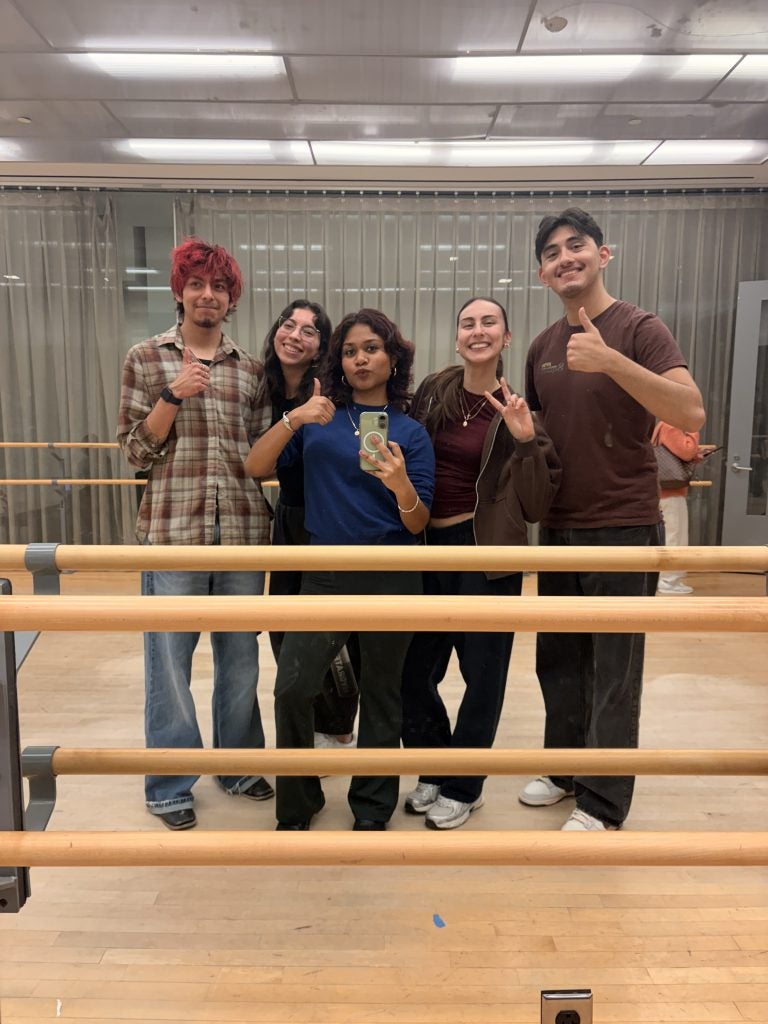
That openness led me to find community, most meaningfully through Ballet Folklórico Mexicano De Georgetown. The club was open-access, with no auditions or lengthy applications, just open practices and the opportunity to interact with parts of my culture I had not fully explored.
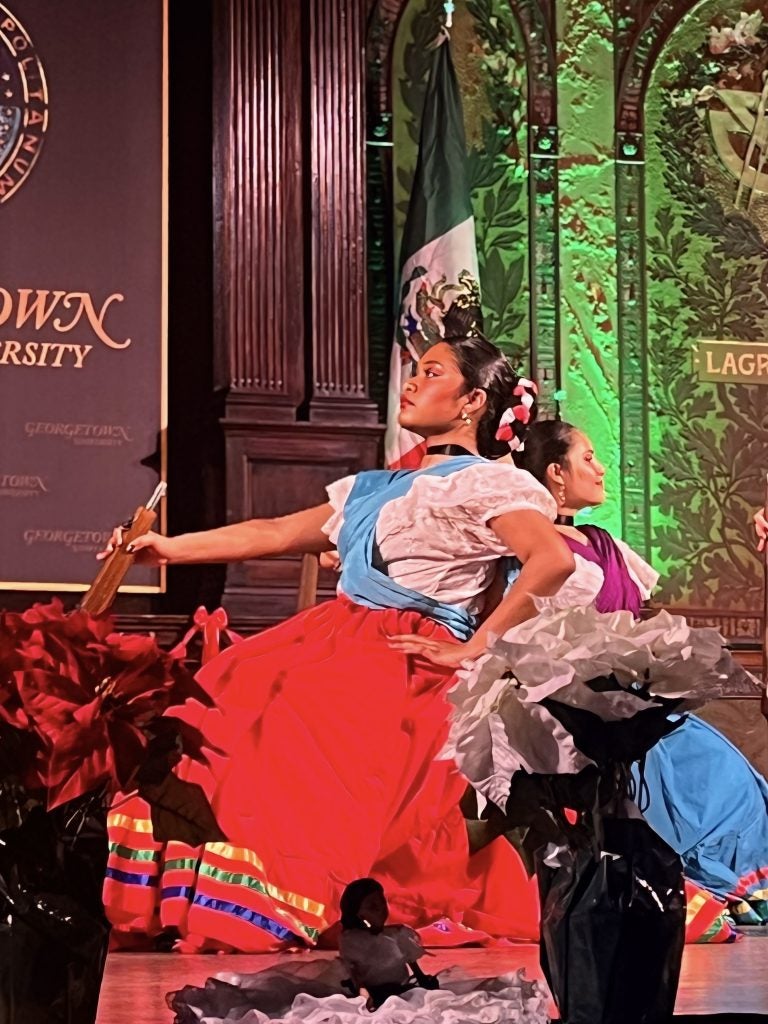
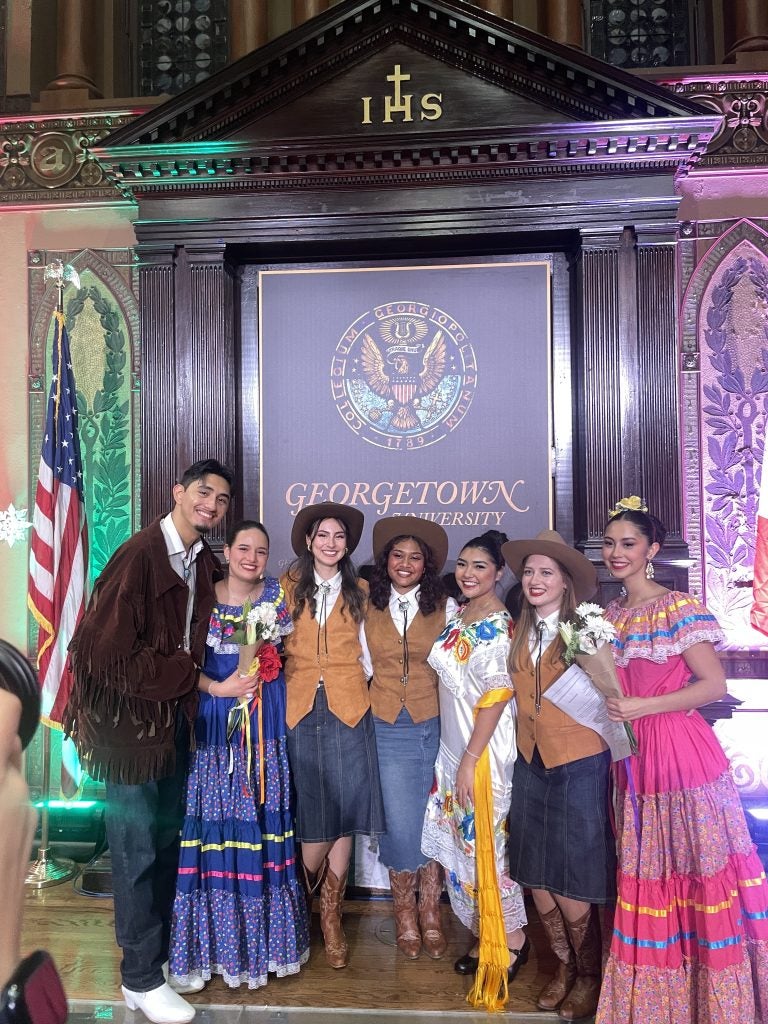
That fall, in late December, I performed in Revolución as an Adelita, a female soldier from the Mexican Revolution. Learning complex footwork and performing it on stage in front of hundreds reminded me of my abilities. If I could do that, I knew I could also speak up in class and grow into my new life as a college student. It became a place where I could rebuild confidence before carrying it back to the rest of my college life. Just as importantly, Folklórico connected me with people who continue to support, challenge and ground me.