Category: University News
Title: ‘Set Your Intellects on Fire’: President Eduardo Peñalver’s Words of Wisdom to the Class of 2030
Date Published: August 24, 2026
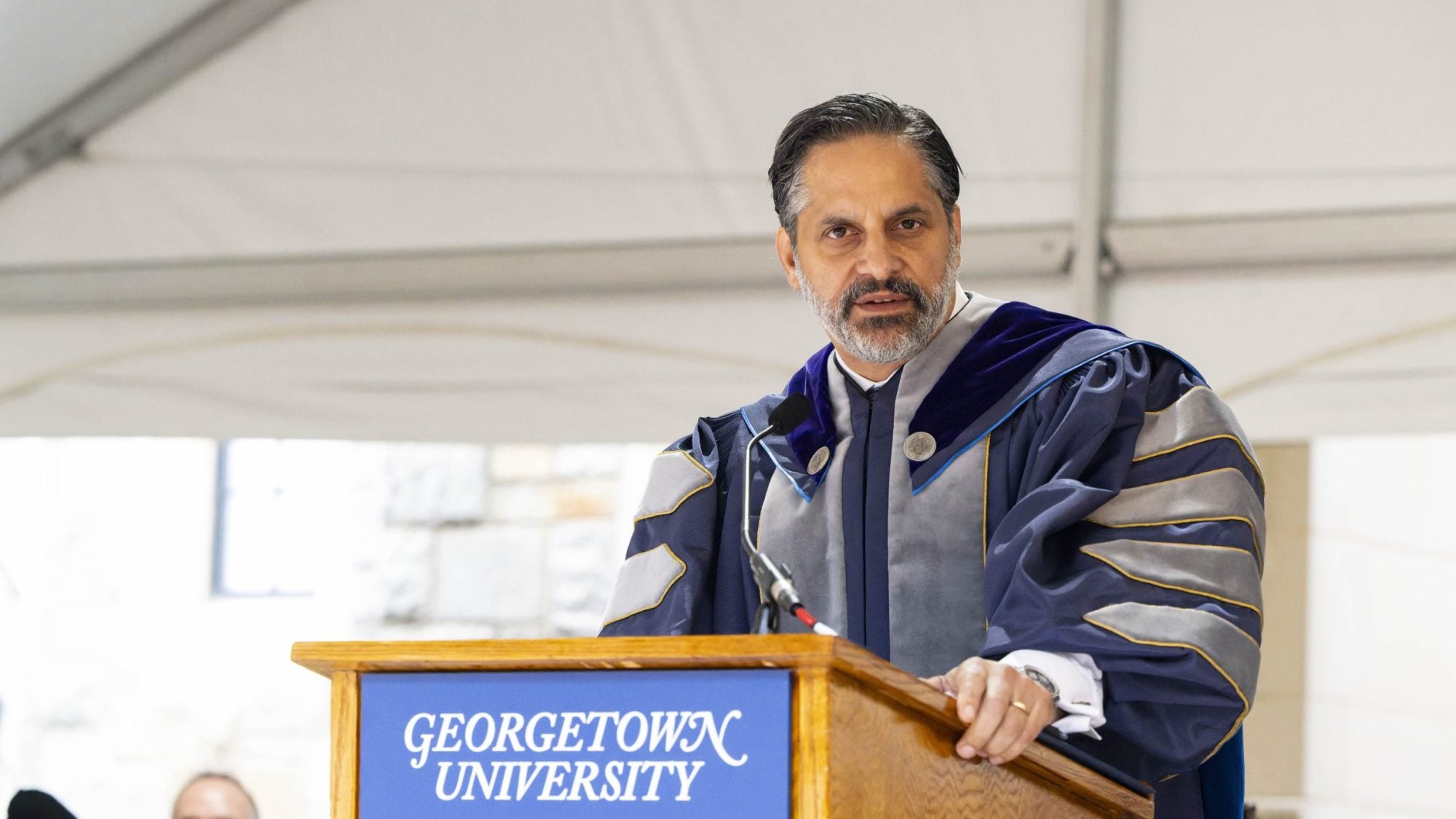
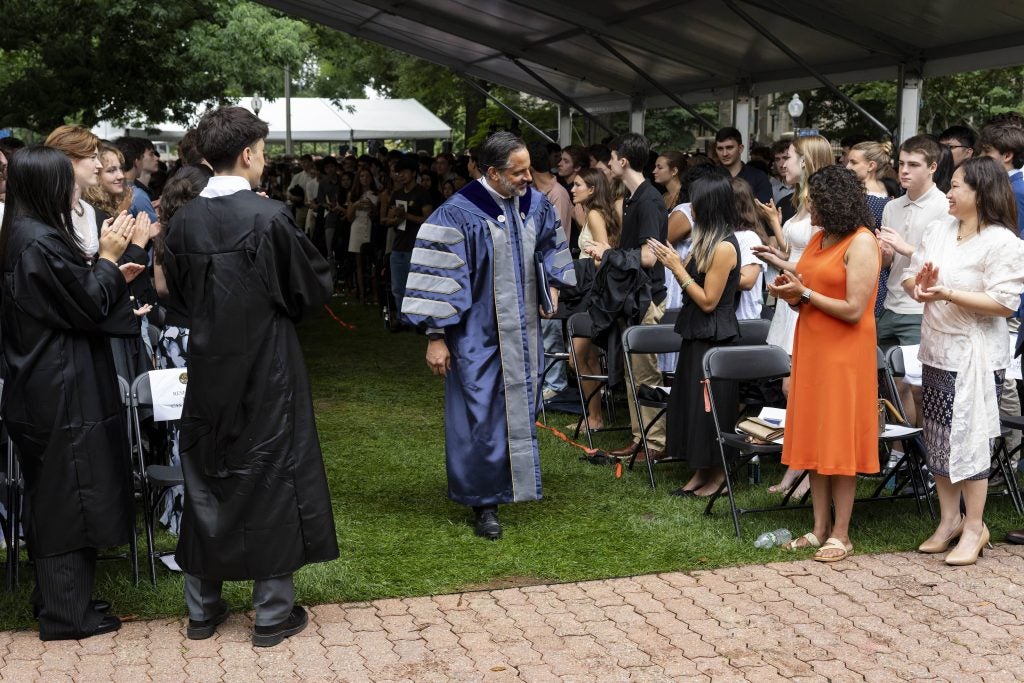
On Aug. 22, Georgetown President Eduardo M. Peñalver addressed members of the Class of 2030 at New Student Convocation.
The annual tradition marks the official start of Georgetown undergraduates’ academic careers. This year’s class includes Hoyas from 49 states, in addition to Washington, DC, and Puerto Rico, and also hails from 46 countries and includes 81 citizenships.
In one of his first addresses to Georgetown students since he began his new role on July 1, Peñalver encouraged the first-year students to enkindle their curiosity at Georgetown. Building on a phrase often attributed to St. Ignatius of Loyola to “set the world on fire,” Peñalver likened the development of a lifelong passion for learning to building a campfire.
Read an excerpt of his speech below.
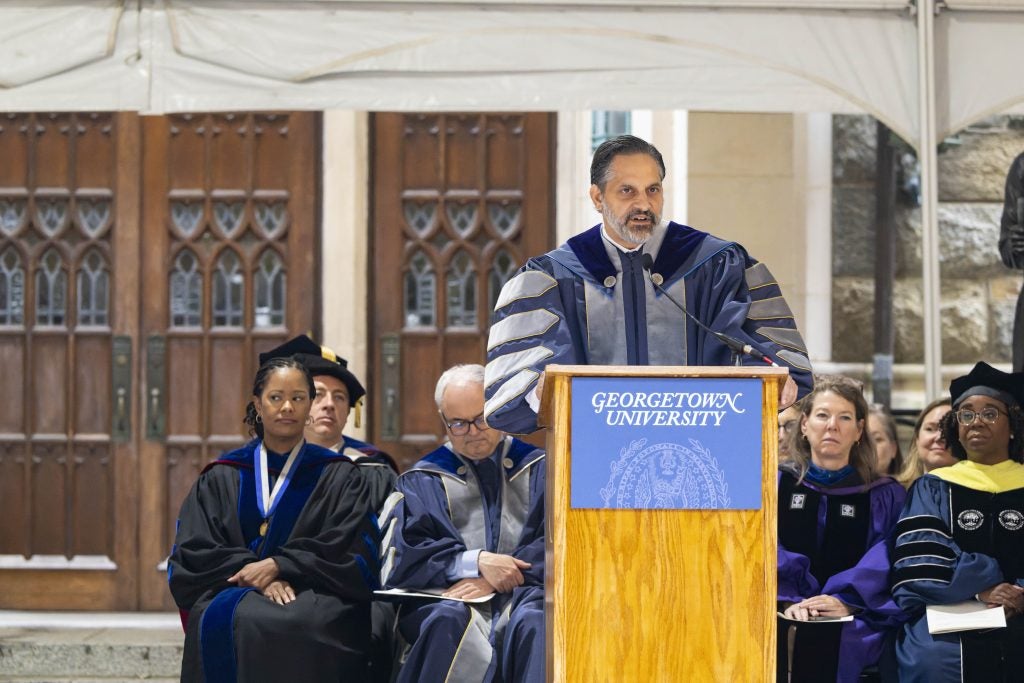
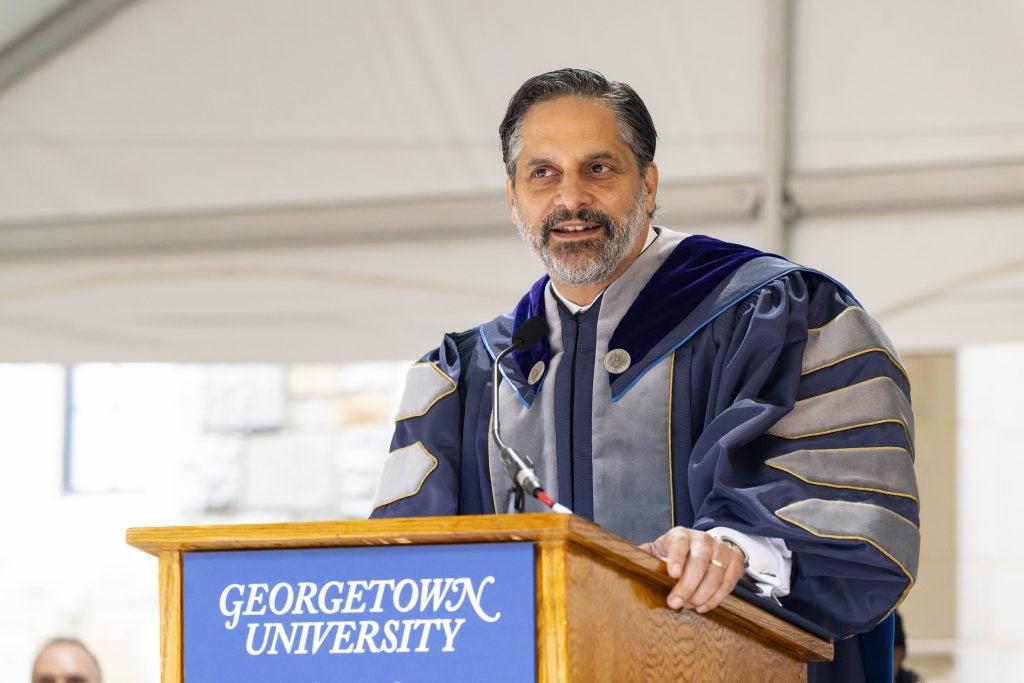
“At Georgetown, the fire we’re trying to enkindle in you is a lifelong passion for learning. And not just learning, but wisdom. And not just learning and wisdom for their own sakes, but in the service of others, in the service of making the world a better place.
I grew up in the Pacific Northwest, so as a young person, I spent a lot of time outdoors. I built a lot of campfires. To build a fire, you need three ingredients: fuel, a spark and air.
We have plenty of intellectual fuel on this campus. You, our students, bring the fuel with you when you arrive: Your intellect, your energy, your ambition, your experiences and accomplishments are great combustible material for the fire you will be building. We add to that fuel our brilliant faculty, our dedicated staff, incredible guest speakers and visiting scholars, a campus with more intellectual resources than anyone can consume in several lifetimes. The acquisition of knowledge requires sustained effort, and that effort is fueled by your curiosity.
Aristotle thought of curiosity, our innate desire for knowledge, as an essential human trait, as something that distinguishes us from other animals. But it’s a trait we can encourage and cultivate or allow to atrophy. One of the great risks I see in this era of generative AI is the possibility that technology will weaken our appetite for the hard work of gaining knowledge. AI offers us an easy and tempting shortcut to something that resembles knowledge but lacks genuine understanding.
As Pope Leo observed in his encyclical this past summer, the temptation to bypass the ‘effort required for seeking the truth’ risks replacing our hunger for new knowledge with ‘fatigue, boredom and apathy.’ This is why, the pope says, ‘[e]ducating people about the use of AI’ requires more than teaching them how to use this important new technology responsibly. It requires ‘teaching them to decide when and for what purpose it ought not be used.’ So curiosity, our desire for knowledge, is an essential ingredient for the fire that we’re building. Think of it as a fuel additive.
But no matter how combustible our fuel, a fire can’t get going without a spark. What is this spark that ignites our curiosity and hard academic work into the flame of knowledge and understanding? To my mind, the spark is the experience of surprise. It’s the unexpected insight that unleashes a chain reaction of further inquiry and discovery. That spark of surprise can be delightful. It can also be deeply uncomfortable and unsettling.
Surprise can come in the form of the sudden recognition of a truth you hadn’t previously appreciated. ‘Eureka!’ Or it can come from a visceral feeling that something you heard is wrong, even deeply wrong. ‘Wait a minute!’ That feeling of wrongness can itself become a powerful motivator for you to redouble your own search for the truth. Plato said something similar when he describes the friction generated by having your beliefs scrutinized and tested, leading to the sudden ignition of the flame of understanding.
In your time at Georgetown, I hope you’ll experience the pleasure of unexpected discovery and the friction of deep disagreement. And I hope that experience will spark the fire of your search for the truth over and over again. But you won’t have those experiences of surprise, and your fire will never ignite if we’re missing the third ingredient: air.
As anyone who’s built a fire knows, even if you have beautiful, dry wood and a perfect spark, if air can’t reach your kindling, the fire will smolder and go out. You’ll get lots of smoke, but no heat and no light. On a university campus, the air that allows the fuel of intellect to catch fire is an atmosphere that celebrates fearless inquiry and fierce but collegial debate, robust discussion and deep disagreement. You can’t experience the spark of intellectual surprise on a campus where different perspectives or divergent points of view are smothered by censorship or censoriousness.
This is why at Georgetown our conception of diversity is and must be a broad and inclusive one. It includes diversity of identity to be sure, but it also includes diversity of life experiences and diversity of viewpoints.
The fire suppressants that suffocate a culture of curiosity and discovery are many. They include intellectual conformism, self-satisfied consensus, judgemental moralizing, rigid orthodoxy, coercive indoctrination or intimidation and an eagerness to take offense. They also include a lack of care in how we express ourselves, a cavalier attitude toward the truth, a relish in giving offense, a disregard for norms of civility and collegiality, all of which evince a lack of respect for your fellow travelers on this educational journey.
To create the swirling air in which our intellectual fires can breathe and grow, we have to resist all of these tendencies.
One last point about the importance of air. To get our fires to burn brightly, we have to stack the wood just right, not packing it in too tightly. As the poet Judy Brown puts it, ‘What makes a fire burn is the space between the logs.’ ‘Too much of a good thing. Too many logs packed in too tight,’ she says, ‘can douse the flames almost as surely as a pail of water.’
In the same way, to kindle your own intellectual fires, you can’t just pile one book, one class, one obligation on top of the other. You have to leave empty space for reflection and for fun.
To give air to your fires, you need to breathe some actual air. You need to get outside. Go visit the monuments. Take a walk around the Reflecting Pool. Just be careful not to touch it. Participate in a retreat at Calcagnini. Catch a Georgetown basketball game at Cap One. Savor the fresh air that comes from new friendships.
It’s important to recognize that the fire of intellectual growth is sustained by the careful balancing of diligence and effort with rest and diversion. Of course, you can take relaxation too far.
To review, at Georgetown, our goal is to set your intellects on fire. To build that fire, you need fuel, a spark and lots and lots of air. Our goal, our job, is to help you kindle that flame, but it’s up to you to carry it with you, keeping it burning long after your time here at Georgetown is done, carefully tending to it and stoking it for the rest of your lives.”
Watch Peñalver’s full speech.