Category: University News
Title: Georgetown Appoints Higher Education HR Administrator as Vice President and Chief Human Resources Officer
Date Published: July 9, 2026
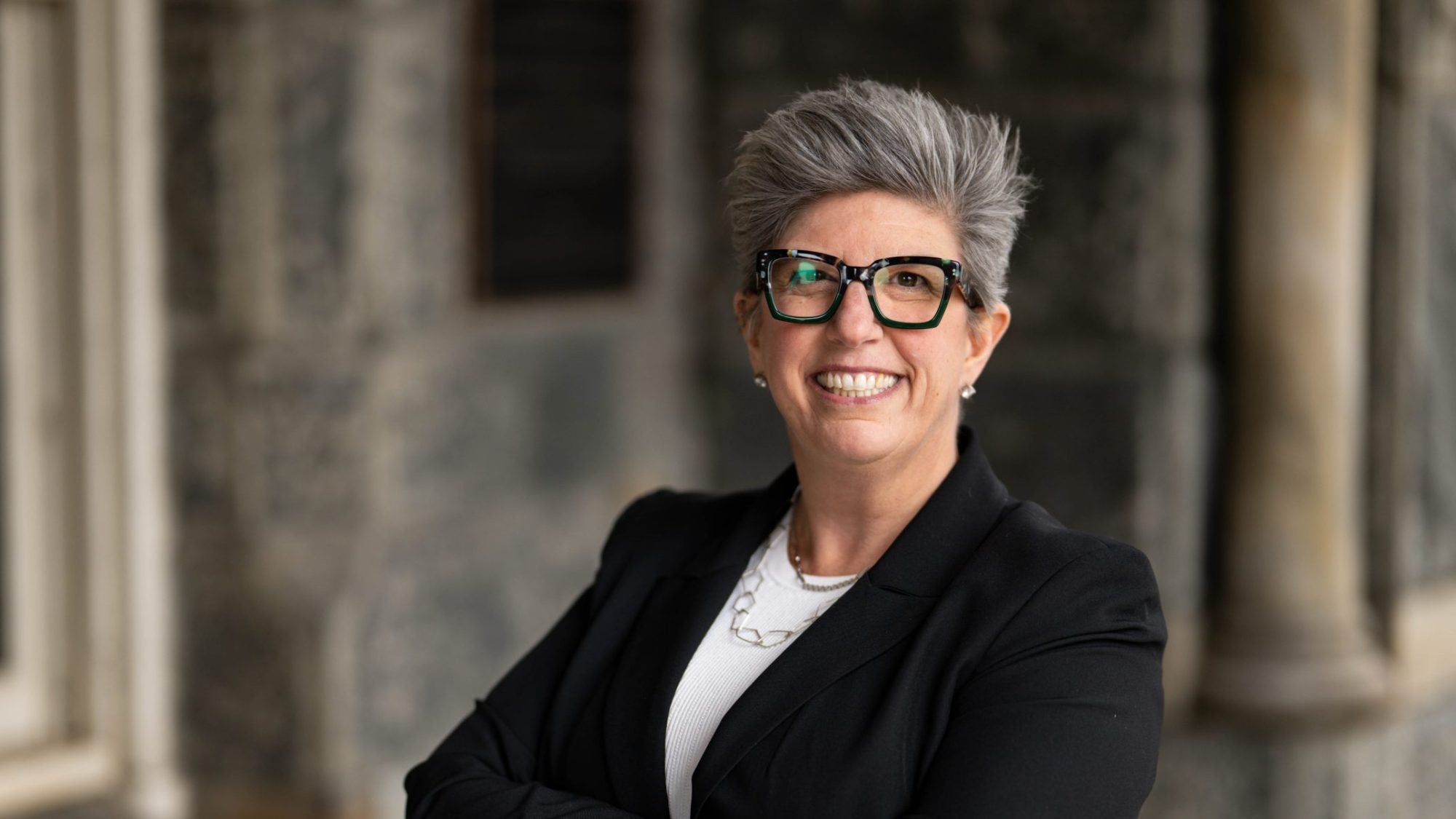
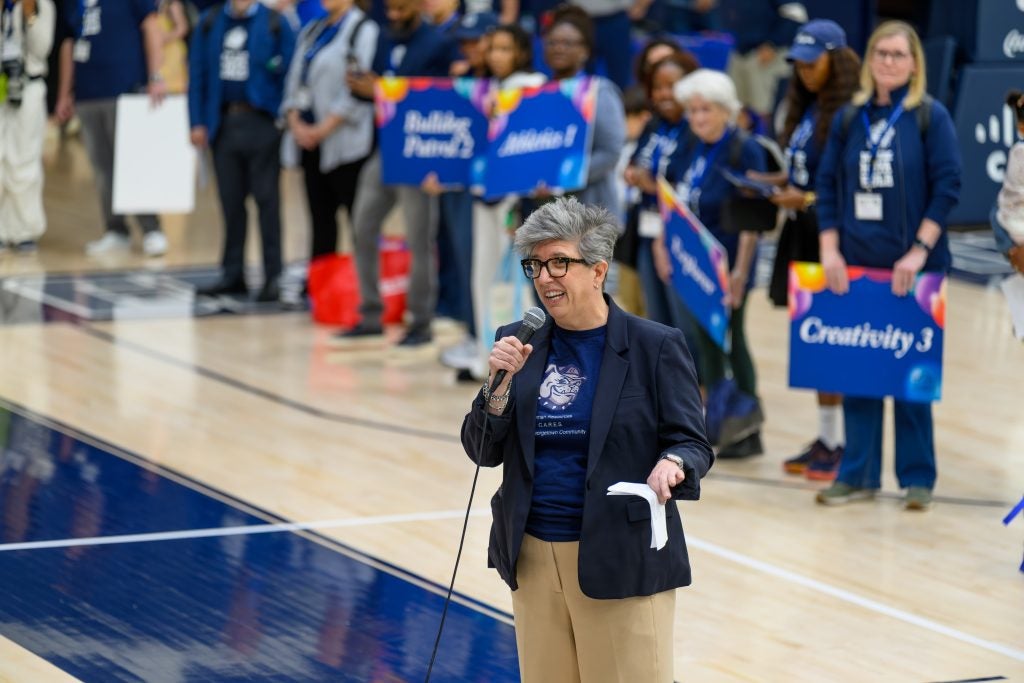
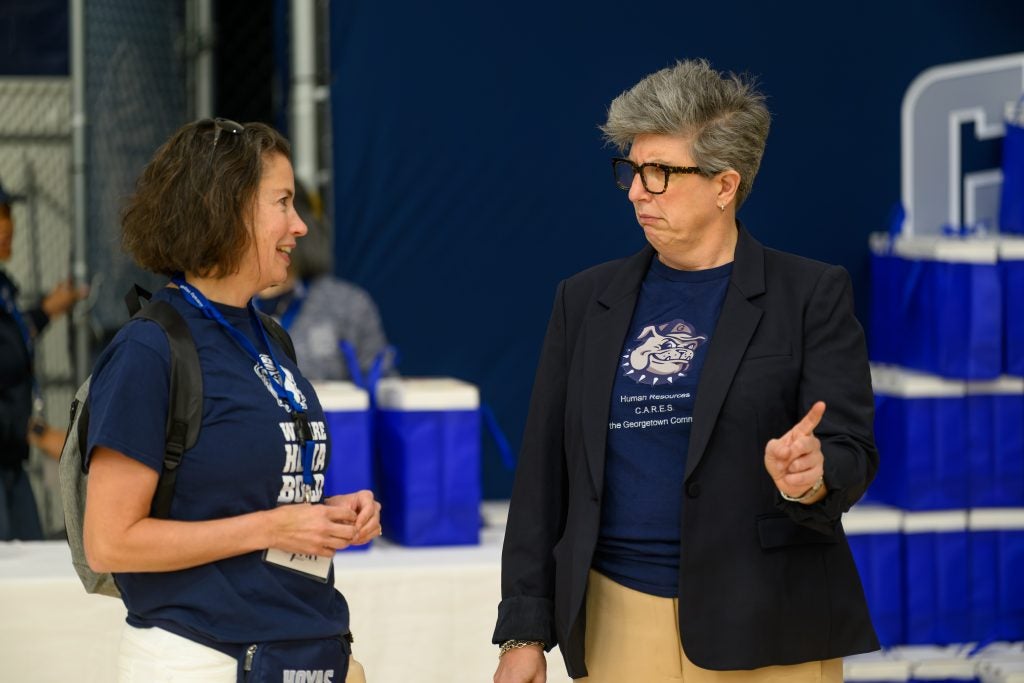
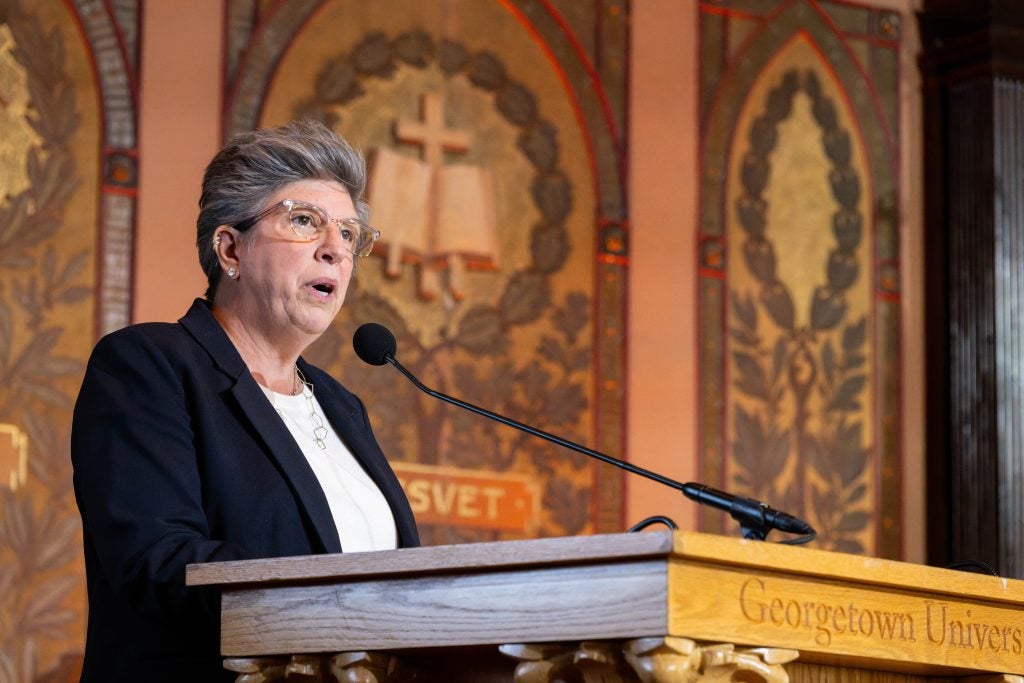
After a nationwide search, Georgetown has appointed Becci Menghini as the university’s vice president and chief human resources officer.
Menghini currently serves as Georgetown’s interim vice president for human resources and chief human resources officer. In her role, she will continue to optimize the university’s human resources services and create strategies that will better serve Georgetown’s workforce.
“I am delighted to continue working with Becci as she leads our efforts to make Georgetown a premier place to work,” said Georgetown Executive Vice President and Chief Operating Officer David Green. “Becci’s decades of experience in higher education make her uniquely qualified to understand the needs and opportunities of our workforce to be more effective in carrying out Georgetown’s mission.”
Prior to Georgetown, Menghini spent nearly 10 years at the University of North Carolina at Chapel Hill, most recently serving as the vice chancellor for human resources and equal opportunity and compliance.
At North Carolina, Menghini led a team of 150 people to oversee the strategic, functional and operational transformation of the university’s workforce. As part of her role, Menghini revamped the university’s hiring practices and cut hiring times in half, helping the university recruit top talent.
Menghini has spent nearly 30 years working in higher education and has previously held roles at the University of Wisconsin-Madison and the University of North Carolina at Greensboro.
“I’m terribly excited to join the Georgetown community permanently. I’ve had the good fortune to audition for the role over these past seven months, and I’ve found the people here to be deeply committed to their work and, importantly, candid about the ways human resources could better support their efforts and development. I love that, in part, because it shows why the work we do is so important,” Menghini said. “I feel lucky to be able to play a small part in supporting those living out Georgetown’s mission in the classroom, in the lab and across campus.
Get to know Menghini, her vision for Georgetown’s workforce and how her first job driving the Oscar Meyer Wienermobile still holds lessons for her career today.
How did you get into higher education?
I went to school as an anthropology major in pre-med. I rode an ambulance all through college. I thought I’d go to medical school and ended up at Wisconsin getting my master’s degree. I started out focused on medical education and realized pretty quickly I was not going to become a doctor. I redirected my program to focus on higher ed and have been here ever since.
You’ve been in higher education for nearly 30 years. What’s motivated you to continue working for universities?
The things that are most valuable are often things that give back to you more than you give. Being able to play a small part, even if it’s peripherally in roles like HR, in educating the next generation of leaders by being able to support the people on the front lines feels like a real gift and opportunity. Even on the hard and complicated days, knowing that I can be a part of recruiting, retaining and developing the university’s greatest asset has been a large part of what keeps me doing the work.
What interested you in working in HR?
I did not go to college hoping I could become an HR vice president. My first job out of college was driving the Oscar Meyer Wienermobile. It’s every parent’s dream. They send you to college, and you come out driving a hot dog.
I made my way through a series of jobs in higher education, mostly built on the foundation of maintaining a natural curiosity for how things work and how organizations run. I started in alumni and development work, and then I moved on to become the chief of staff to three different chancellors at the University of Wisconsin-Madison. Through that work, I learned a little bit about how organizations like this run and how complicated and nuanced places like this are.
I didn’t come up with a traditional HR background. I think the reason I’ve been successful is that I’ve been on the other side. I’ve been the recipient of the university’s HR practices and policies, and I understand the importance of transactional HR, but I also understand the benefits of creating an environment where we put the best people in the best seats and give them the tools to thrive. If we do that, we can be very successful.
You mentioned your first job was driving the Wienermobile. What did that experience teach you?
I like to say I cut the mustard to get that job. Apparently, it’s harder to get a job driving the Wienermobile than it is to get into Harvard Law School. I went to Hot Dog High immediately after college, which is the training program they ran us all through. They then put me on the road. My Wienermobile went up and down the Eastern seaboard, and we auditioned kids to sing the “My Bologna” song or the “Oscar Meyer Wiener Jingle” to be in a Super Bowl commercial. Those were wild days, but one of the things I learned through that process was how to navigate through adversity to find the good in everything.
What drew you to this role at Georgetown?
The opportunity to do tremendous work alongside remarkable people is what ultimately made me throw my hat in the ring for the job permanently.
As I think about the values of Georgetown, they’re my values. It’s okay that I’m not a Jesuit or Catholic. I believe we have a responsibility to care for our people, to care for our community, to ensure that we are continually learning and being innovative in the way we anticipate and engage with the change that’s before us.
What have you learned about Georgetown in your first few months here?
I like to think the interim role has allowed me to get a lay of the land and do some of what they call Jesuit discernment, and not presupposing an outcome. I’ve been pleased to see what an open, welcoming and thoughtful community Georgetown is.
Georgetown is remarkably positioned at a time when higher education is struggling across the country. The opportunity to grow at the Capitol Campus is something that’s unheard of elsewhere. I think there’s a sense of deeply held values that really drive a lot of the work of the community. It’s striking how hard people work and how committed they are to this place, and I’m impressed by the global nature and the sense of purpose that is grounded in our Catholic, Jesuit values.
What’s your vision for human resources at Georgetown?
The university’s greatest asset is our people. There’s no doubt about that. But the university’s mission isn’t about human resources. It’s about educating, teaching, research and service. Our job is to ensure that people have the tools they need to make that work happen and to deliver our work in service to the institution’s larger mission.
There are times when any organization’s HR function is seen as transactional or non-responsive. I want to change that perception to one where we are seen as an office in service to the community and in service to our partners in getting the best people into the best seats to do their best work.