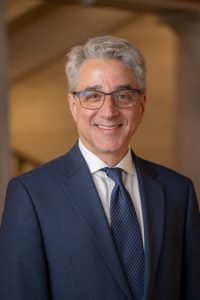
Georgetown has appointed Arthur “Skip” Lupia, a social scientist and research administration leader, as the university’s first chief research officer.
Lupia currently serves as the vice president for research and innovation and Gerald R. Ford Distinguished University Professor at the University of Michigan. In his current role, Lupia leads research efforts across Michigan’s three campuses.
“Human knowledge advances by faculty research and scholarship. Increasingly, research experience for students provides problem-solving skills, key to whatever they choose to do in life,” said Interim President Robert M. Groves. “Skip Lupia is a unique talent, with valued experience from the classroom to the most sophisticated scientific facilities. We are honored by his decision to devote his energy to advancing research at Georgetown.”
As the chief research officer, Lupia will lead research administration across the university, working closely with academic leadership, Georgetown’s research community and its research partners. The new position will bring together the work of the Joint Office of Research Administration, Office of Research Oversight, Office of Human Subject Protections and the Office of Technology Commercialization.
“We’re at a moment where universities need to rethink how they conduct research and justify it, and Georgetown is having the conversation,” Lupia said. “It’s exciting to think that I can help this organization pursue its vital, singular mission more effectively.”
Research as an Instrument for Good
As a researcher, Lupia has always been committed to using research to serve the public good. That commitment stems in part from his own upbringing.
Growing up, Lupia split his time between his parents. He spent his winters on a farm south of Buffalo, New York, and his summers in El Paso, Texas.
In living in these two different communities, which he said people can often overlook, he began to wonder how he could contribute to more places like his hometowns.
“I felt like they had so much to offer,” he said. “How do you help people understand each other so they can work together more effectively? That was a guiding principle. I wanted to do things that mattered to people.”
As the first person in his family to go to a four-year college, Lupia studied economics. He liked the idea of how economics could help solve societal problems, he said.
“It was a great honor and privilege, but I always felt like I wasn’t going to college for me, I was going for everybody,” Lupia said. “Growing up Catholic, I had a role in the world. I didn’t know what it was. But I knew it came with obligations, and college could help expose me to different points of view and figure out what that is.”
Lupia went on to earn his master’s degree and Ph.D. in social science from the California Institute of Technology before joining the faculty at the University of Michigan in 2001.
In his work, Lupia studies how people and organizations make decisions and build trust in complicated political environments.
“I always wanted to publish papers that both made sense in academia but could have another use. The intention was to try and figure out a way where I can help people solve problems,” he said.
While a professor at Michigan, Lupia was asked to advise then-Colombian President Juan Manuel Santos on how to rebuild trust as the country looked for a way to end its civil war. Lupia worked with Santos, who won the Nobel Peace Prize for his approach to peace, on multiple ways the government could demonstrate its trustworthiness while improving programs designed to combat infant mortality, childhood malnutrition and poverty.
“When I’m sitting face-to-face with the leader of a country in the middle of the Western Hemisphere’s longest civil war and he asks for my advice, it is important to respond in ways that reflect the lives at stake,” he said. “It was surreal, but I like being in those situations where I can be genuinely helpful.”
Lupia has continued work on building trust through his leadership of the National Academy of Science, Engineering and Medicine’s Strategic Council for Excellence, Integrity and Trust, which he co-chairs with NASEM president Marcia McNutt. He also recently designed the University of Michigan’s Center for American Dialogue, an innovative outward-facing and outcome-oriented approach to bringing together people with different points of view.
Leading Research Organizations
Lupia’s passion for turning research into actionable insights that help people has been the driving force of his career. Over the last decade, Lupia has focused on increasing the impact of others’ research by leading large research institutions.
In 2018, he was appointed as the assistant director at the National Science Foundation (NSF) , leading its Social, Behavioral, and Economic Sciences Directorate. At NSF, he led efforts to increase political support for social science research tied directly to the public good.
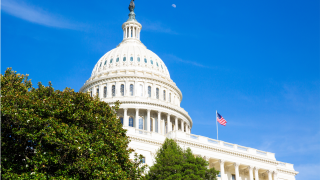
While in DC, he also served as the co-chair on the Subcommittee on Open Science at the White House Office of Science and Technology Policy. At the White House, Lupia oversaw projects to increase data sharing across federal agencies and to make federally funded research products more accessible to the public.
His experience in the nation’s capital allowed him to better understand what research resonates with policymakers and federal agencies looking to fund research projects that serve the average American.
“Research is fundamental to our mission at Georgetown, and Skip brings a potent mix of proven leadership, innovative collaboration, and deep experience with the funding agencies,” said President-elect Eduardo M. Peñalver. “I look forward to working with him as he helps us advance Georgetown’s commitment to producing research that serves the common good.”
Lupia took his insights back to Ann Arbor and has led the University of Michigan’s research administration since 2024. In his current role, he’s designed programs to promote interdisciplinary research and connect researchers with government, nonprofit organizations and the private sector looking to solve acute societal problems.
At Georgetown, he plans to help to better connect faculty with research opportunities that tangibly impact people.
“We have opportunities at universities to do things that really matter, but sometimes we send the federal government things that are technically correct, but they can’t see how it helps people, which makes it harder to defend science budgets,” he said. “We need to articulate the public value of what we’re doing.”
As the head of research at Georgetown, Lupia said it can be easy for universities to think of research and teaching students as two different silos. However, he’s eager to get more students involved in research at Georgetown.
“The world needs universities to be something different now, where they’re all interconnected,” he said. “We’re not just generating knowledge. We’re developing the next generation of innovators. The more we make the research enterprise available to students, the better it is for everybody.”
In his first few months, Lupia is excited to learn more about the ins and outs of research at Georgetown. He’s also interested in better understanding how Georgetown’s Catholic, Jesuit mission animates its research mission to serve the public good.
“I want to help Georgetown be the best version of itself,” Lupia said. “I’m always thinking about the people who will never step foot on a college campus whose lives will depend on how effectively we work together. That’s where it starts for me. Ultimately, I see research as a form of service.”