During the winter of 2024, Professor Gina Green and her research team undertook a messy assignment: picking through restaurants’ trash in Washington, DC.
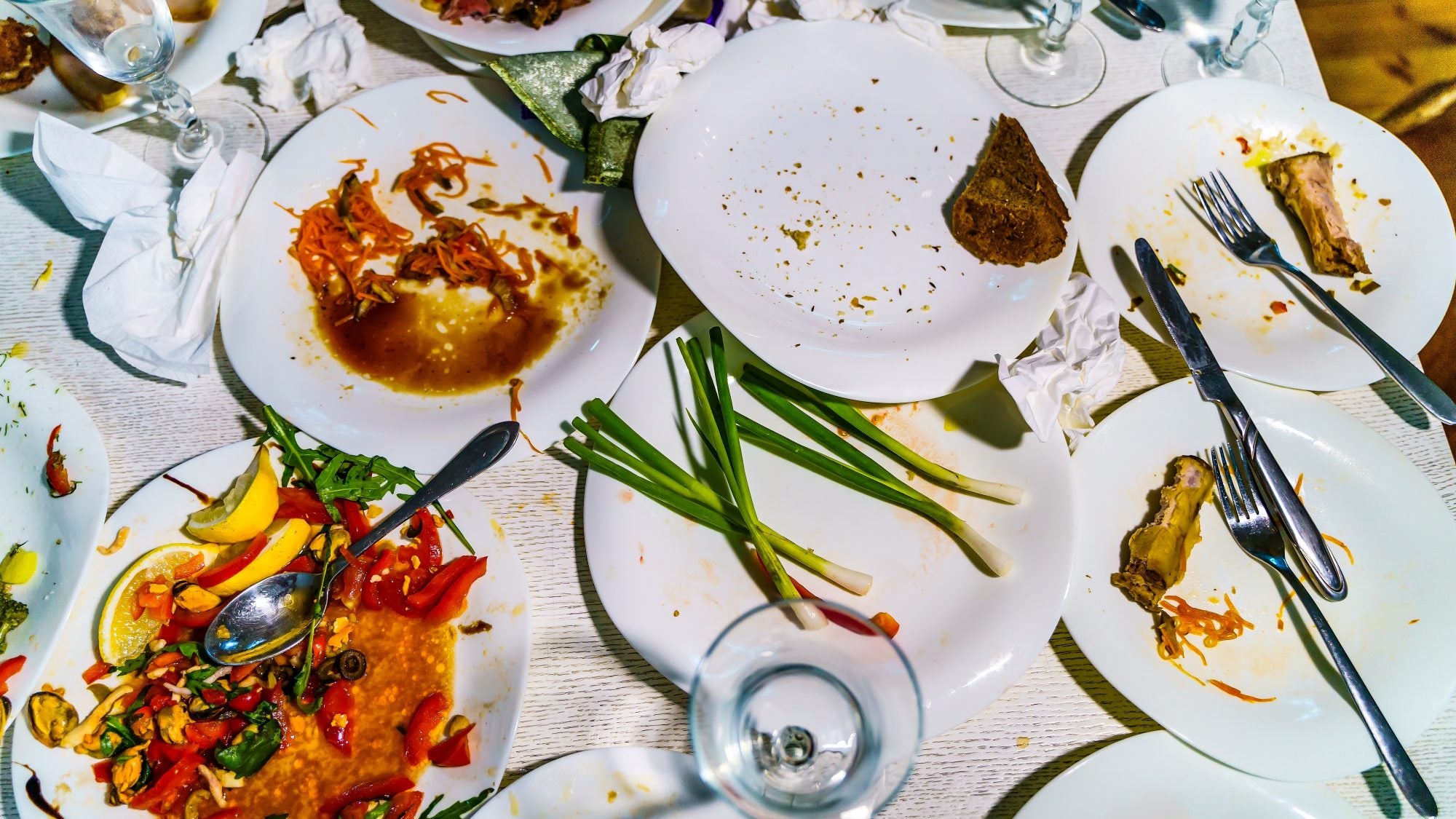
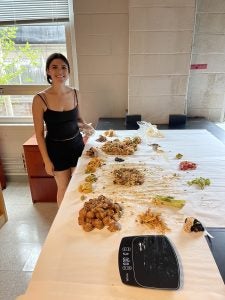
For three days, they sorted through half-eaten omelettes and lettuce slivers, pickles, fries, lime wedge carcasses and drizzly sauce containers. They analyzed every single order and any food that had been thrown out, and weighed the amount.
They wanted to find out what causes the most food waste: food that is thrown out before it reaches diners’ plates or uneaten meals that end up in the trash?
“In the U.S., billions of dollars are wasted in the cultivation of food, the transportation of food and the consumption of food,” said Green, the project lead and a professor in the Earth Commons. “It’s a real global issue. I thought, we’ve got to focus holistically on what is that food waste? What goes into the trash bins?”
In a new paper by Green of Georgetown’s Earth Commons Institute, graduate students, the Portion Balance Coalition, the Menus of Change University Research Collaborative (MCURC), and the food waste nonprofit ReFED, researchers found that food left on plates makes up 70% of total restaurant food waste.
That means those uneaten fries, potatoes and sides of fruit are fueling what amounts to a massive food waste challenge.
In 2023 alone, American restaurants and food service operators generated 12.7 million tons of surplus food, equating to 21 billion meals that were unsold or uneaten, according to a report by ReFed. That tallies up to $162 billion in annual waste-related costs, including food, packaging, labor and disposal.
If restaurants could adjust customers’ portions, that could have real, tangible benefits on their bottom line and on the environment, the paper argues.
“This study reinforces what we’ve long believed at Georgetown’s Portion Balance Coalition: portion strategy sits at the intersection of health, sustainability and business performance,” said Laura Ferry, senior director of the coalition under Georgetown McDonough’s Business for Impact, who worked on the paper. “When restaurants align portion structure with how people are actually eating today, they can reduce waste, control costs and maintain the guest experience.”
Uneaten Meals Drive Food Waste
Over the course of a year, Green and her team of researchers and collaborators surveyed food service industry leaders and interviewed owners of fast casual restaurants in DC.
They found that most restaurants already track back-of-the-house waste, or food that is discarded before it’s served due to over-ordering, spoilage or other preparation or operational issues.
But only 20% of those surveyed monitored what customers actually left on their plates, known as front-of-house waste.
“In our interviews with restaurants, they were like, ‘We got back-of-house. We know we have to manage our back-of-house food supplies.’ They have the software. They have the inventory, they understand their procurement,’” Green said. “But front-of-house is like, ‘Who cares? You bought it. Right?’”
Green’s team analyzed restaurant menus, conducted waste audits, and built a model to understand the amounts being thrown away and which menu items were and weren’t selling. Here’s what they found.
Starches and Sides Are Thrown Away the Most

Bread and fries dominate the trash bin.
Starches like rice, potatoes and chips fill up plates and are often uneaten and tossed, Green’s team found. As are sides of fruit, vegetables and dips.
“You want to fill your plates, so you look like you’re getting good value for your meal,” Green said. “So what’s the easiest thing to fill your plate? French fries and bread or rice. We saw a lot of fruit wasted as well. There’s a high cost to that, too, because fruit is more expensive than, say, potatoes. But potatoes are not cheap either.”
These costs add up, Andrea Morante (G’25), a graduate student in the Business Analytics program in the School of Business who worked on the project, found. She built a model to show the results.
“We were able to say, ‘On average for every potato sold, this is how much is wasted.’ It’s a lot of money that they are not effectively using for other things,” she said. “It’s helping businesses spend their money in a way that’s more effective, while also helping the planet and providing more options for health-conscious consumers.”
High-Calorie Meals Add Up 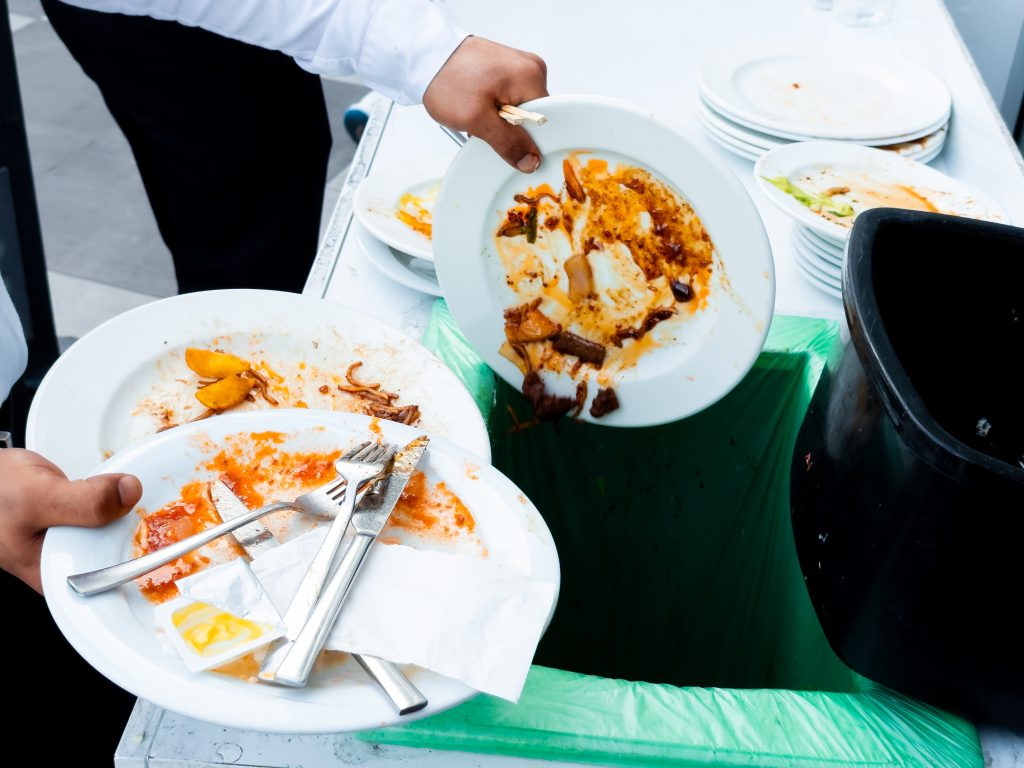
In auditing the restaurants’ waste, Green’s team found that large, high-calorie meals — 800-1,000+ calories — produced more waste than lighter, more customizable options (400-500 calories).
In a changing consumer landscape, especially as an increasing number of diners take GLP-1 medications and others want customizable portion sizes, restaurants can adjust, the paper notes.
“Most restaurant teams have yet to embrace portion customization for adult dinners, representing a missed opportunity to meet evolving consumer preferences and capture the growing market of health-conscious consumers,” Green said.
Adjustable Portions Can Help Reduce Waste
In their research, 43% of the 70 major restaurant chains analyzed offered reduced or customizable portion options.
“Small portion options are not available in most restaurants beyond the kids’ menus,” said global health graduate student Shreyaa Venkat (H’24, G’25), who also worked on the study.