Category: Student Experience
Title: Students Get Hands-on Diplomatic Experience at Embassies in Chile, DC
Date Published: August 20, 2026

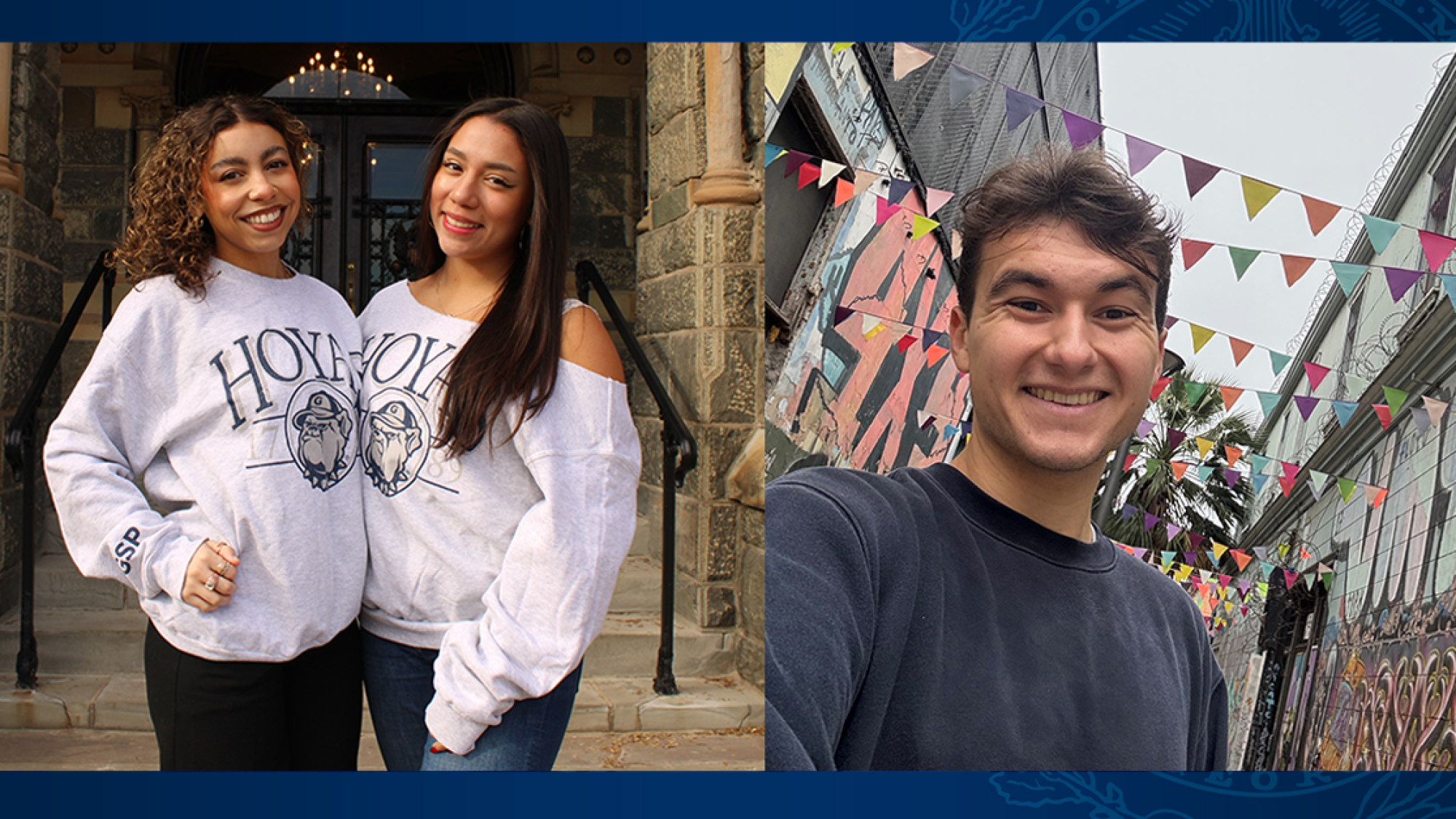
TJ Barczak (SFS’29) worked in an embassy this summer, about 5,000 miles south of Washington, DC.
Barczak interned in the U.S. Commercial Service at the American embassy in Santiago, Chile, an internship he found while batting around ideas with a coworker at The Corp.
As a sophomore in Georgetown’s Business and Global Affairs program, Barczak thought the role checked a lot of boxes: applying his Spanish skills and international trade learnings in a foreign country.
So at the end of his first year at Georgetown, he packed his bags and moved to Santiago for the summer.
“When I landed in Santiago, bright and early at 7 a.m., it was a shock,” he said. “In Chile, the amount of people who speak the English language is very few. I had to change my brain very quickly. It was a matter of, ‘Let’s go. Get ready.”
Barczak, who has studied Spanish since grade school, was off and running. At the U.S. embassy, he rubbed shoulders with foreign service officers and local specialists working in international trade and diplomacy. He tracked down potential trade leads in Chile’s AI sector and met with U.S. companies to learn more about their products and where they might fit in the Chilean market.
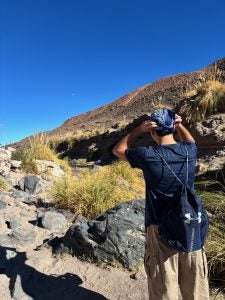
Along the way, he gained experience working in government – both in how to communicate and how to write – which he plans to bring back with him to Georgetown. He also got to see firsthand how business and global affairs intertwine, and the different ways diplomacy manifests outside closed-door meetings.
“Every day I immersed myself into the nuances of the Chilean market and the world of trade, gaining a better understanding of how diplomacy is not only done in the negotiation room,” he wrote on his LinkedIn. “I am excited and inspired to continue investigating trade as diplomacy in my studies and future career.”
Outside the office, Barczak immersed himself in Chilean culture. He lived in a one-bedroom apartment, supported by the School of Foreign Service’s BSFS Summer Award, and explored Chile’s different barrios, visiting museums, parks and restaurants.
“I’ve described it as the most formative experience of my life so far,” he said. “I learned so much about how I operate alone and how I operate with others outside of a school environment. I’ve learned so many lessons that I’ll take away from Santiago that will continue to be fruitful in the upcoming years at Georgetown and beyond.”
On Call for the Mexican Embassy
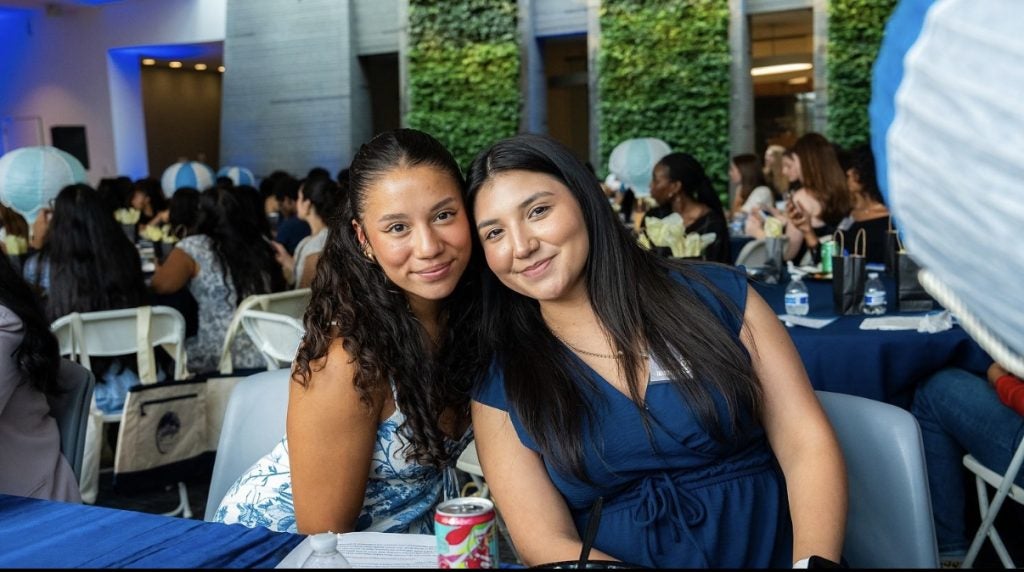
This summer, Sabrina Gomez (SFS’27) walked past the glitzy boutiques and hotels on Georgetown’s M St. and into an embassy office.
At her cubicle, she’d pick up the phone.
“You never knew what kind of call was going to come in,” she said.
It could be a student detained and needing help. Or a Mexican national in prison requesting medical assistance. Or an ICE agent.
Gomez interned at the Embassy of Mexico’s consular office, where she helped connect Mexican nationals detained or incarcerated with legal services. The work was difficult – and often heavy. Reports, which Gomez wrote up after calls, sometimes involved sexual assault, domestic violence and incest.
But those weren’t the hardest cases she worked on.
“The hardest cases were those that resembled maybe friends or family, especially understanding that a piece of paper is the only thing that separates me from this other human’s entire life experience.”
Gomez is a first-generation Mexican American who grew up in a predominantly Mexican community in the northwest suburbs of Chicago, Illinois. At Georgetown, she sought out clubs and communities that connected her to her culture: Ballet Folklorico Mexicano de Georgetown; the Latin American Student Association; the Georgetown Scholars Program.
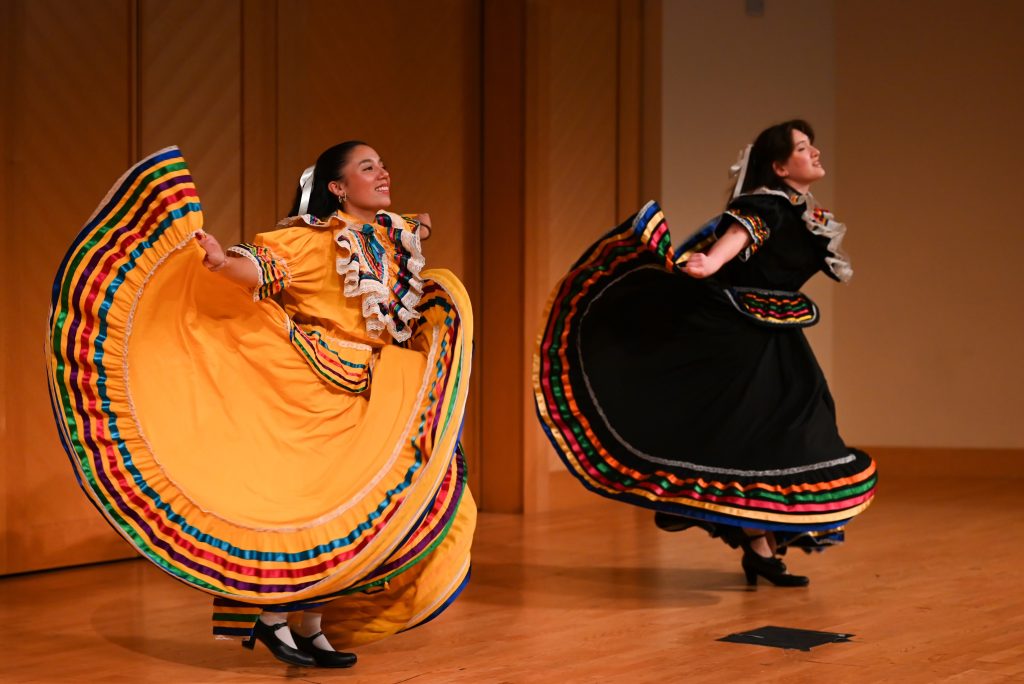
Last fall, she met the head of the Mexican consular office at a Georgetown Hispanic Heritage Month event she was performing in, and later applied to its summer internship. As an intern, she’d often translate conversations between consular officials and ICE agents, or for Mexican nationals themselves.
She learned to approach calls with empathy and patience, even when they hit close to home or made her angry.
“As I’m talking to these agents, I’m always imagining the Mexican nationals,” she said. “They’re a man or woman with a family. They’re somebody’s son or daughter. I always made sure to reinforce [words like] petitioner, resident of Mexico, this individual, because framing words, imagery and descriptions, especially in these legal cases, are incredibly important to deter unjust stereotyping.
“This is where the cura personalis that I learned at Georgetown truly came in, in understanding individuals as their whole being, as the whole person.”
The internship helped her better understand the legal landscapes in the U.S. and Mexico. It also reignited her passion to give back to underserved Latino communities, she said, whether it’s through mentoring, dance, research or her career interest in law.
“It helped me realize the way that I can tangibly help Mexican nationals every single day, but then also begin to theorize on how I can work on more upstream approaches that will survive long after I have graduated from Georgetown,” she said.