Ella Camp (C’26) has wanted to pursue environmental science for most of her life. She grew up in the outdoors and loved her family’s annual camping trips around her home state of Maryland.
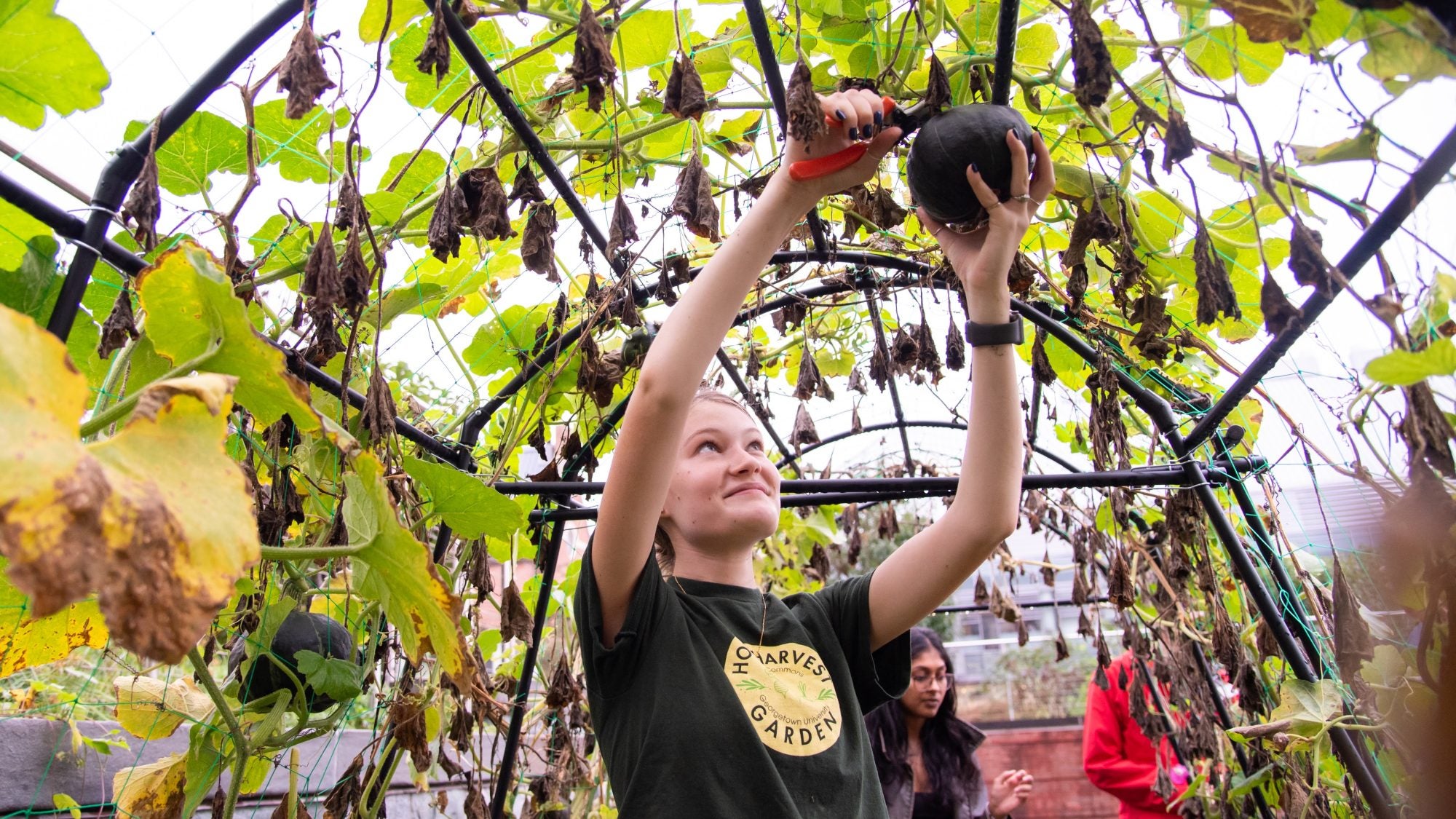
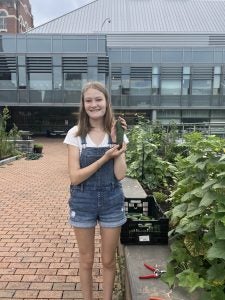
At Georgetown, she studies environmental biology and has conducted research in the Ries Lab studying butterflies. She also worked with the Hoya Harvest Garden, planting and harvesting crops and developing a seed-saving project to collect seeds to plant in future seasons.
But after a few years of focusing on science, Camp realized she didn’t want to pursue a career in research and had rarely stepped outside of her comfort zone in science.
She picked up a business minor to round out her interest in sustainability. As a senior, she wanted to explore a new path in policy, which she found through the Earth Commons Institute.
Camp is part of the inaugural cohort of the Environmental Science Policy Fellowship. The Earth Commons program enables juniors and seniors studying science, technology, engineering and mathematics to study public policy for one semester at the Capitol Campus and complete an internship.
For Camp, the fellowship was an opportunity to learn about how science can make meaningful change through policy.
“With everything going on in the environment, it has been easy to feel hopeless at times, so being able to think that I can actually do something, no matter how small, at the business level or more of the federal level gives me more hope,” she said.
When Science Meets Policy
In lab work, field experiments and science classes, STEM students can often exist in a bubble, said Anne Rosenwald, a biology professor in the College of Arts & Sciences who directs the fellowship program.
Students don’t dive deep into policy in most biology classes. The Earth Commons fellowship connects the dots between how a scientific breakthrough can spur policy changes, she said.
“It’s certainly possible to be a scientist and just do your science,” Rosenwald said. “The students who do this program get to see how policy works. We can do the greatest experiment in the world and talk about it with other scientists, but if it doesn’t exist in the real world to help people or the planet, then sometimes it’s just an exercise.”
In the fellowship, students take two public policy courses: Shaping National Environmental Science Policy and Current Events in Environmental Science Policy. Students have access to several electives on the Capitol Campus and can also enroll in classes on the Hilltop Campus.
Camp said her two policy classes sharpened her critical reading skills and taught her the complexities of implementing policy and communicating science to policymakers.
“It’s opened my eyes to what science policy is and how having the knowledge of what the science says might not translate well to policy,” she said. “You can have all the evidence you need, but the support for policy solutions might not be there, and people might argue over how to best solve the issue at hand.”
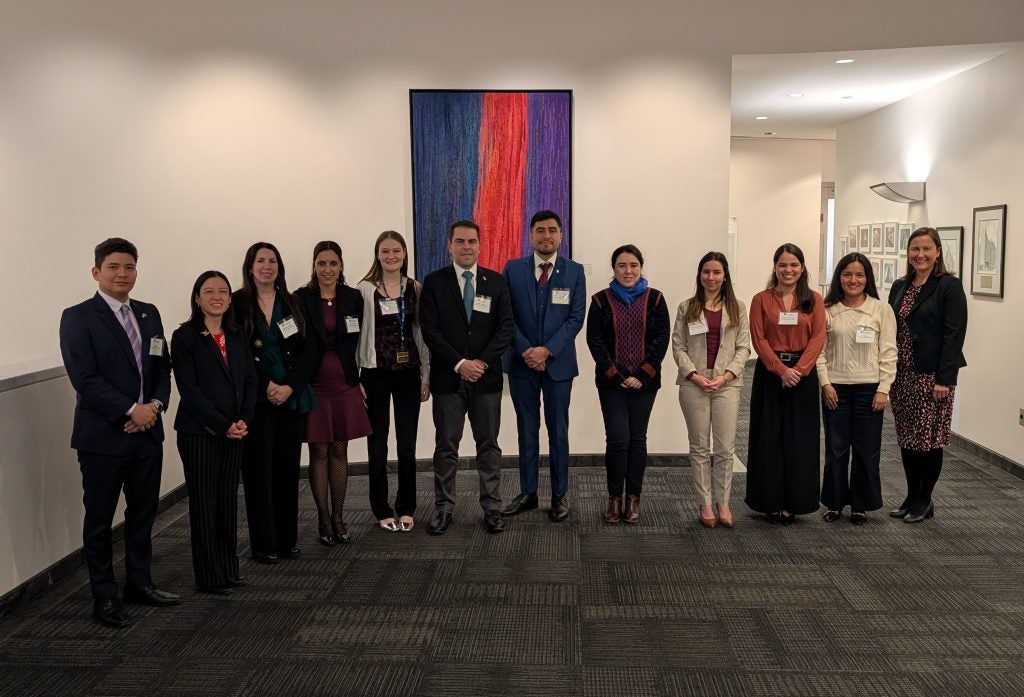
As part of one of her classes, Camp created a campaign advocating for representatives from across the aisle to join the Congressional Extreme Heat Caucus. She organized a virtual meeting with the staff of her congressional representative. She also designed a one-pager and visited Capitol Hill with her classmates to lobby congressional staff.
“That’s definitely not something I thought I would do during my time here, but it’s been interesting to learn the process of building up support for addressing an issue and how easy it is to get out there and try to make meaningful change through talking to congressional offices.”
Living and Interning in Downtown DC
Camp almost chose not to enroll in the fellowship. She was hesitant to spend part of her senior year away from her friends on the Hilltop.
“I decided to give it a chance, especially because I thought being able to have an internship during the school year and the proximity of the Capitol Campus to it would be great,” she said. “Living down here has been amazing. It’s been super easy, and I don’t feel disconnected at all.”
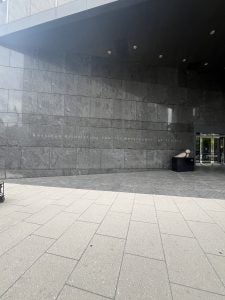
As part of the program, students complete an internship for academic credit. This semester, Camp is interning with the Center for Science Diplomacy at the American Association for the Advancement of Science (AAAS). She usually walks 20 minutes from the Capitol Campus to her internship but also takes the bus on colder days.
In her role, Camp prepares AAAS leadership for their international engagements by drafting memos on a country’s politics and relationship with the U.S. She also helped prepare interview questions for an event with a foreign ambassador and edited articles for the online journal Science & Diplomacy.
Camp said her experience in the fellowship and internship has convinced her to pursue a career in sustainability policy or business.
“I love the people I work with, and it’s opened my eyes to the possibilities of what can be done in this field,” she said. “I’ve learned a lot about myself, and this is definitely a route I could see myself going down.”
Students in the fellowship also receive the same benefits as students in the Capitol Applied Learning Labs (CALL) program, such as fully funded transportation on the Metro, professional development funds, networking programs and two community lunches every week.
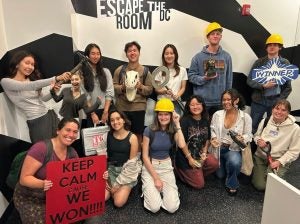
While Camp worried about missing her friends on the Hilltop, she said she found a new community at 55 H St., where the residence hall staff hosts regular community events. Students in the fellowship also regularly joined events with students in the environment and sustainability major, including excursions to Capitol Hill, an ice cream social and an escape room event.
Currently, Earth Commons plans to host another cohort of the policy fellowship in spring 2027. Applications for the next cohort will be available in the fall 2026.