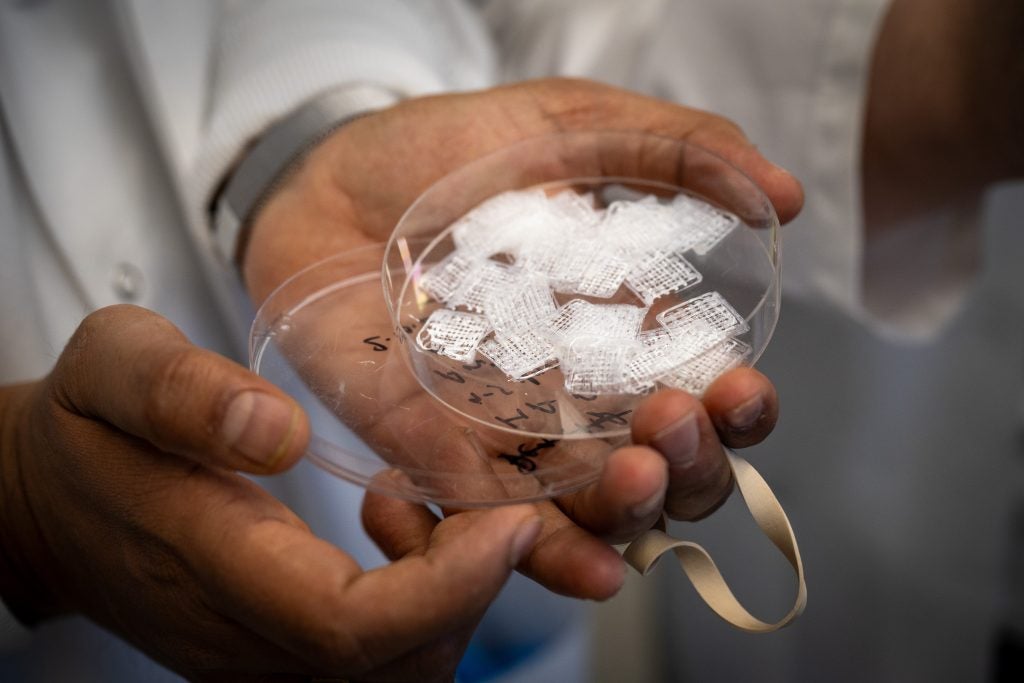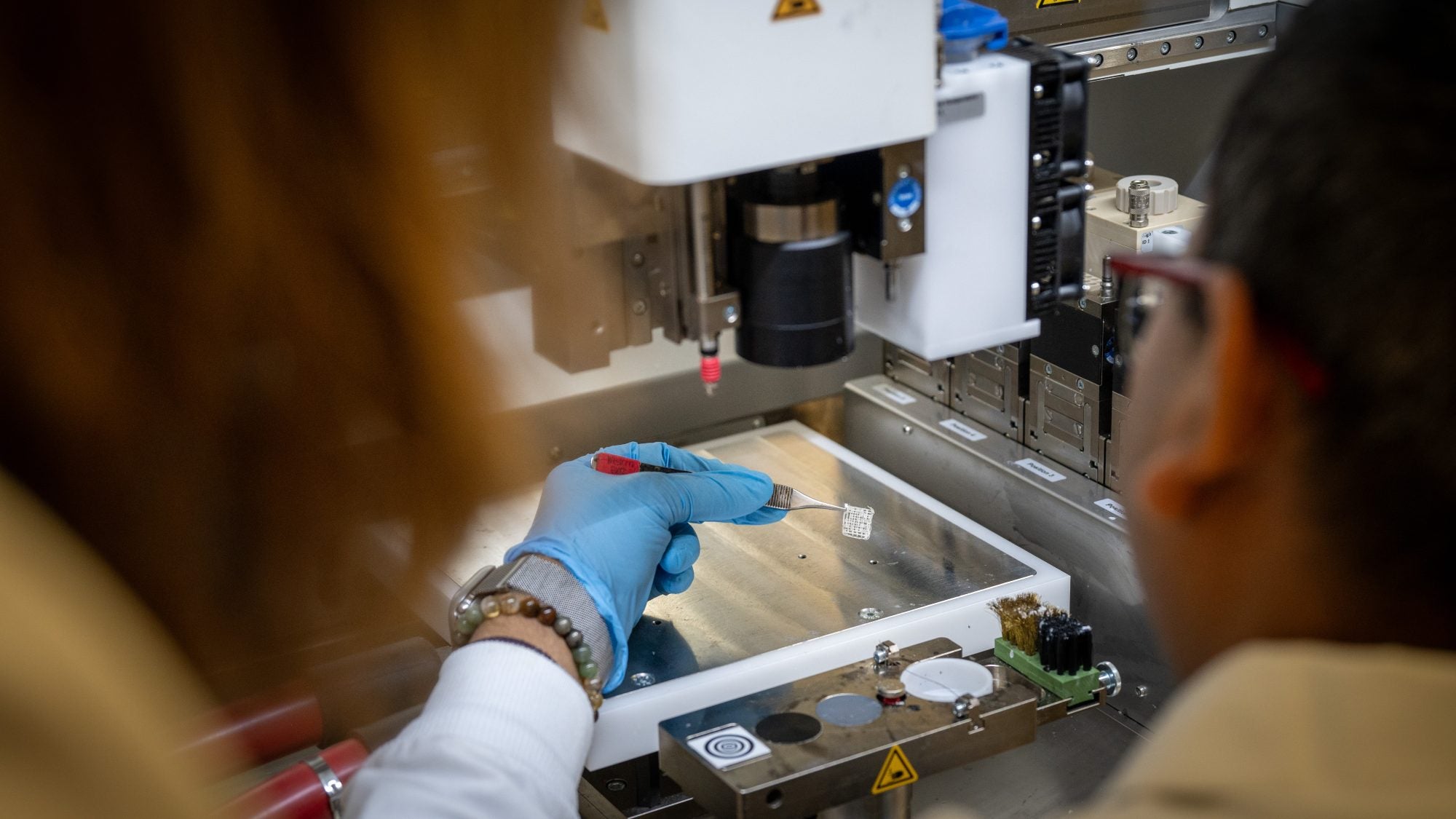
Bone grafts and replacements are common medical procedures performed to treat patients with chronic conditions or serious injuries.
Around the world, millions of bone graft procedures occur every year, from dental implants to hip replacements and spinal fusions.
However, replacing human bones with artificial materials can introduce a host of complications: infections, nerve damage, bleeding and outright rejection by the body.
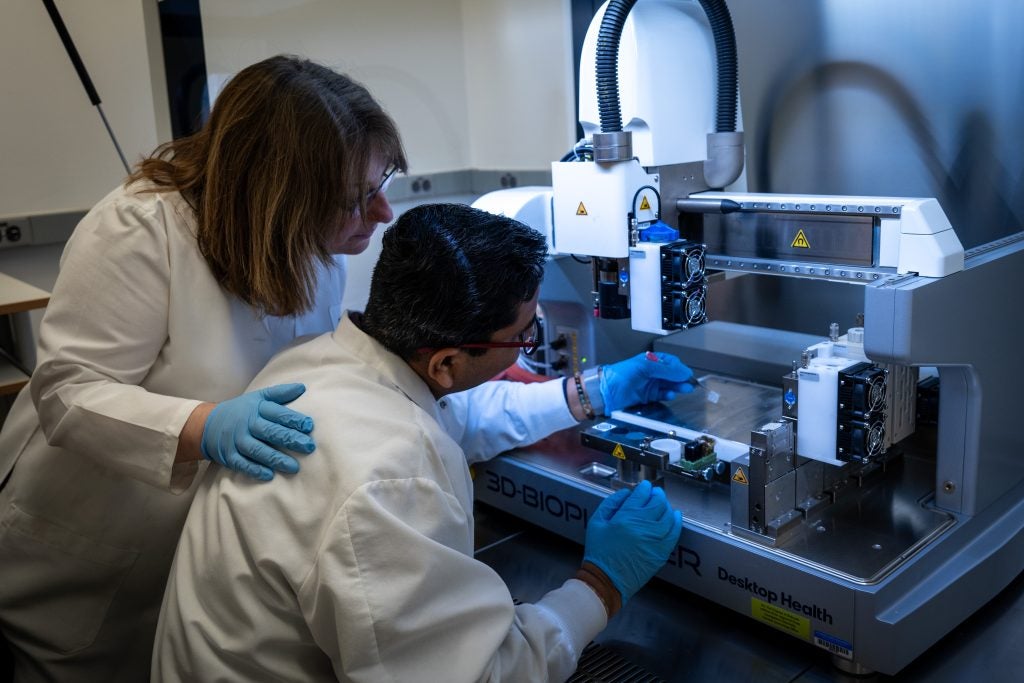
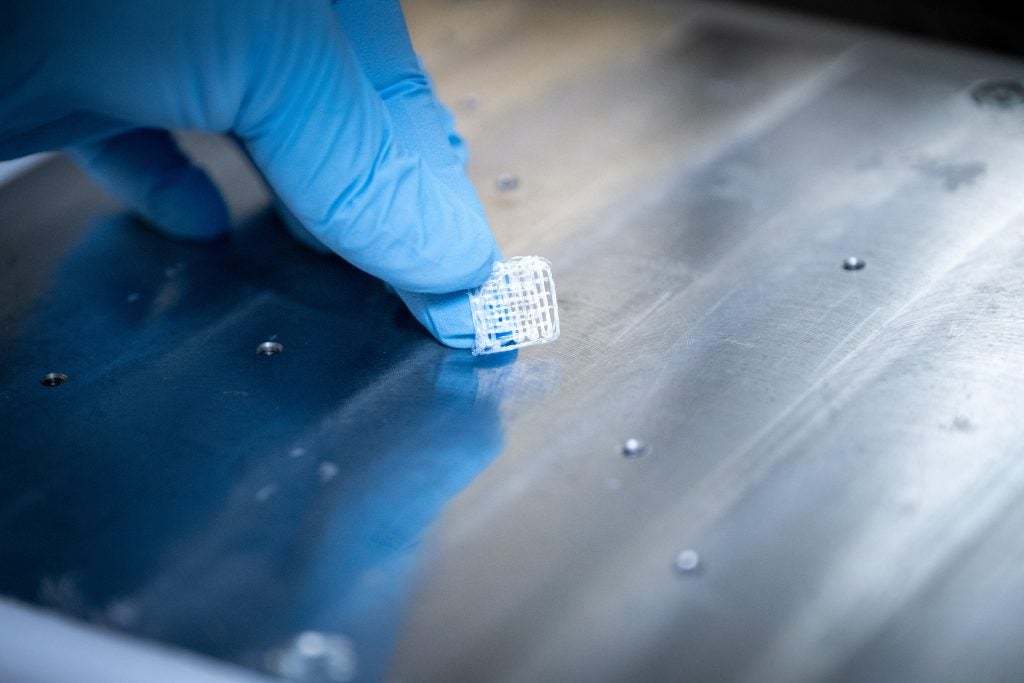
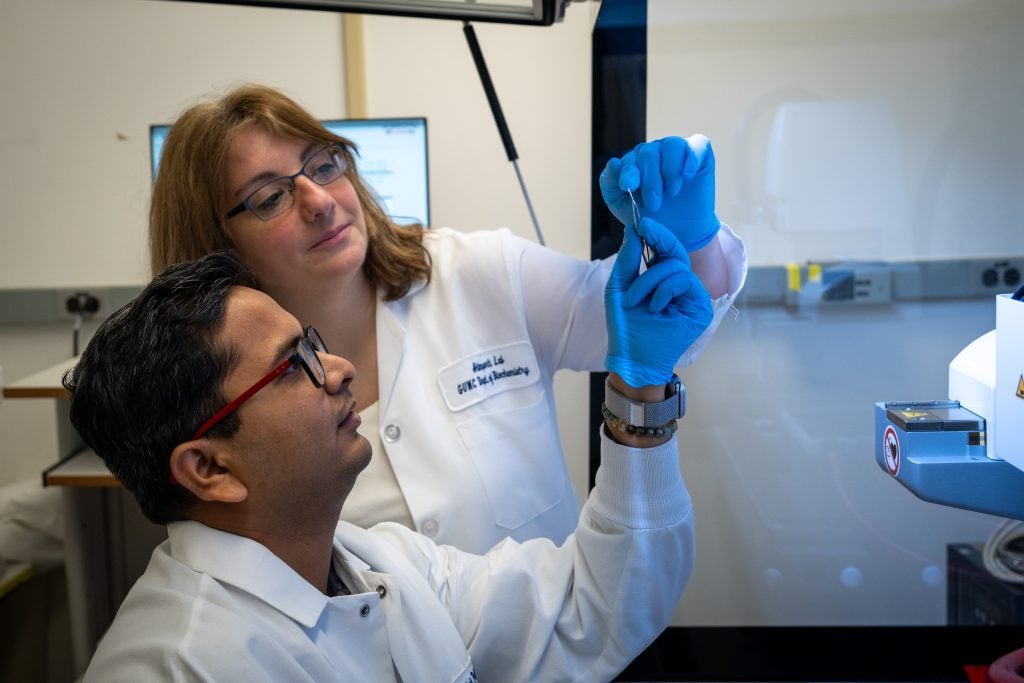
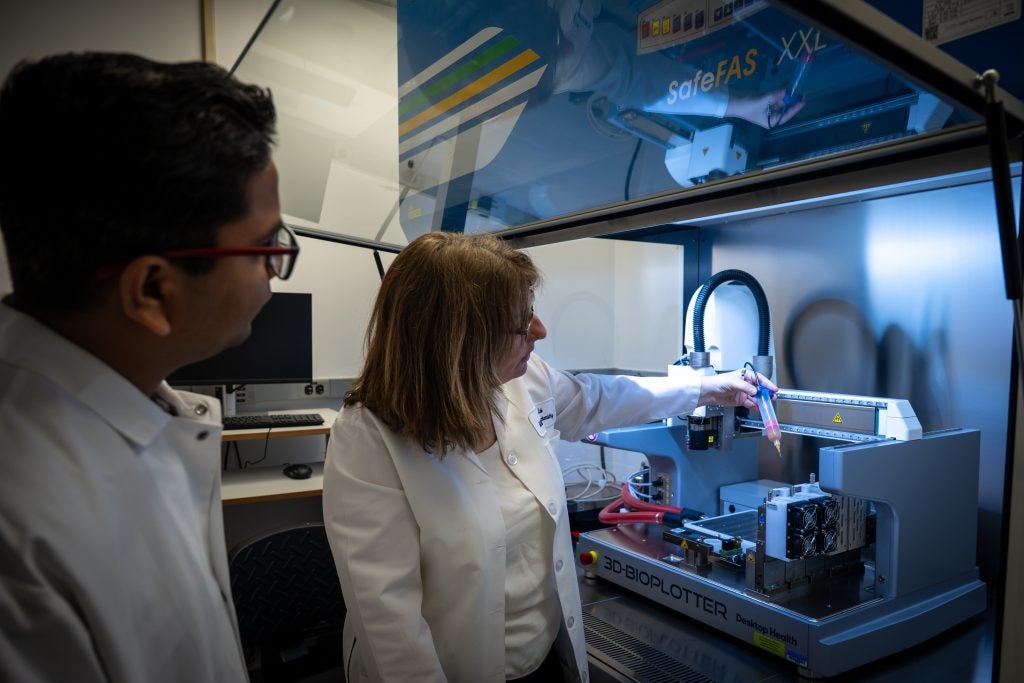
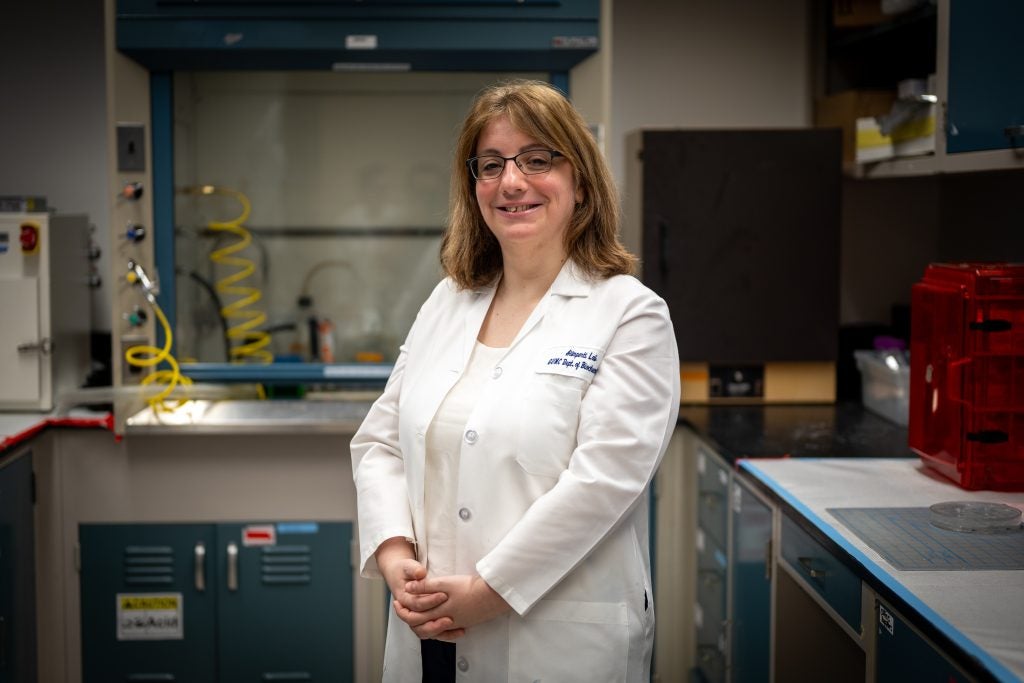
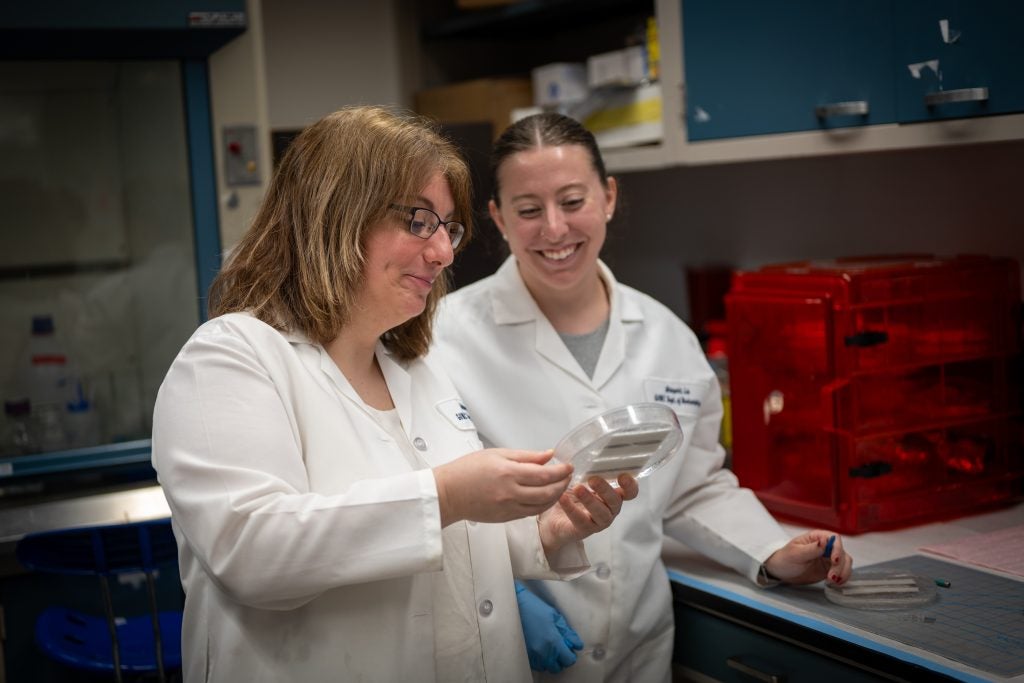
At Georgetown, Styliani Alimperti, associate professor of biochemistry and molecular and cellular biology in the School of Medicine, is developing 3D-printed bone grafts based on natural materials that could make procedures safer and more effective.
“The process of making the body regenerate its own tissue is very challenging because of aging, injury and other factors,” Alimperti said. “Engineering tissue parts or whole organs that are closer to the native ones with the proper structures and cells will help the regeneration and restoration of the tissue.”
The Challenge of Current Solutions to Bone Replacements
Currently, bone grafts are often made by taking existing bones from a patient’s or donor’s body to create new bone implants. The practice can cause significant pain, infections and new fractures, and is not always successful, Alimperti said.
Metal and other synthetic materials are also common components in bone grafts. These can include screws, plates and other parts to help bind bone grafts to the body’s natural bones.
However, metal implants can more easily cause infections and lead to rejection by the body, Alimperti said. They can also cause inflammation at the site of the implant and fractures along other parts of the bone.
“Metal is not something we have in our system. Bones are not made out of metal, so the successful integration between bone and metal is very low and blocks the regeneration capacity of the bone,” Alimperti said.
A Better Way to Create Bone Grafts
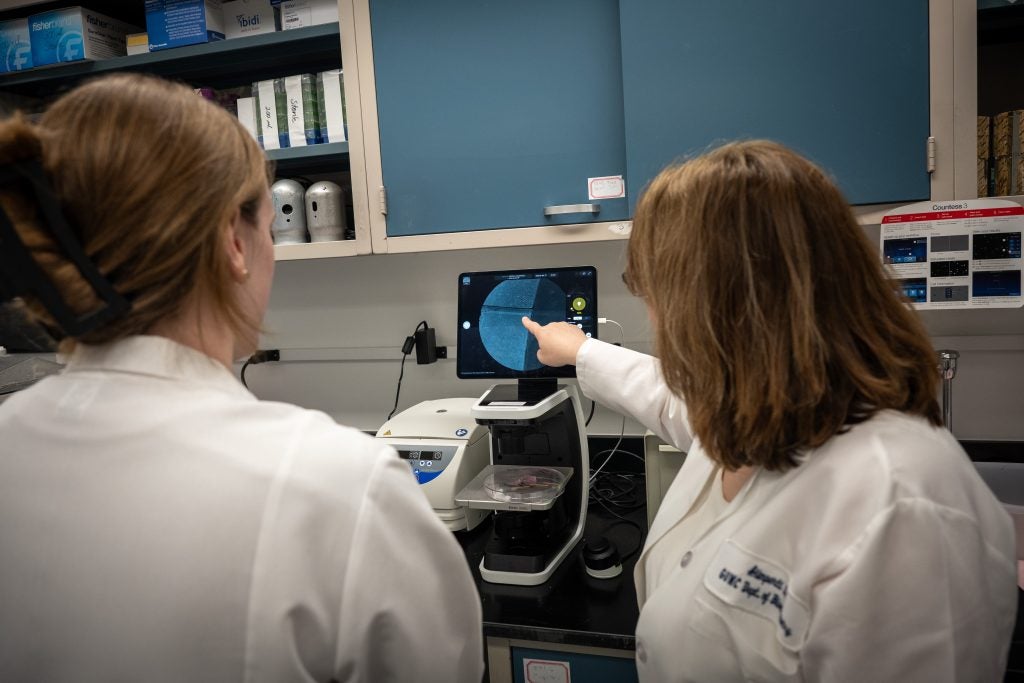
Alimperti’s lab is focused on using more natural materials to produce 3D-printed bone grafts.
Her bone grafts are based on pectin. The natural substance is commonly found in dietary fiber, especially in fruits like apples and citrus peels. Pectin is naturally processed in the digestive tract and provides a gel-like or thickening substance, making it a common ingredient in foods like jams, jellies and yogurts.
“Pectin is compatible. It’s something good. It doesn’t harm our body,” Alimperti said. “It gives us the ability to challenge other methods that use toxic materials or synthetic polymers.”
Using pectin in bone grafts also has other advantages, like the ability to 3D print the grafts at room temperature. Other synthetic materials often require special conditions — extreme temperatures or specific printing materials — to be successful, Alimperti said.
Pectin also offers a more porous substance that encourages more optimal nutrient flow for the cells in the graft, increasing the chances of a successful procedure.