Exploring Faith as a Non-Religious Hoya
Mariela Cruz-Suarez (SFS’28)
Despite not identifying as a religious person, I attended Loyola, a first-year Catholic retreat, during my first year. I wanted to go because I was both intrigued by the religious literature in my Problem of God class and eager to escape campus.
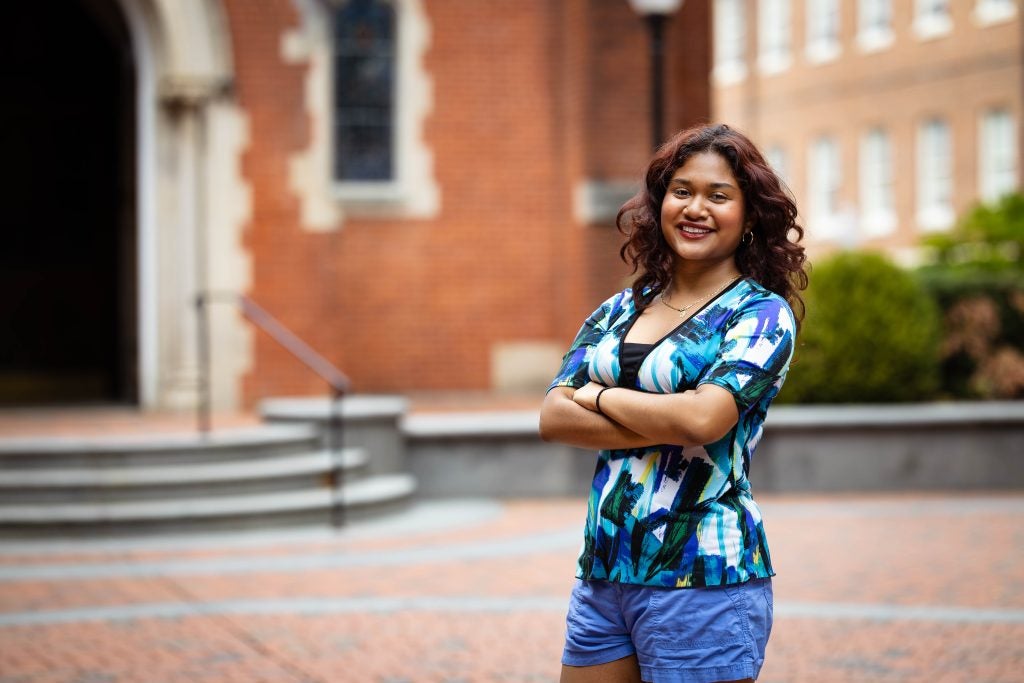 I wasn’t enjoying my college experience and was seriously considering transferring or taking a leave of absence. I was going through a downward spiral, and I felt a deep sense of despair.
One evening, while sitting at the ICC steps, a ladybug landed in my hair. I had always heard that ladybugs symbolized good luck, and in that moment, perhaps out of desperation, I took it as a sign that I would be okay. For the first time in weeks, I felt a sense of relief.
Fast forward to the Loyola retreat. I was introduced to the idea of “seeing God in all things.” One retreat leader shared that her mother likes to explain this as “God wink moments,” instances when someone says what you needed to hear or when something catches your attention in a meaningful way.
During a small group discussion, I shared that I liked this way of framing God. I initially thought that to believe in Him, I needed to literally see Him. This new idea made Him feel more approachable and less like a distant figure I could never encounter. During a small group discussion, I shared how meaningful this realization felt to me.
As the next person began to speak, everyone suddenly paused and pointed toward the coffee table in the center of the room. There was a ladybug.
I was stunned.
I didn’t say anything, but I felt everything. In that moment, I took it as confirmation that I would truly be okay, and that perhaps God was there with me that day.
After the retreat, I continued to encounter ladybugs, sometimes physically or as images, at moments when I felt particularly anxious or uncertain.
I continue to see ladybugs during difficult moments and I take them as reassurance that I will be okay.
Looking back, I can see how much has changed. I am no longer in that same place of despair. I feel more secure in who I am and more hopeful about where I am going.
I still don’t consider myself a religious person in the traditional sense. However, Georgetown has shaped how I understand spirituality. Through its emphasis on reflection, open dialogue and cura personalis (care of the whole person), I’ve learned to explore questions of meaning without needing definitive answers. The people I’ve encountered have shown me that uncertainty is something to sit with, not resolve immediately.
Because of that, I have come to believe that I have a relationship with something greater than myself, even if I cannot fully define it. Maybe that is God or something else. I am still unsure. What matters more to me now is not having a precise definition, but recognizing the feeling of reassurance that I am not navigating life entirely on my own.
And more often than not, when I take the time to notice, I find it.
Living Out Judaism and Exploring Interfaith Dialogue
Sam Perlman (C’27)
Here at Georgetown, I have served on the board of the Jewish Student Association (JSA) for three consecutive years, interned for the rabbi through the Office of Jewish Life and lived in the Jewish Living Learning Community, Bayit. However, before Georgetown, I went to a very competitive, secular high school with no faith-based identity.
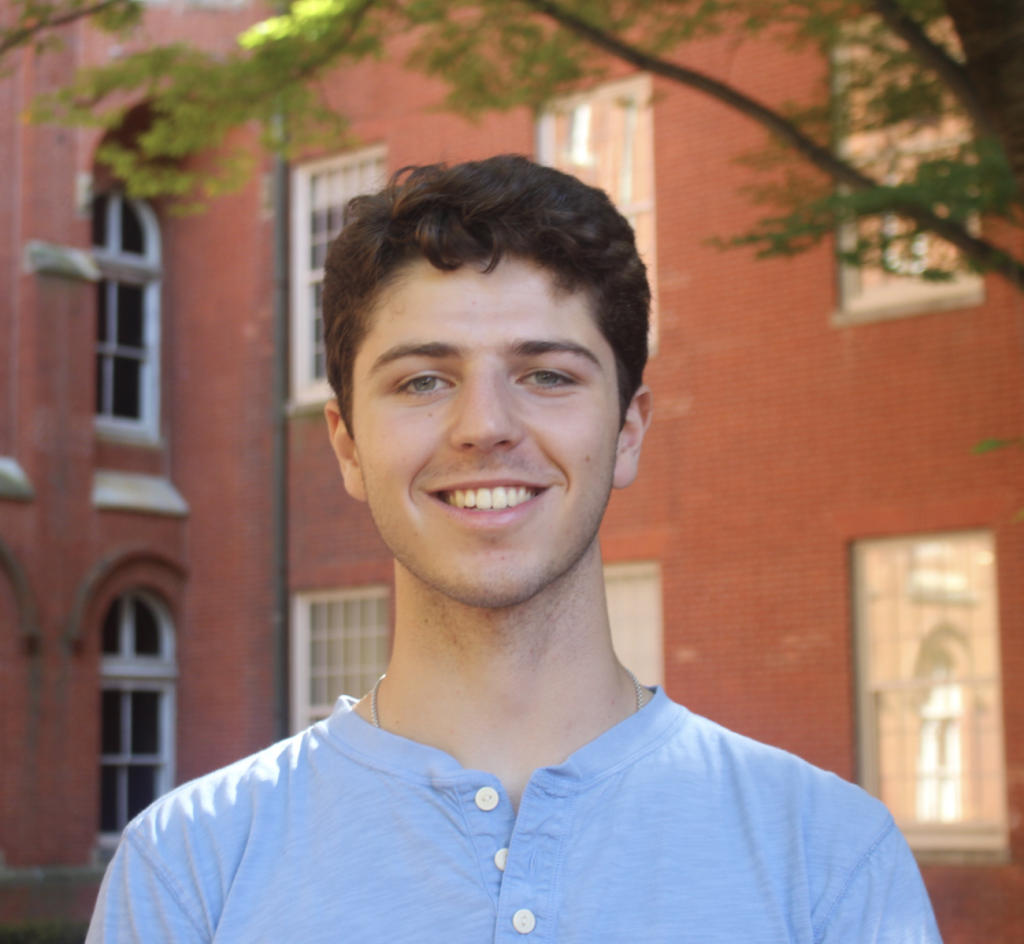 In my first days at Georgetown, I became aware of the exceptional religious and spiritual growth Georgetown would offer me. During New Student Orientation, I attended a panel about the Jesuit values, featuring ministers from different faith traditions. During this panel, I realized that, having been admitted to Georgetown, it is a given that we students are academically high-achieving, but the reason we are at Georgetown is not only to continue advancing as young professionals but also to grow as people.
With one of the most expansive campus ministries in the country, multiple sacred spaces on campus and the Jesuit values permeating through everything about Georgetown, the university intertwines academic excellence with internal, spiritual and interpersonal growth.
That Jesuit values orientation panel also showed me that engaging with faith is not only encouraged but also cool here. In addition to high student attendance at religious services and community events, this manifests in frequent impromptu conversations where I’ll find myself answering genuine questions about Judaism and asking friends about their faiths. I bring non-Jewish friends to Shabbat services here on campus and engage with interfaith events.
For all of these reasons, the Jesuit values are the biggest reason I chose to attend Georgetown and why I continue to love it. This may be surprising, given that I am so heavily involved with Jewish Life, but the Jesuit values, to me, are Latinized versions of the universal human values I grew up learning in Hebrew. They are about academic and spiritual learning, engaging in interfaith dialogue and working in the service of something bigger than us. As a campus of 8,000 undergraduates living by these ideals, engaging with faith and approaching religion with genuine curiosity, Georgetown is an incredibly powerful place that has afforded me incomparable growth and opportunities as a student, friend and practicing Jew.
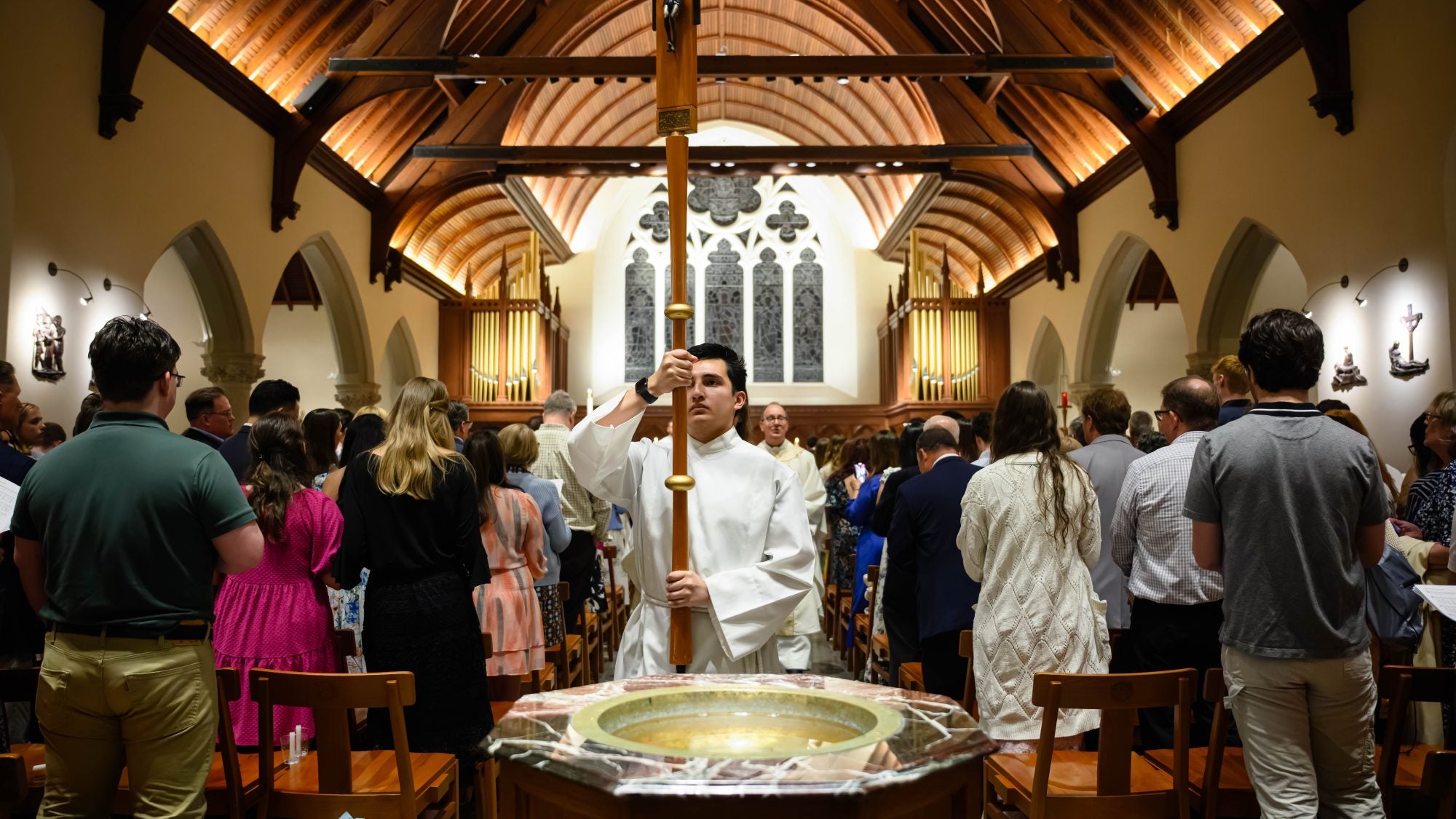
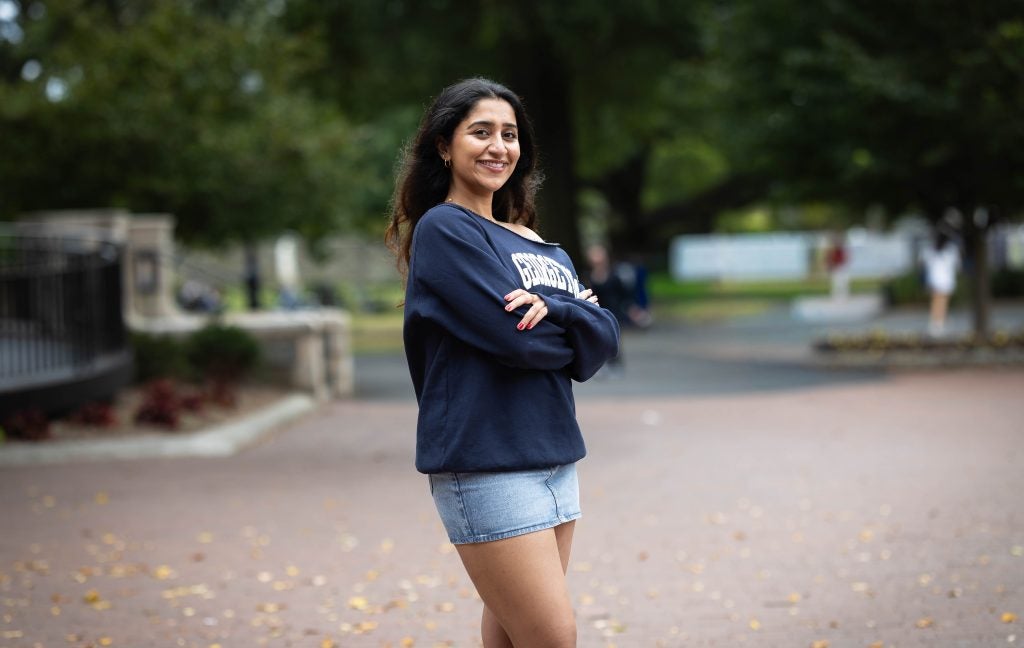 I came to Georgetown confident in my Sikh faith and curious about what it would mean to study at a Jesuit university. I was quick to realize how much the conversations around faith here felt like an invitation rather than a boundary. One of my favorite traditions has become Chaplains’ Tea, where students from all backgrounds gather in the main foyer of Healy Hall to share stories, ask questions and connect with students of other faiths. Sitting there with friends and listening to different perspectives, I realized that faith at Georgetown isn’t about fitting into one tradition. It’s about exploring meaning and community together.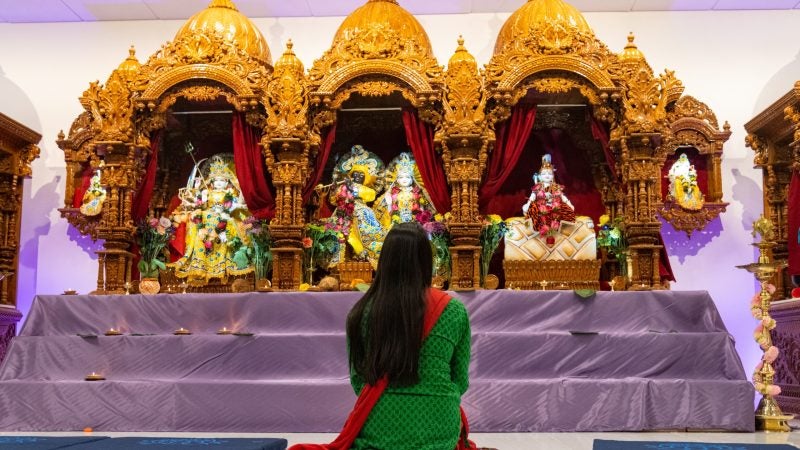
 When looking at universities, it was important for me to find a place where I could grow in my faith while simultaneously learning about people of different backgrounds and perspectives. Georgetown has given me the ability to explore my Roman Catholic faith in the classroom, on campus and at church.
  At Georgetown, you learn the campus through motion before you ever understand it through meaning. You cut across Red Square on instinct, pass Healy without looking up, step into Dahlgren Chapel for a quiet minute between classes and keep moving. For a while, I did the same. But over time, those places stopped feeling like checkpoints in a routine and started feeling like invitations to pause. That shift became real to me one Friday at