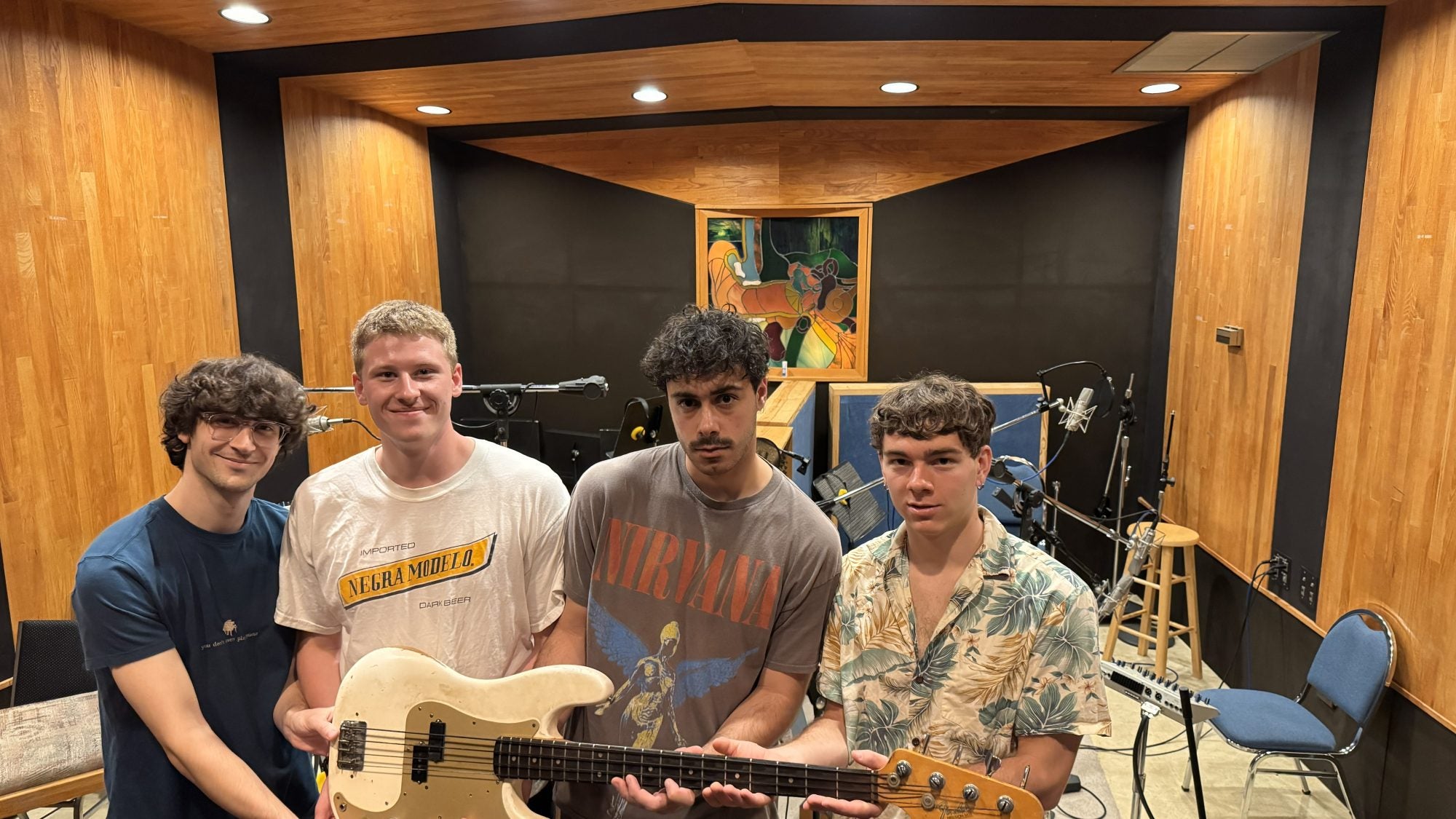
Charles Adorney (C’26) is a senior at Georgetown University in the College of Arts & Sciences studying American musical culture and computer science.
I still remember one of the first questions I had as a prospective Georgetown student: What music classes does the university offer?
Coming into Georgetown, I had my reservations. It’s an institution famous for the School of Foreign Service and the McDonough School of Business, where Supreme Court justices and C-suite executives are forged. I feared that amid such intense career-focused drive, being a musician meant being relegated to a hobbyist – an extracurricular afterthought. 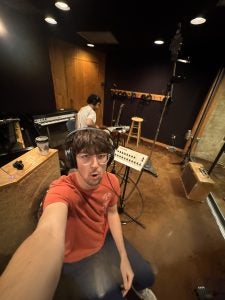
But there is 100% a music major here, populated by diverse classes and esteemed faculty. And nothing challenged my initial skepticism more than the course Guild of Bands.
Guild of Bands is exactly what it sounds like, yet so much more. It operates primarily as an academic course for existing groups to write, rehearse and perform original music, and students can take it as many times as they like.
My time in Guild of Bands started out of necessity. During freshman year, my friends and I formed a band, The Ordeal. We were (and still are) a four-piece rock outfit – a drummer, two guitarists, and a bassist – and while the chemistry was there, the infrastructure wasn’t. Practicing together in a dorm room certainly wasn’t an option, mostly due to the lack of a drum kit, but also out of consideration for our neighbors. Thus, we were at the mercy of the “first come, first serve” practice rooms, shared by acapella groups, jazz combos, string quartets and Rock History students alike.
As a part of Guild of Bands, we had a dedicated space and a structured curriculum designed to help us grow as instrumentalists and songwriters. Suddenly, The Ordeal wasn’t fighting for scraps of time in a practice room the week before a show.
The heartbeat of the course is Monday nights. Every week, our band meets for 30 minutes with Professor David Murray. His role isn’t to dictate what we play, but to listen to and help us refine our music. This isn’t some casual jam session – we put in over four hours of songwriting and rehearsal throughout the week to prepare for that 30-minute window.
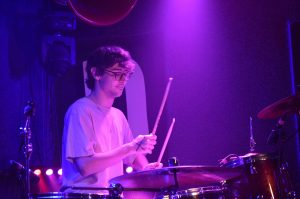 In the beginning, it was definitely a little awkward – playing your creative work for a professor always carries a bit of vulnerability. But Professor Murray is funny, easy to talk to and deeply respectful of artistic direction. Over the course of several semesters, he got to know us, and we got to know him. The feedback was always constructive, pushing us to tighten a transition, rethink a melodic line or embellish a drum fill (Murray is a monster on the drums). It taught us that rock music, often dismissed as chaotic or raw, benefits immensely from the rigor of academic critique.
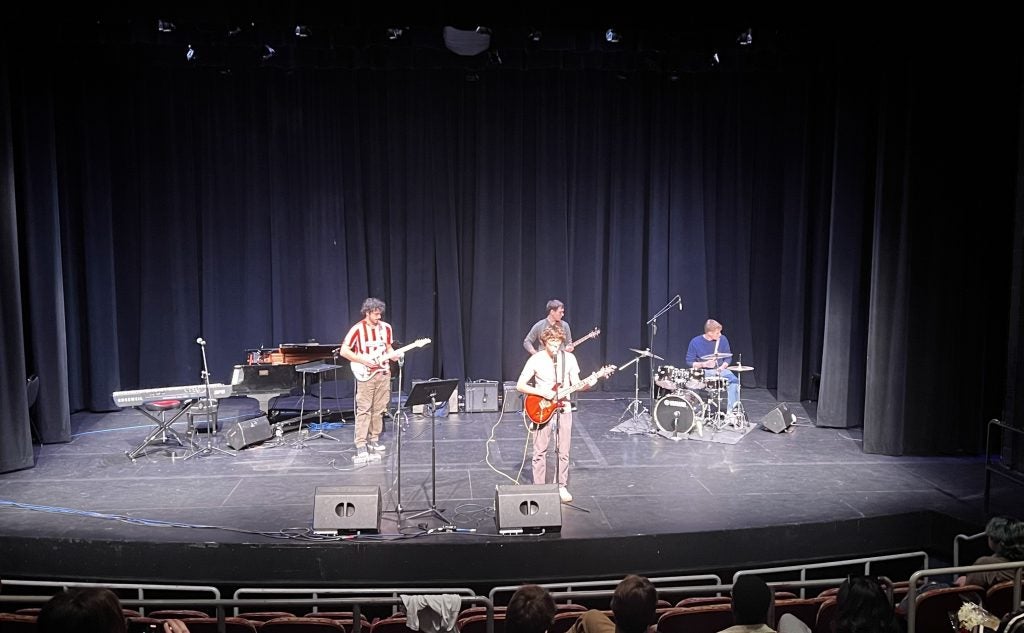
Toward the end of the semester, the class culminates in a showcase at the Gonda Theatre. The concert is a key exercise in stagecraft, particularly because playing loud gigs on campus is often an uphill battle. It’s one thing to nail your originals in a small practice room; it’s another to play them for the first time under stage lights with a live audience. But beyond all that, it represents a rare moment of convergence. We spend so much time heads-down in our own creative bubbles that getting to hear what the other bands have cooked up is genuinely inspiring.
The true payoff, however, comes just before finals. Through the class, we get the opportunity to record at BIAS Studios in Virginia, about a half-hour away from campus. BIAS is a Grammy-Award-winning facility equipped with top-tier consoles, fancy microphones, gorgeous instruments and, funnily enough, great coffee. As a music major interested in production, the difference between a bedroom recording and a session at BIAS is night and day.
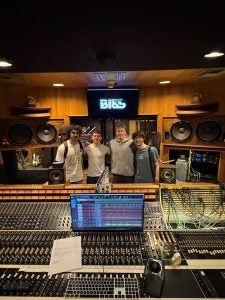
Walking into that studio changes your mindset. It elevates the work. It’s no longer a hobby you’re squeezing between essays and projects but a professional team affair. The first time we recorded at BIAS, we weren’t expecting to be taken completely seriously – we were just a gaggle of college students with instruments, after all. We couldn’t have been more wrong. The engineers at BIAS were incredibly flexible and kind, working with us at every step to ensure our stems sounded as clean as possible. And perhaps the best part? It’s free. It is not every day you get to book professional studio time without paying a cent.
Looking back, The Ordeal has been the highlight of my time at Georgetown, and Guild of Bands only augmented that experience. With the infrastructure and support the class provided, we grew more proficient, more productive and more sure of ourselves as artists. We’ve played at venues like DC9 and The Renegade, and even distributed some of our original music.
Ultimately, the lessons learned in Guild of Bands extend far beyond the music. The class forces you to treat creativity with professional discipline. It guides you to collaborate efficiently within a small team, separate your ego from constructive criticism and deliver a polished product on a deadline. Whether you’ve got grand plans to tour the world with your college friends or enter the corporate sphere, the rush of waltzing into a high-end studio or onto a stage and executing a vision is invaluable. It proves that you can take a raw idea and, through rigor and teamwork, turn it into something tangible.
Georgetown might not be a conservatory, but that’s exactly why this program is special. The music scene here isn’t handed to you on a syllabus; it’s a community you discover and build. If you’re a musician looking at the Hilltop, don’t let the suits and the politics fool you. There is plenty of noise being made here. You just need to know where to listen.