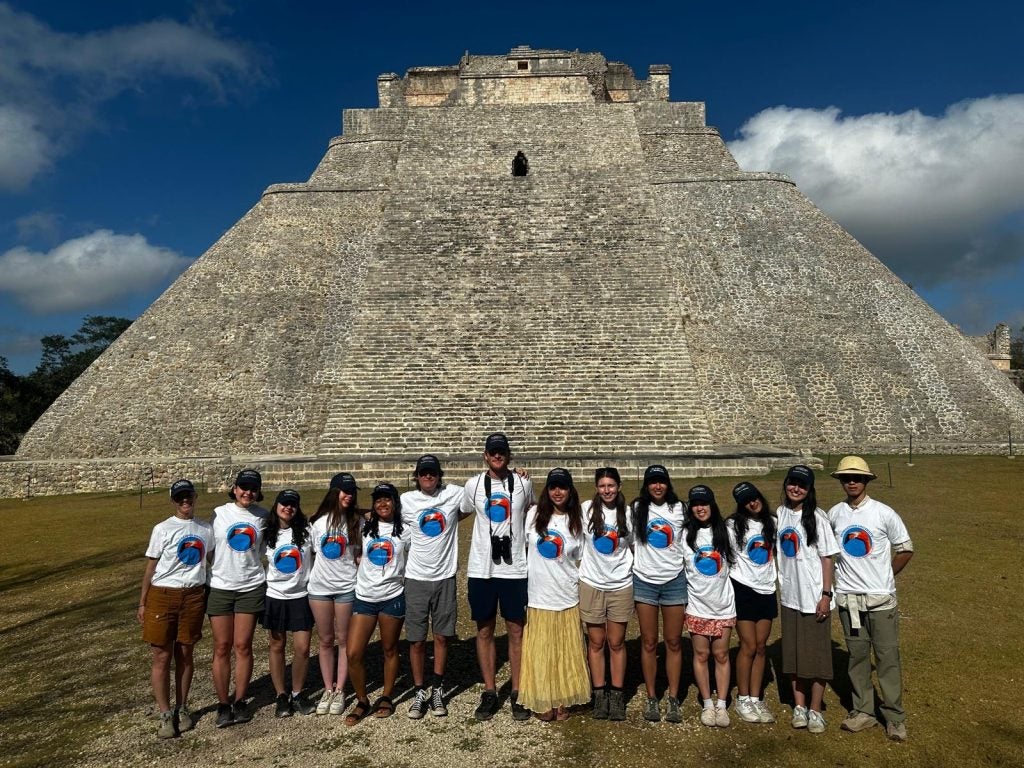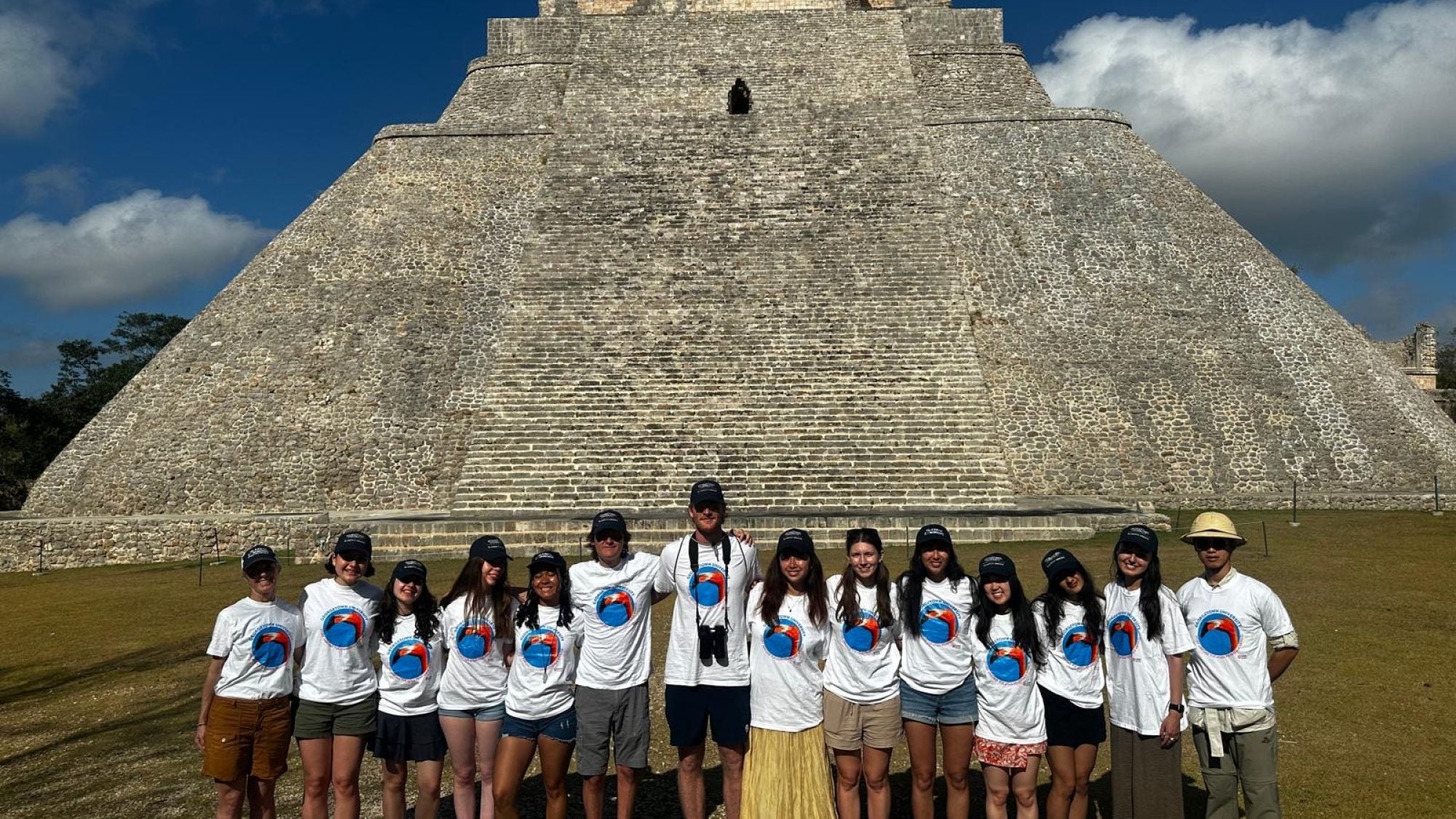
Group of students in white shirts in Mexico
Category: Academics

Title: Exploring the Yucatán: Hands-on Learning in a Whole New Light

Author: Zoe Gutherman (C’27)
Date Published: April 16, 2026

Zoe Gutherman (C’27) is a BS in Environment & Sustainability Student at Georgetown University and is also studying Law, Justice, & Society and interning at Georgetown Climate Center. She is COO of Georgetown REUSE and president of Club Tennis.

A warm evening breeze rustled the treetops. The van lights went out, and we were plunged into darkness with only our headlamps and a near-full moon to guide us on our night hike near El Cuyo, Yucatán. As my eyes adjusted, I swept my light back and forth to get a sense of my surroundings. Little glimmers appeared everywhere — on the path, in the trees, amidst the underbrush.

There were hundreds of spiders staring back at me.

I turn my headlamp off, and the glimmers go out. My classmates do the same, on and off. You have to be looking at them from the right angle to catch the glimmers. Only by exploring like this — by shining a light in the dark, moving it this way and that, learning together how to spot them — could we have known there were hundreds of spiders hiding in plain sight. 

We all then turned off our lights again to listen for birds. Tony Celis, our study abroad program guide, mimicked the rhythmic toots of a Ferruginous Pygmy-Owl. Sure enough, a distant identical call came back. The calls got louder as the owl came to protect its territory from this new intruder.
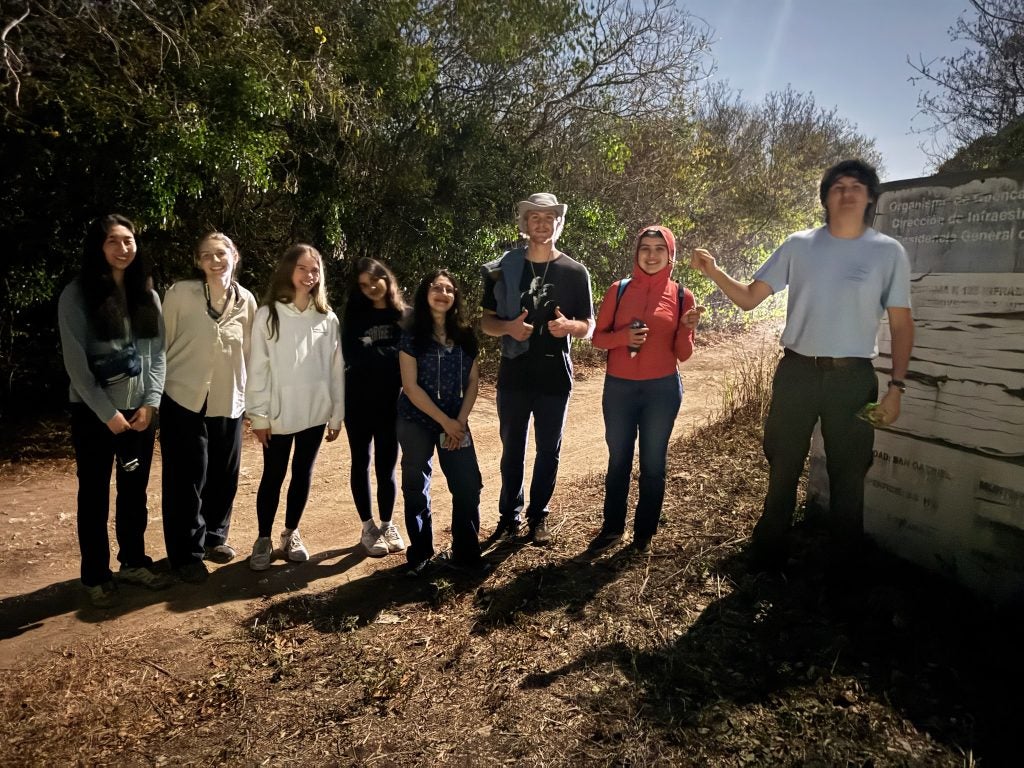
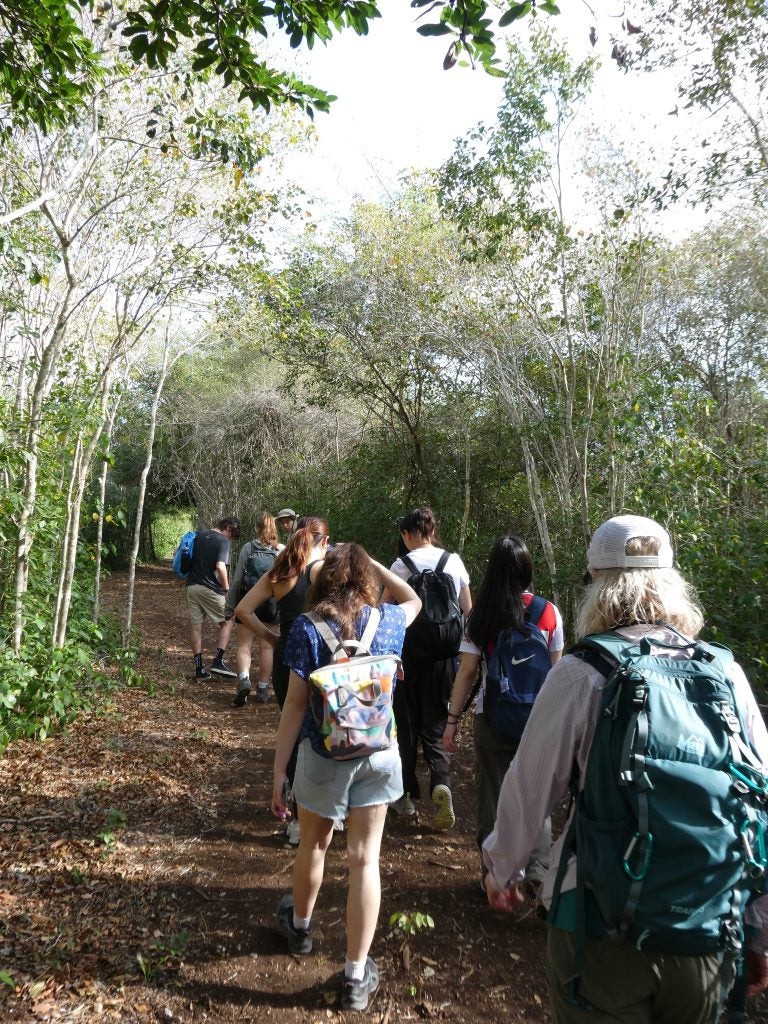
For a time when people are usually sleeping, many non-human animals were out and about. Bats flew overhead, a gecko was spotted, and there was rustling in the trees. Our ears were listening for the next cool bird call, and our eyes were scanning in hopes of spotting a pair of glowing eyes from the underbrush. An amusement park for the senses, every stop around the Yucatán Peninsula held species and behaviors that were novel to me, never spotted where I’ve lived in New York State and at Georgetown University in DC. There was so much to observe, and everything caught my attention.

This was only a couple of hours of the Yucatán: Conservation, Culture, & Environmental Sustainability course trip paired with a classroom component throughout the semester. Our course goals consist of examining the conservation of tropical forests, coastal ecosystems and mangrove habitats, the culture of the current and pre-European Mayan communities, and the sustainability of the environment and culture in the Yucatán. 

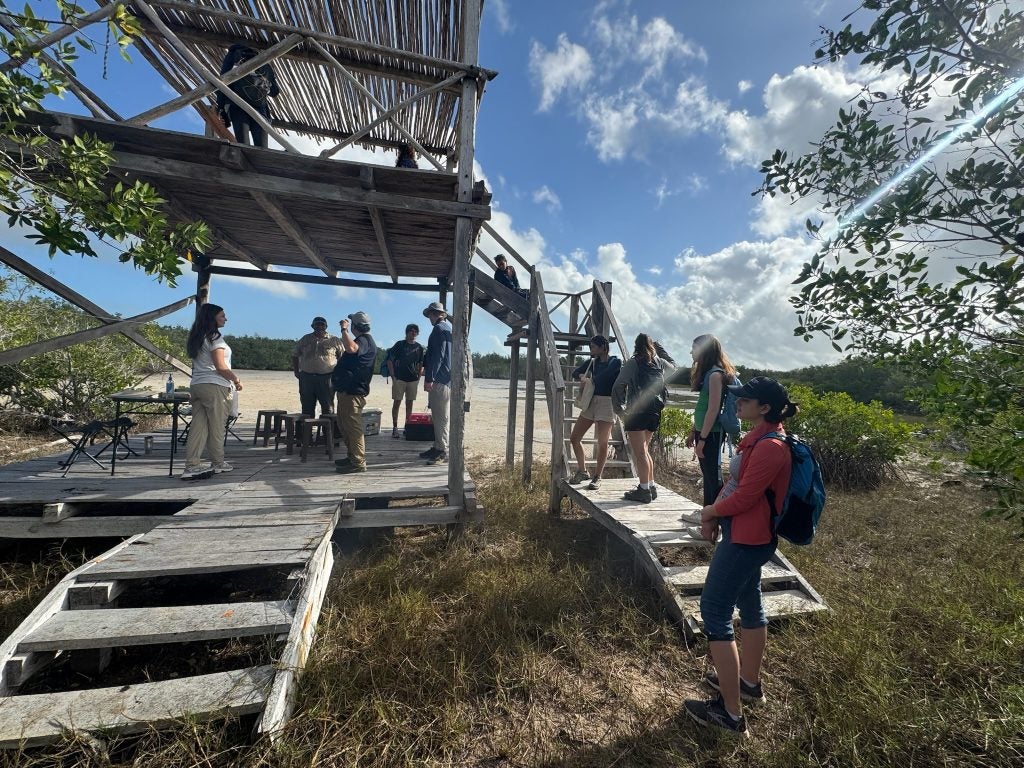
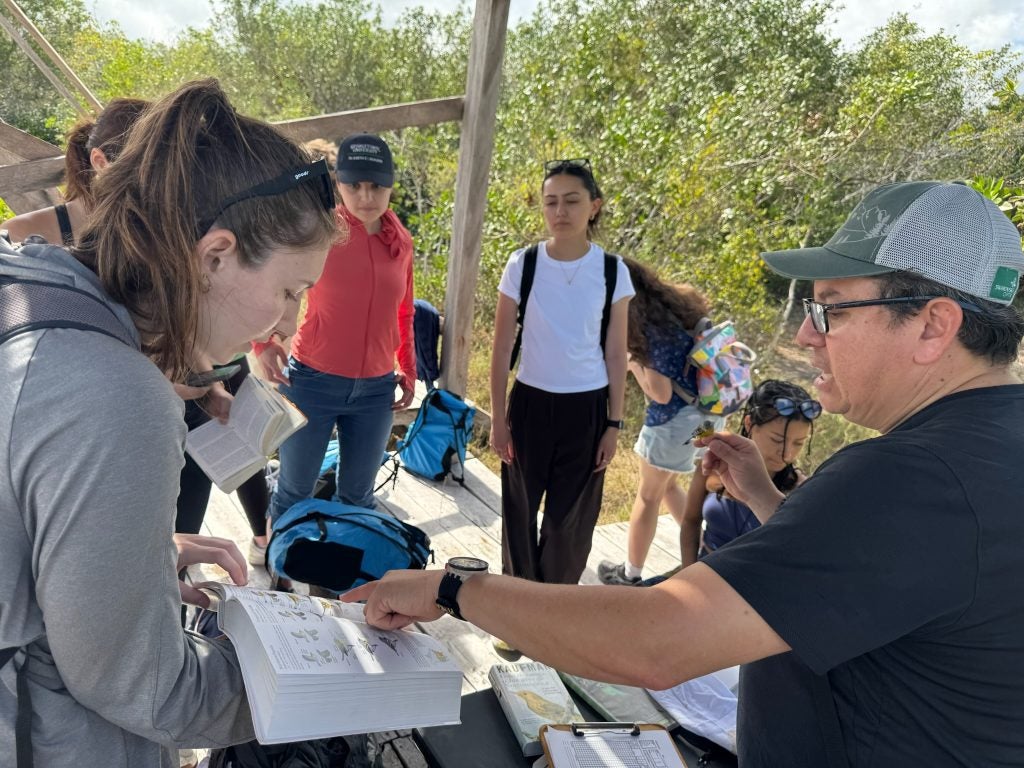
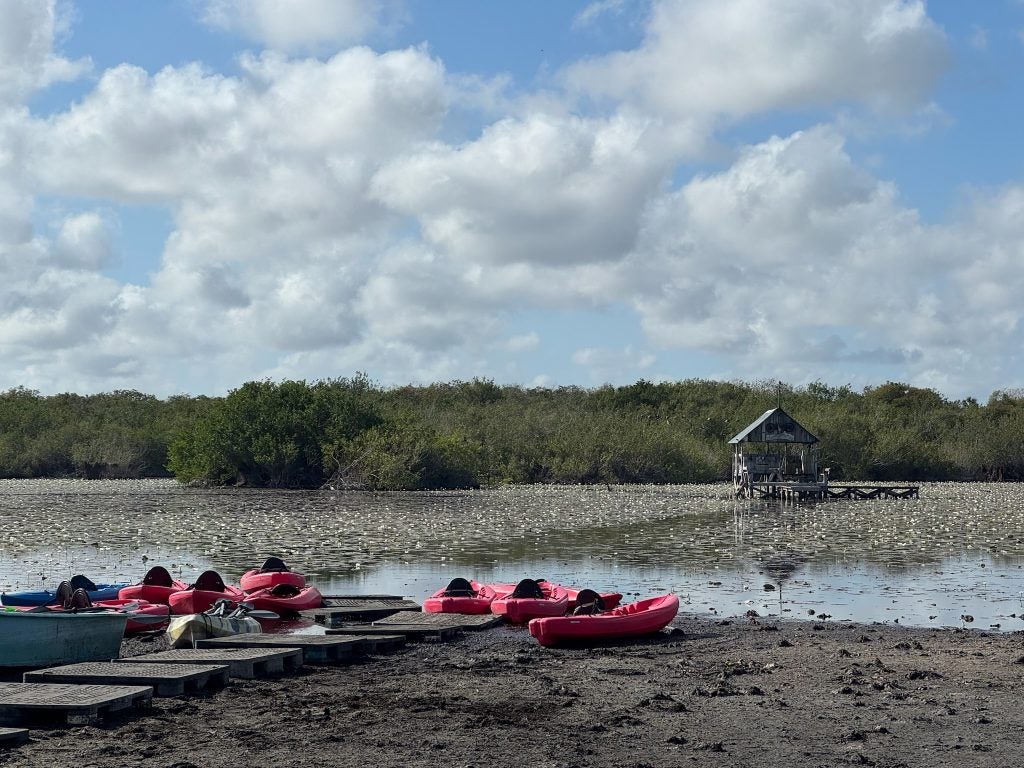
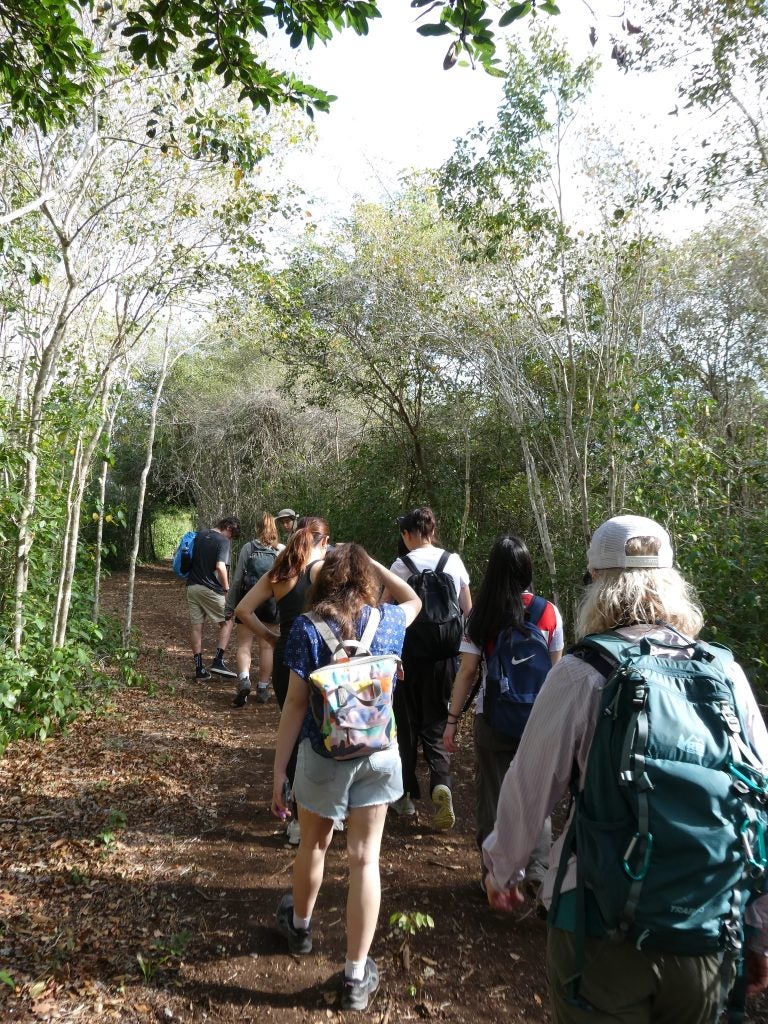
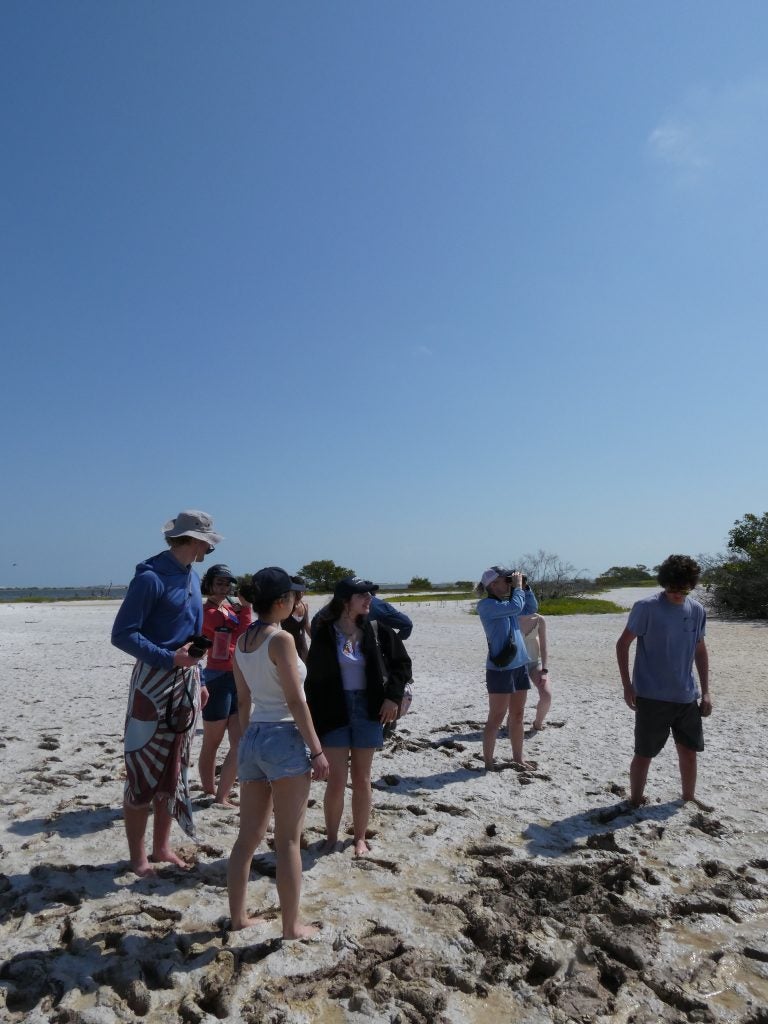
The previous days in El Cuyo were spent bird banding, kayaking and hiking around UMA San Manuel, a certified Voluntary Conservation Area within the Ría Lagartos Biosphere Reserve. We learned about the importance of the habitat for migratory birds, the rich endemic biodiversity, and the steps that the community has been taking to preserve them directly from the owners of UMA San Manuel and even Tony himself.

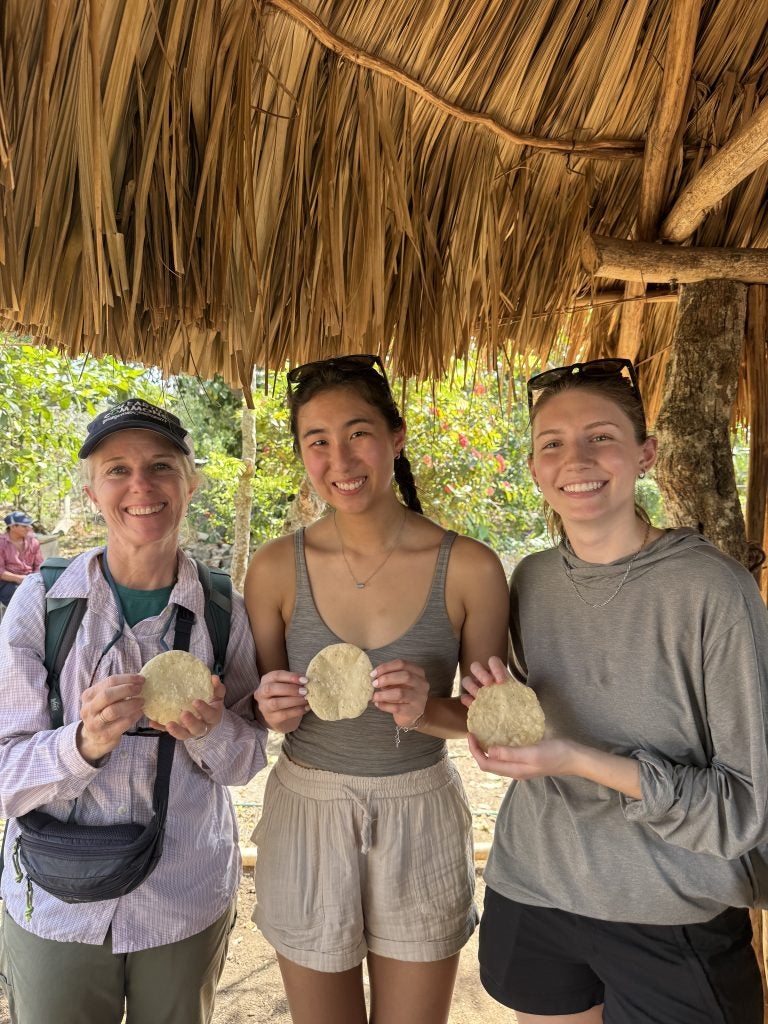
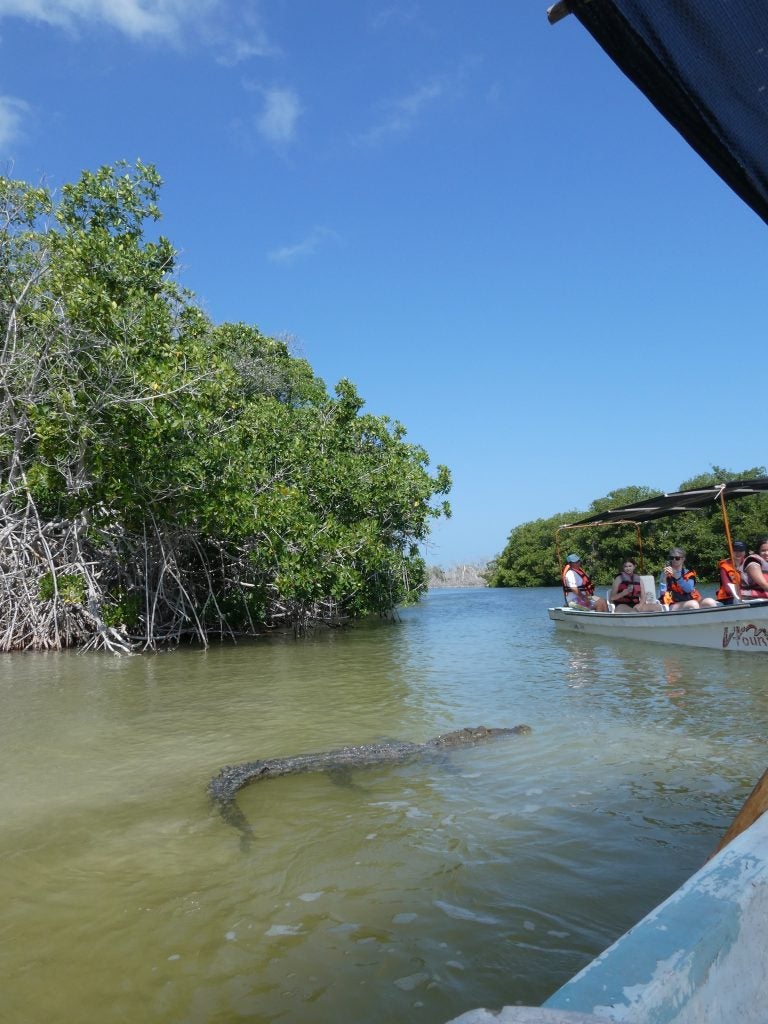
In the days that followed, we visited a Maya community, toured the mangrove channels in Ria Lagatos by boat, swam in three majestic cenotes, explored the ruins of Uxmal, wandered around Merida and snorkeled at Isla Contoy National Park. At almost every location, we spoke to local community members and learned about how their way of life, conservation efforts and research give back to the environment.

The Maya practice regenerative agriculture, the fishers in Ria Lagarotos combat illegal fishing practices, the guides at Isla Contoy teach tourists about their protective measures, and professors at the University of Yucatán research better farming practices and the region’s karstic geology. Even though I was familiar with many of these strategies and much of the science behind their actions, I gained so much context and understanding from experiencing and listening to people firsthand. Like the difference between knowing the spiders are there in the woods and actually seeing their eyes shining back at me, learning in the classroom cannot compare to being immersed in a place with its unique cultural context.

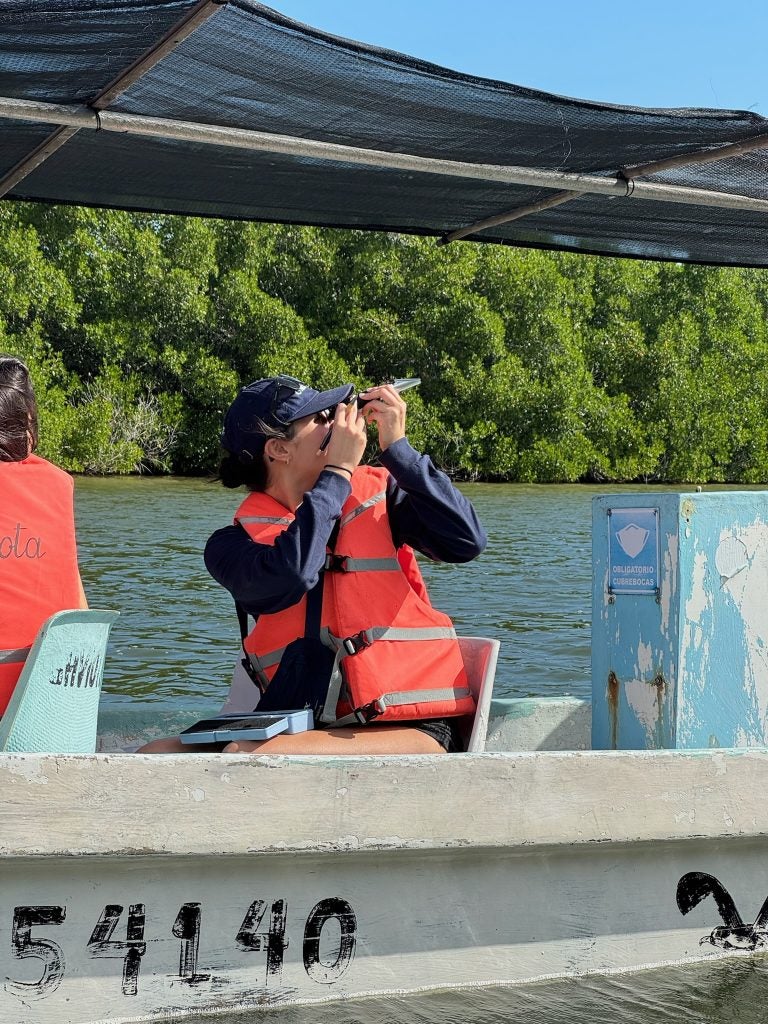
A woman in a life vest using a scientific instrument while on a boat
Field Data Collection at Ría Lagartos

This is my third immersive program I’ve taken with the Earth Commons — Georgetown University’s Institute for Environment & Sustainability — in conjunction with the BS in Environment and Sustainability degree. Each experience has been an invaluable learning opportunity, from focusing on Marine Field Research Methods in Biscayne Bay, Florida, to Marine Remote Sensing in Athens, Greece, to now Community Conservation in Yucatan, Mexico. I have gained skills and perspectives that would not otherwise be possible — not even as a tourist seeking out some of the same sights. The Earth Commons has forged connections with the local community members who can share their insights and experiences. Unlike a classroom with a set time to learn, an immersive experience like this allows for knowledge to be absorbed and picked up in any passing moment, even while sharing a meal.

So, with a reinvigorated sense of purpose and sharpened observation skills, we returned to the classroom to apply the knowledge we had gained in the Yucatán to our group research projects. Each group focused on a different facet of life in the Yucatán and is working toward crafting a StoryMaps to be presented. Being surrounded by all the biodiversity and expert knowledge in the Yucatán has set us up for these projects and continuing our journeys as lifelong learners outside the classroom.

The exposure to such a variety of excursions and guest speakers reflects the intentionality that goes into the BS-ES curriculum while in Washington, DC, and anywhere else. Everything we do impacts ourselves and our community, and being out in the field is the clearest demonstration of how our actions are important, especially with environmental work. These experiences are also exciting and reinvigorating, and they make us feel hopeful. This is an important reminder to us why we are dedicated to pursuing this work even after we graduate.