Category: Discovery & Impact
Title: AI Is Creative. But Can It Replace Human Creativity? Maybe Only If We Let It.
Date Published: July 27, 2026
The next time you’re brainstorming, consider this: Instead of asking an AI tool to generate ideas, try scribbling your thoughts with pen and paper first.
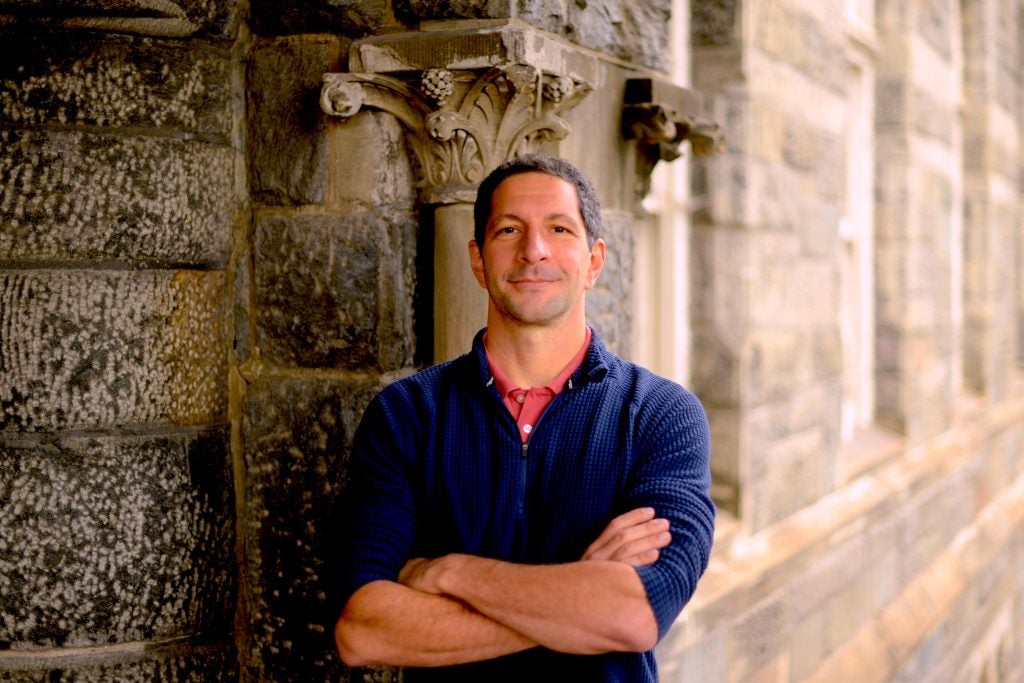
It’s not that AI can’t be creative. But even with all its technical whizz, AI can’t make up for the human brain’s limitless creative potential, said Adam Green, a psychology professor and neuroscientist in the College of Arts & Sciences.
“I have no problem saying that AI can be creative,” Green said. “What I think we have to be careful of is to assume that it’s a replacement for human creativity.”
Green studies human creativity and the neural processes that power humanity’s best ideas. In the last few years, he has studied how AI interacts with human creativity and how other emerging technologies could supercharge creative expression.
New research from Green and his lab at Georgetown shows how creativity from AI may not be all that creative.
For Green, creativity pushes human civilization forward. Humanity’s capacity for creativity is what sparked the earliest discovery of fire and spawned AI.
But relying on AI to do more of our creative thinking may stymie our ability to solve today’s problems and tomorrow’s challenges.
“At the level of our species, there are a huge number of big problems. Those problems have not been solved with existing ideas,” Green said. “If we lose the diversity of new ideas that has always been the basis of generating innovative approaches to solve old problems, we are not likely to solve those big societal or global problems.”
How Creativity Works in the Brain
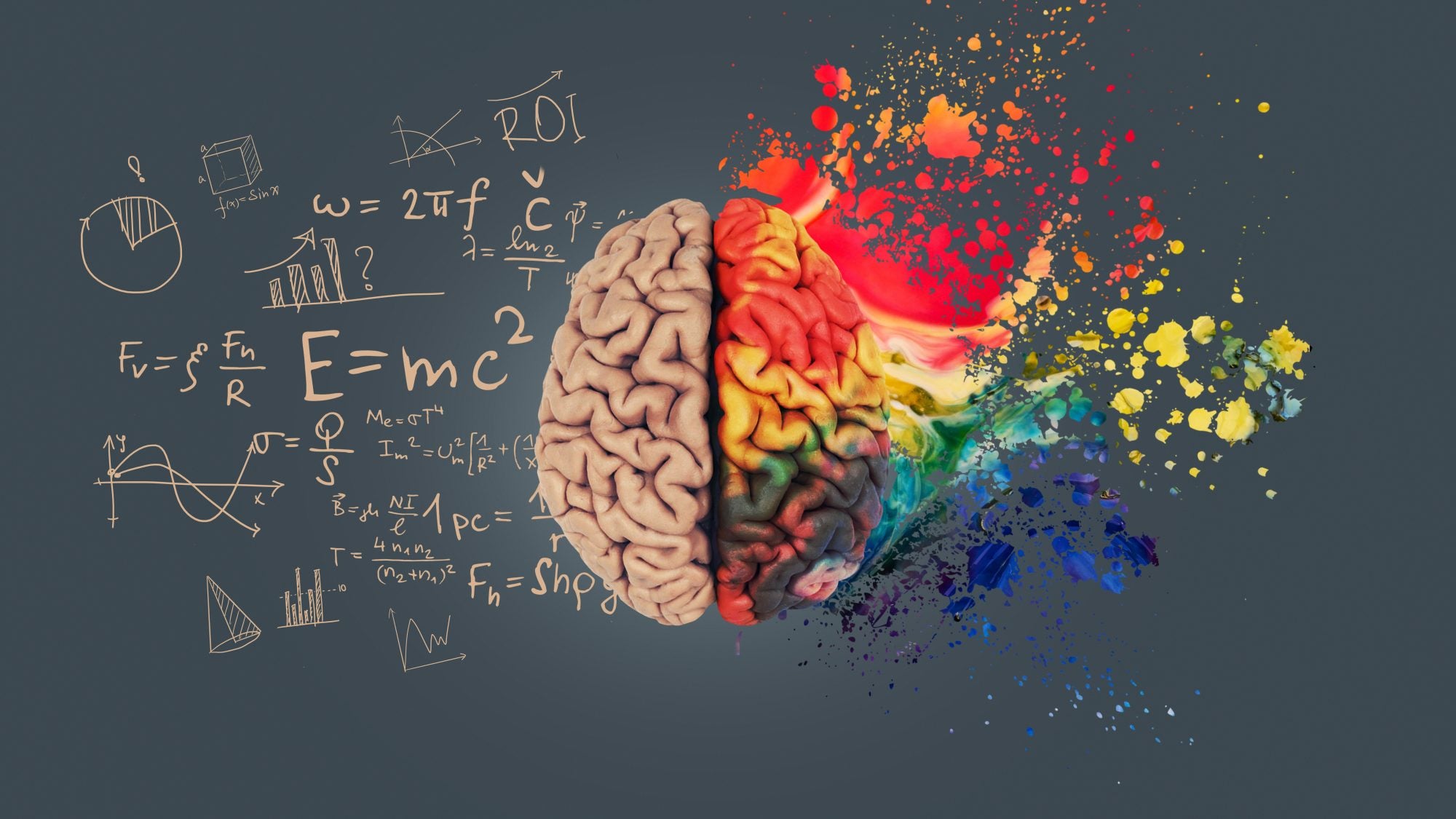
The human brain can fire on all cylinders when it is creative. Green studies how different parts of the brain activate depending on what creative activity a person is doing.
When you learn something, information is stored along networks in the brain. These networks are based on an individual’s life experiences, Green said. During creative processes, the brain searches along these networks to generate new ideas.
“You might have had an experience that makes you associate watermelon with soccer. I don’t have that same association, but I have other associations,” Green said. “But because of the individuality of my semantic network, when I generate ideas, my ideas are going to be different from your ideas. If we shared this one system, that distinctness starts to go away.”
The problem with AI, Green said, is that it relies on one system.
“When you ask AI to do something creative, it will do something creative,” he said. “It can write you a poem. It can try to come up with an unusual use for a paperclip. But the ideas it produces, even though they may be good ideas, end up pretty similar to each other. What’s lost is the human diversity of ideas.”
Will AI Kill Human Creativity?
In a recent research paper, Green and his colleagues sorted through over 370,000 college admissions essays from before and after the release of ChatGPT in 2022.
The study found that essays written after the launch of the generative AI tool used a greater diversity of words, but they often contained fewer original ideas.
The issue, the study warns, is that humans generally associate a greater diversity of words with greater creativity. That’s because throughout the history of human thinking and writing, the creativity of words has been generally linked to the creativity of ideas because of the shared networks in the human brain, the study says. When a group of outside experts who study creativity read the essays, they rated the essays that used ChatGPT as more creative, even if they didn’t necessarily offer more creative ideas.
The study implies that the influence of word diversity overshadows humans’ ability to perceive true originality of ideas when AI generates content.
And as more people rely on and use AI more, the long-term effects on individuals and society may not be positive.
While researchers are working to find a definitive answer to whether AI negatively affects the brain, Green said he and many of his colleagues are not optimistic about the neurological effects of AI.
“That would run counter to everything else we know about technology,” he said. “It used to be that people could navigate on their own and had a lot of spatial cognitive abilities. GPS has totally changed that, and people cannot navigate without their phone or GPS. As people have lost this spatial ability, it is very likely they’re losing more general cognitive abilities.”
If Green’s hypothesis is true, the result could be devastating for humanity’s future capacity for creativity.
How to Use AI To Complement Creativity
AI can still be useful in creative contexts – though Green recommends using the tool as a complement to your own creativity.
He said to always start with your own ideas before using AI to sharpen concepts or analyze the ideas for possible problems. In writing, AI can be a useful editing partner to keep your ideas clear and concise.
Green often uses AI in his own work. His lab partners use the tool to analyze data based on human-generated ideas and parameters to guide its thinking.
“AI can help me with the less creative part of the thinking, and it might even free me up to do more creative thinking because I don’t have to spend time doing that more mindless stuff,” Green said.
The Future of Creativity
While Green’s work may show how AI can hamper human creativity, it also shows how emerging technologies can possibly push the boundaries of human creativity.
“I’m interested in the furthest reaches of what brains can accomplish, the most impressive and highest reaches of evolution,” he said.
Green’s lab investigates how electrical nodes and magnetics can stimulate creativity by sending electrical currents through the brain. They are also researching how ultrasound can stimulate the neural pathways responsible for creativity.
“The electricity goes through your neural wires, and that helps neurons in a specific area activate when you want to use that brain region,” said Green, who was recently named Innovator of the Year by Georgetown’s Office of Technology Commercialization.
Green’s research contributes to a growing industry around transcranial electric stimulation devices. Some of these devices, which look like headsets or helmets, are already commercially available and are used to regulate mood, stimulate productivity or promote other cognitive functions.
While research is still ongoing, Green is hopeful that these emerging electrical stimulation methods could yield long-term benefits for people.
“With repeated stimulation over the course of a month instead of just a day, it looks like you can actually change the way neurons are wired for different kinds of thinking,” Green said. “You could keep that benefit over a much longer period of time.”
That humans could one day use headsets to help them write novels or generate new ideas to treat disease is an exciting prospect for Green, who’s eager to continue his research to see what’s possible.
Whereas AI, when used in certain ways, can potentially displace human creativity, this emerging technology only looks to enhance the neural processes already happening in the brain to potentially make humans more creative. That creative process is what matters the most, Green said.
“What AI is doing in a way that nothing else ever has is asking us to trade that process in favor of product,” he said. “All of the benefits that come with creative engagement are process-related.”
He hopes that by pushing the boundaries of human creativity, people will be better positioned to tackle the challenges facing society.
“If you’re a business or scientist who’s trying to generate a new solution or cure for a disease, all of these things require something different than what’s been tried,” Green said. “If we allow AI to do the creating, then we’ll be stuck with the ideas that already exist. If I can generate something good and truly different, that has much more value than something good but the same.”