Black man in suit and red shirt
Category: Georgetown Faces, Spirit of Georgetown

Title: Mentorship Steered This First-Generation Student to a Ph.D. Now, He’s Returning the Favor.

Dexter Sharp was the first in his family to attend college. 

An Army brat who calls Fayetteville, North Carolina, home, Sharp graduated from Fayetteville State University through support from his parents, church leaders and high school football and track coaches.
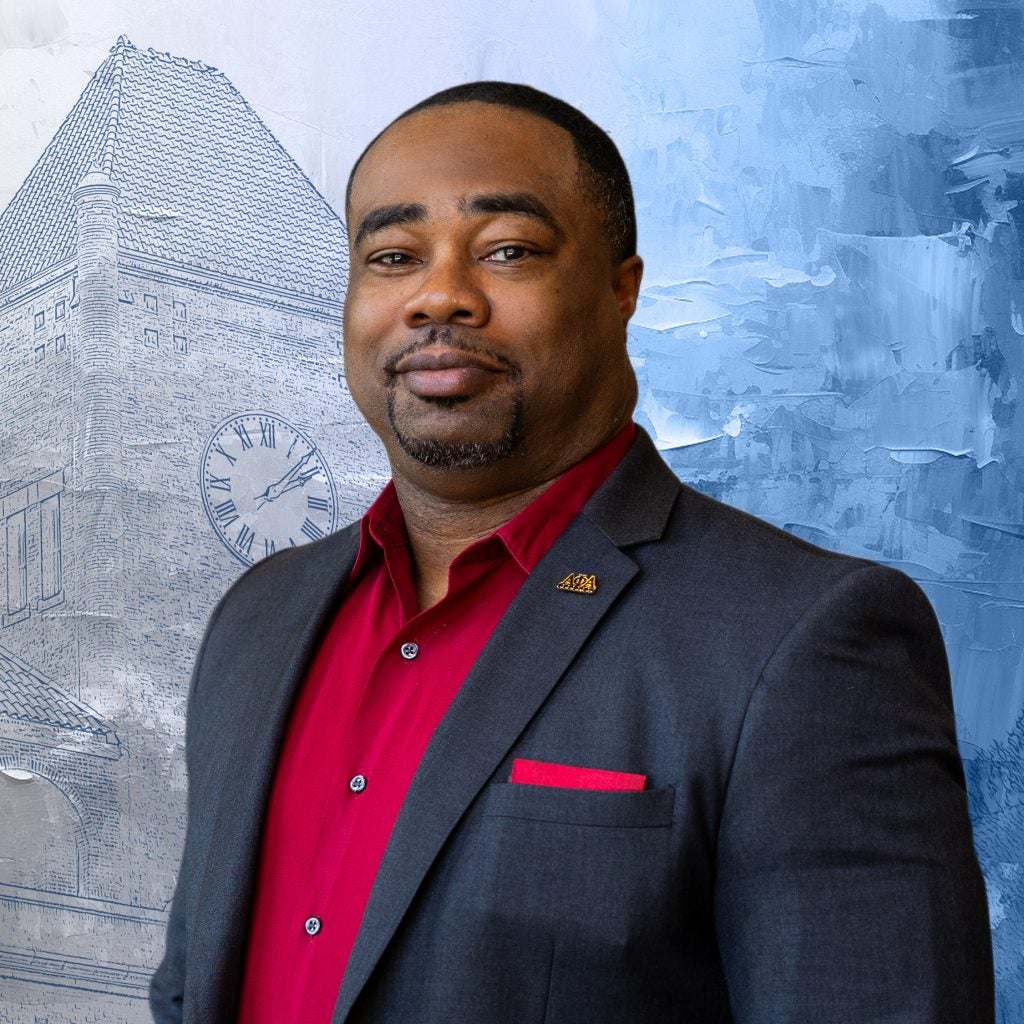
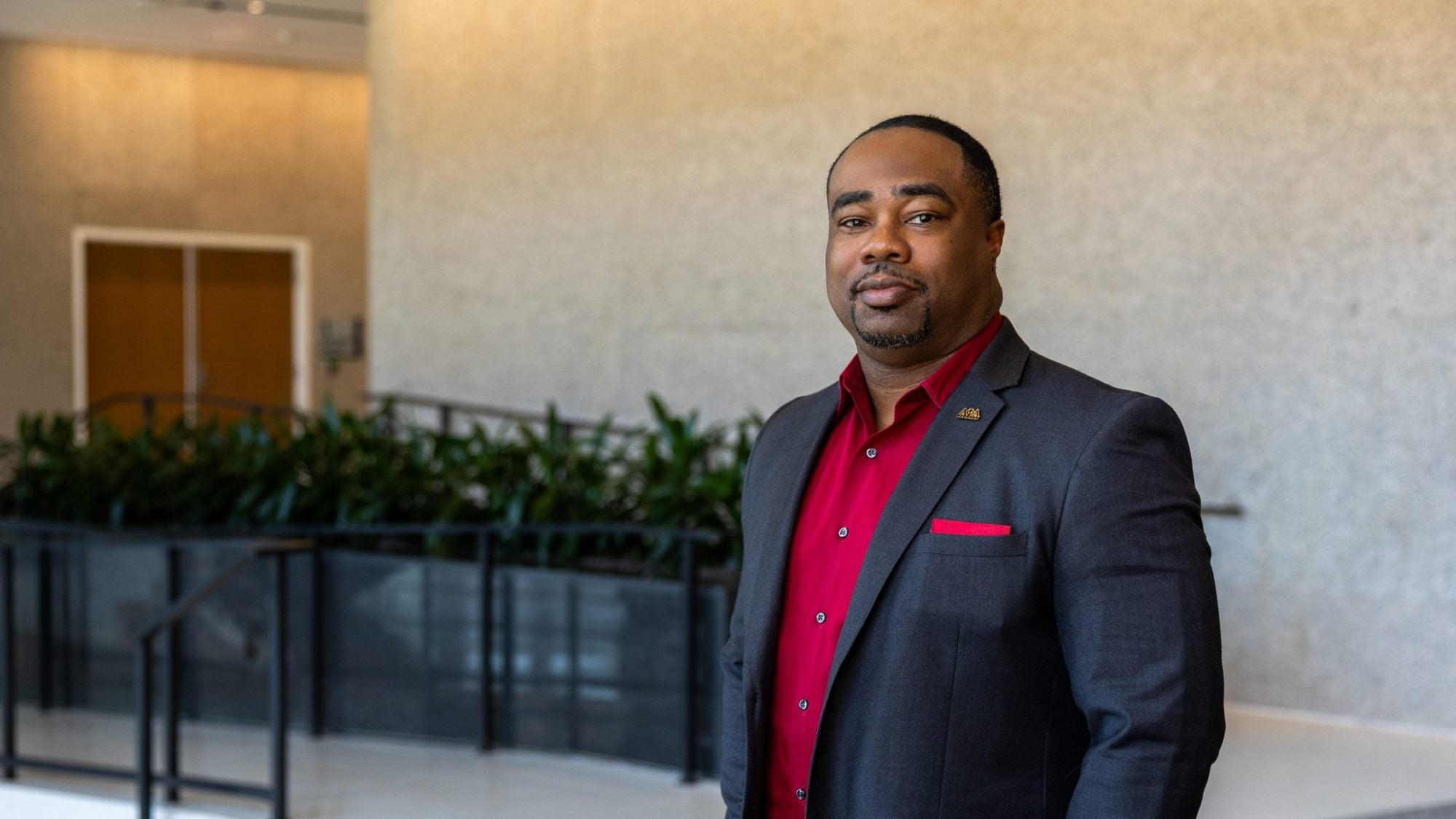
Black man in suit with red shirt
Dexter Sharp is the assistant vice president for graduate student enrichment at the Joint Office of Graduate Studies.

“That’s why I try to do everything I can to help others out, because I had tons of people behind me,” Sharp said. “They looked out for me, provided guidance and poured into me wisdom, courage and encouragement.”

That experience steered Sharp, the assistant vice president for graduate student enrichment at the Joint Office of Graduate Studies, to a career in higher education where he could connect students to similar support networks.

Over nearly five years at Georgetown, Sharp has expanded opportunities for grad students in the classroom and beyond. He leads graduate student affairs across the Hilltop and Capitol Campuses for all students except those in Georgetown Law (JD) and Doctor of Medicine (MD) programs.

Sharp’s office creates student-centered events and programming; advises GradGov, Georgetown’s graduate student government, and dozens more clubs; and provides services like alumni networking and leadership development for the graduate community.

Sharp was drawn to working in education through athletics, and he started his career teaching high school math in North Carolina and coaching the school’s football and track teams. 

He returned to his undergraduate alma mater for his master’s in education and began tutoring male high school students through Fayetteville State’s college preparedness program. Sharp realized he enjoyed working at a university and went on to refine similar support and leadership development programs for undergraduates at East Carolina University and Wake Forest University. 

His mentors continued to inspire him at each stop. They motivated Sharp to continue his own professional development, leading him to earn a Ph.D. in leadership studies with a focus in higher education from North Carolina Agricultural and Technical State University in 2020.

He joined Georgetown in 2021, where he saw the opportunity to try something new by developing and expanding resources to help students at a different educational level. Sharp was confident that his experiences mentoring younger students would translate well to a graduate population.

“It’s been amazing since Day One,” Sharp said. “Georgetown brings in excellent grad students with ambitious visions for initiatives, organizations and the university.”
Growing up as a military brat shaped my worldview: My dad was in the Army 82nd Airborne Division. We moved around a lot, and I grew up engaging with different people from all types of backgrounds and respecting them for who they were. You find a commonality, and that’s what I’ve done as an adult. When I cross paths with someone, I try to figure out: What do we share? And also, what can I learn from you, and what can you learn from me?

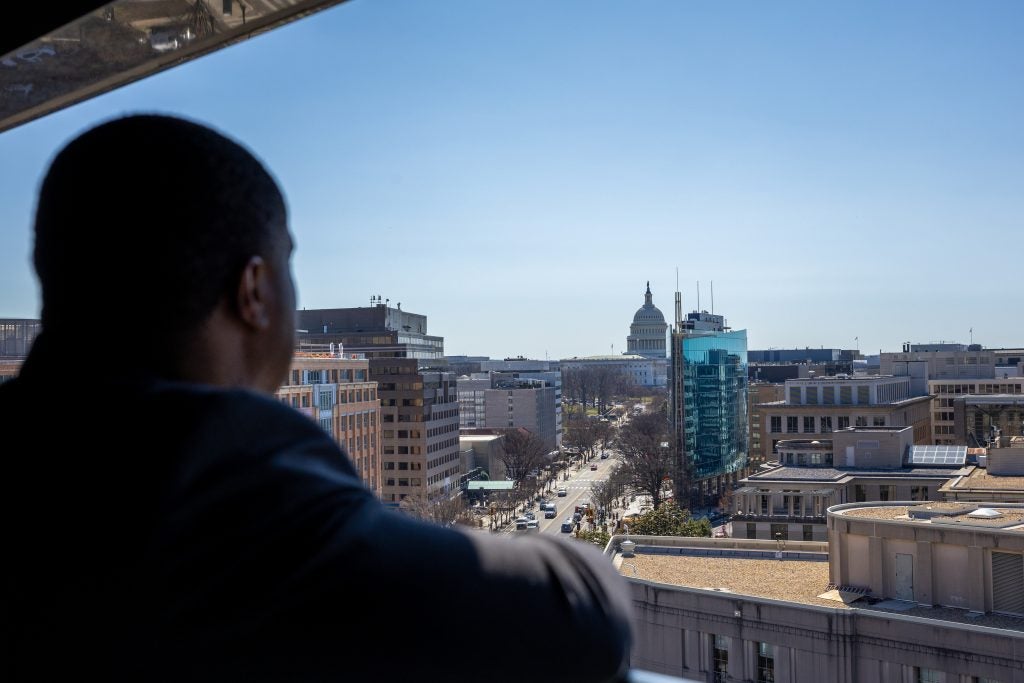
What brought me to DC: I wanted to get out of North Carolina and do a little bit of exploring. Some of that might be due to my former military dependent lifestyle. When I saw the job opening for Georgetown, the reputation of the school was appealing. After interviewing here, I saw the autonomy to develop and build the grad student support program and engage with a different student population. You never really see offices like this for graduate students at a lot of institutions. 

I also like the DMV area. There’s a lot of culture in this space. And I love food, and there’s a lot of good food with a variety of cuisines here.

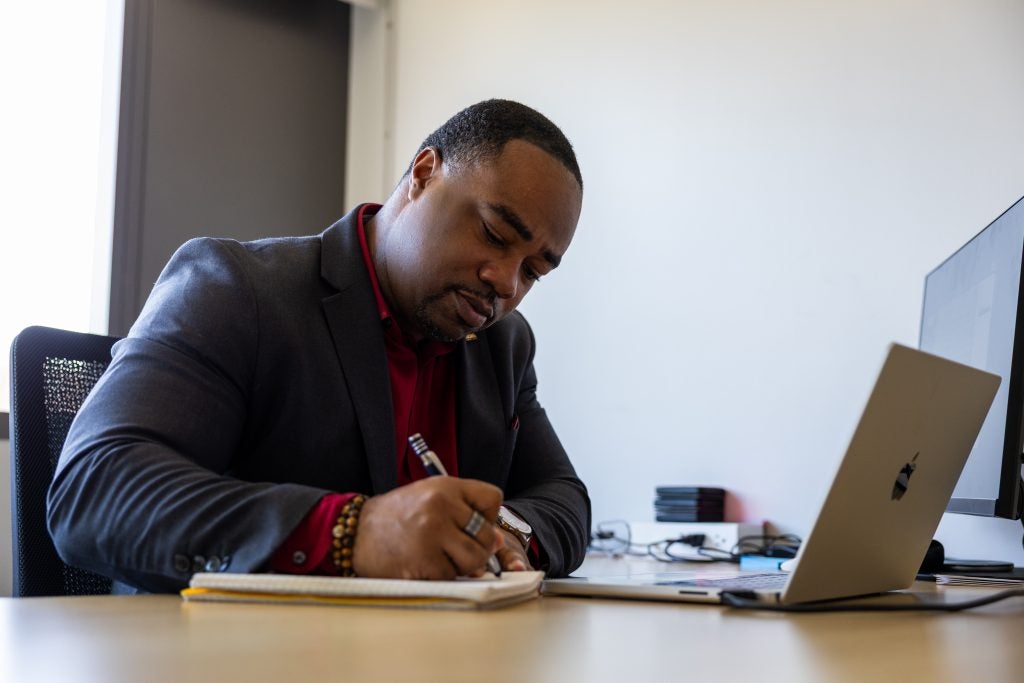
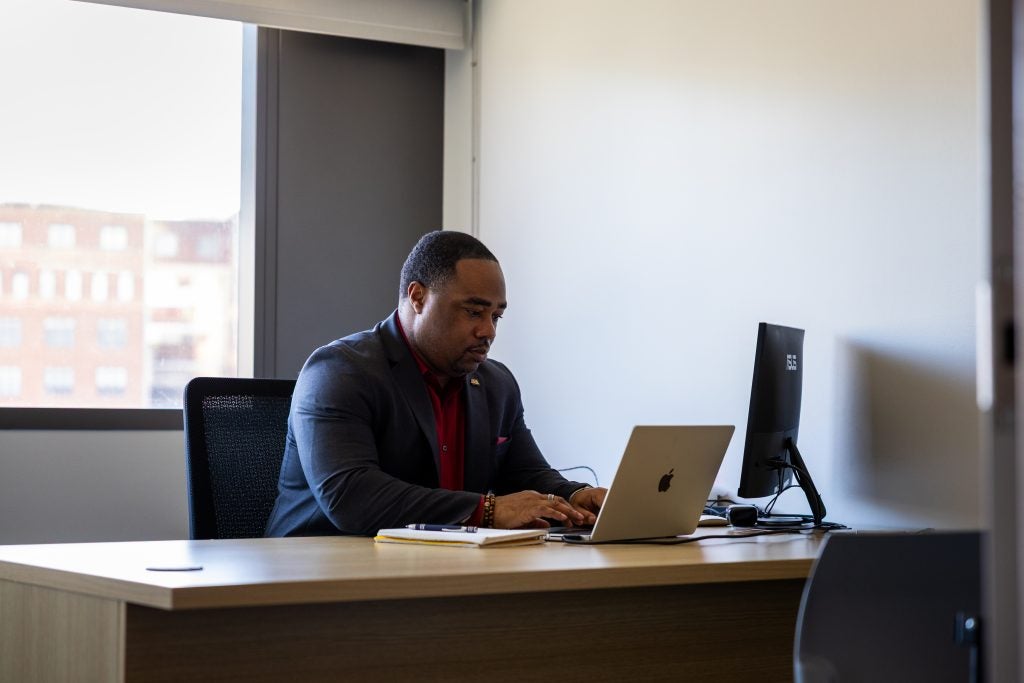
Black man in suit writes at a desk

The difference between working with undergrads and grad students: comes down to who’s involved in these students’ lives. When we look at undergrads, a lot of times the professors are a key component, but really, the residential staff, the clubs and organizations are going to be your primary contacts, because that’s where those students are a lot of the time. For our graduate students, their program directors and coordinators are their primary source, so we make sure we keep them abreast of what’s happening within the community.

But both student populations have the same wants and needs: They want to be treated fairly, they want to be seen and they want to be heard. The biggest difference is where our graduate students are. Outside the classroom, they’re scattered all over the surrounding areas. So trying to engage with our community has its challenges, but I think we do a great job collaborating across campuses to keep everybody up to speed.

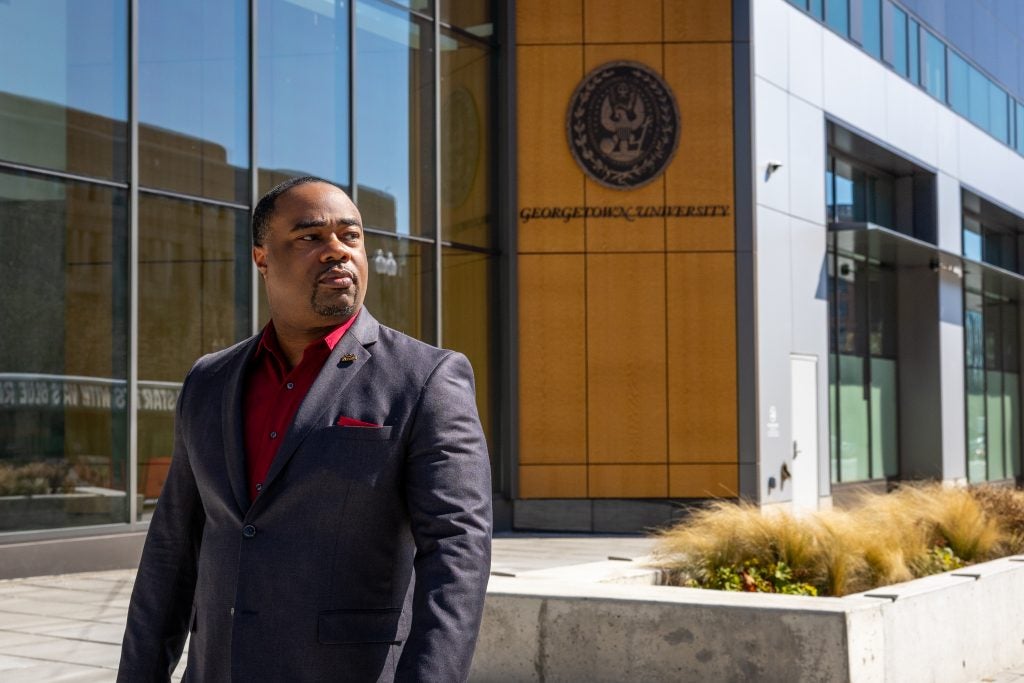
Black man in suit walks outsideMy office does a little bit of everything: It may look a little different than a standard undergraduate student affairs shop, but we provide similar services. If students are having concerns or issues, they’re going to come to our space. If they want to be involved in our Multicultural Celebration or Multicultural Mixer, they’re going to come talk to Kyra [Green, assistant director,] and get involved. If they have an interest in leadership opportunities, they can talk to me to get involved in student organizations.
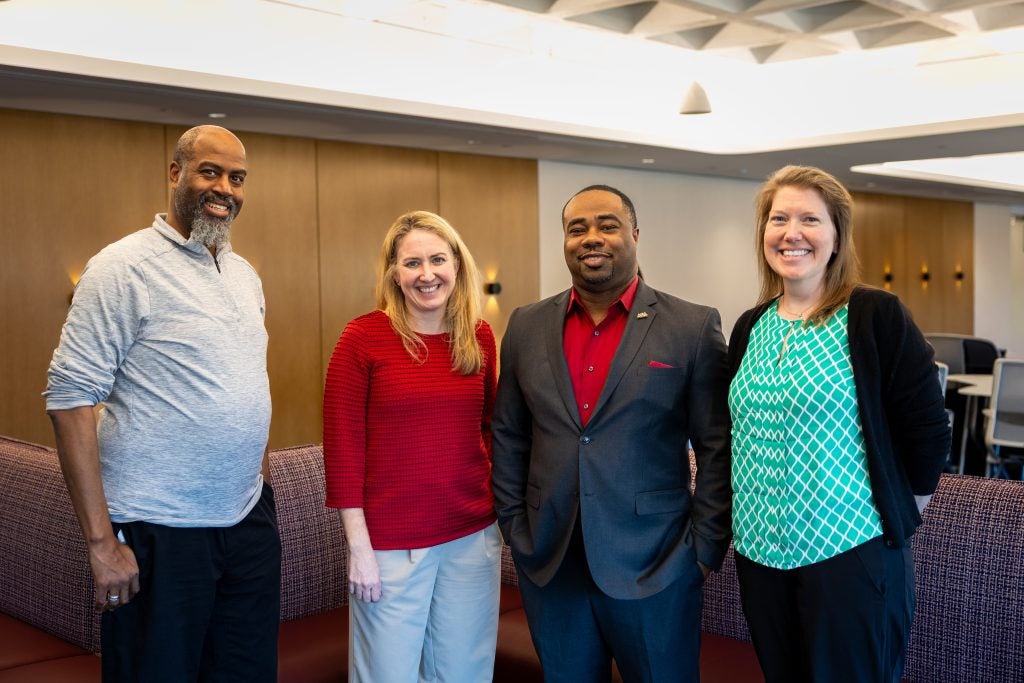
My favorite memories at Georgetown: come from the big events we host for graduate students. Every fall, we do the Induction Ceremony and get students in historic Gaston Hall to hear words of encouragement from key leadership. GradGov’s spring Grad Gala gives students a night out on the town and provides a great opportunity for them to come together across programs, network, unwind and have a great time. And then, of course, the Doctoral Hooding, Multicultural Graduation and big Graduate Commencement ceremonies. I know that journey to graduation, and enjoy seeing the joy the graduates share with their mentors and advisors. Four adults smiling for a photo

When I’m not on the Hilltop or Capitol Campuses: I’m attending sporting events, often with my camera. My interest in sports photography started because of my son: At every game of his, I was holding my camera or my phone. I like capturing those moments. I’ve done highlight tapes for players at my son’s high school and think I’ve gotten pretty decent at it. Maybe one day I’ll get a media pass and be able to shoot in some collegiate spaces. That would be awesome.

One word that comes to mind when I think of Georgetown: Commitment. I’ve seen how our support systems have improved for graduate students because there is a commitment toward that shift from our leadership. There’s a commitment, also, from other staff members to find ways to better serve graduate students. We’re doing a great job as a university in exploring ways to serve our students consistently, even through challenges.

By Katie Rice