Georgetown has awarded three early-career faculty members $100,000 in research funding and leave to pursue their research in AI and digital ethics.
The university’s annual Magis Prize recognizes faculty recently granted tenure who are making an extraordinary impact in their field. In addition to the $100,000 research grant for each faculty member, recipients will receive two semesters of research leave to continue their studies. The awardees will also work with students who will contribute to their research projects.
This year’s recipients are Kostadin Kushlev, an associate professor of psychology in the College of Arts & Sciences who studies digital wellbeing; Andrea M. Headley, an associate professor in the McCourt School of Public Policy who studies criminal justice policy; and Sean Aas, an associate professor of philosophy in the College of Arts & Sciences who studies bioethics and social and political philosophy.
“Rapid advances in digital technology and AI require new scholarship to better understand how we can manage and thrive with these technologies,” said Interim Provost Soyica Diggs Colbert (C’01). “We are pleased to support this year’s recipients of the Magis Prize with the resources to explore these important questions and contribute to the wider discourse on how we can use these technologies for good.”
Meet the third cohort of Magis Prize recipients and learn about their research in digital ethics and the intersection between AI and well-being and the criminal justice system.
How AI Impacts Motivation and Persistence
Kostandin Kushlev has always been interested in how technology has shaped people’s well-being, from the effects of smartphone addiction to whether digital detoxes actually work.
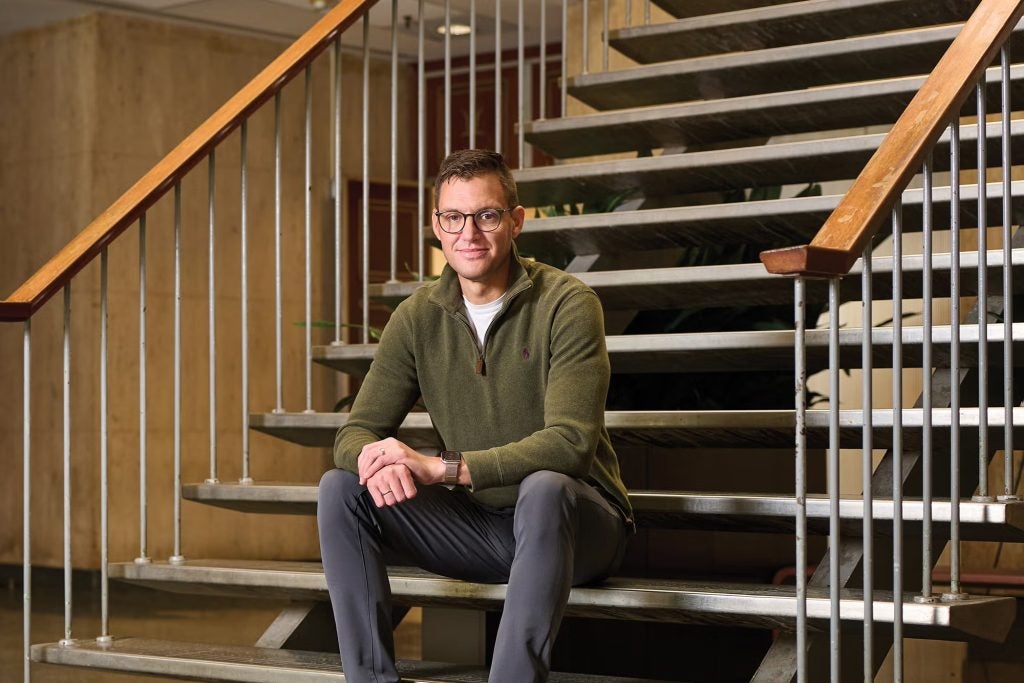
As a recipient of the Magis Prize, he’ll study how the use of AI can affect human psychology and how outsourcing labor to this technology can lead to less fulfilling lives.
“Competence and autonomy are basic psychological needs. Enjoyment peaks when challenge meets skill, and people enjoy the exercise of their realized capacities,” he said. “Yet by the Principle of Least Effort, people reliably prefer the easier path. When AI strips away the effort, it may also strip away the benefits that depend on it.”
Kushlev will study the differences between what he terms product-oriented use — where people substitute the process of work with AI to create a product — with process-oriented use — where people use AI to support their own work processes to help brainstorm, evaluate and revise their work.
For his study, Kushlev will observe the AI usage patterns of participants in a research study. Participants will complete a series of tasks that will require them to use AI in either a process-oriented or product-oriented way. They will then be surveyed on a number of psychological well-being indicators to see whether differences emerge depending on how they use AI.
Kushlev hopes that through this study, people will better understand how to use AI not only to support their work but also to improve their overall well-being.
“With that support, we will lay the foundation of a new research program for studying how people can learn and create with AI without losing the effortful engagement they need to thrive, grow and strive for more,” he said. “The principles this work yields would reach beyond writing, toward technology that serves the Jesuit aim of educating the whole person.”
Using AI Equitably in the Criminal Justice System
Today, AI is being increasingly used by law enforcement and the criminal justice system to promote efficiency and make up for resource gaps.
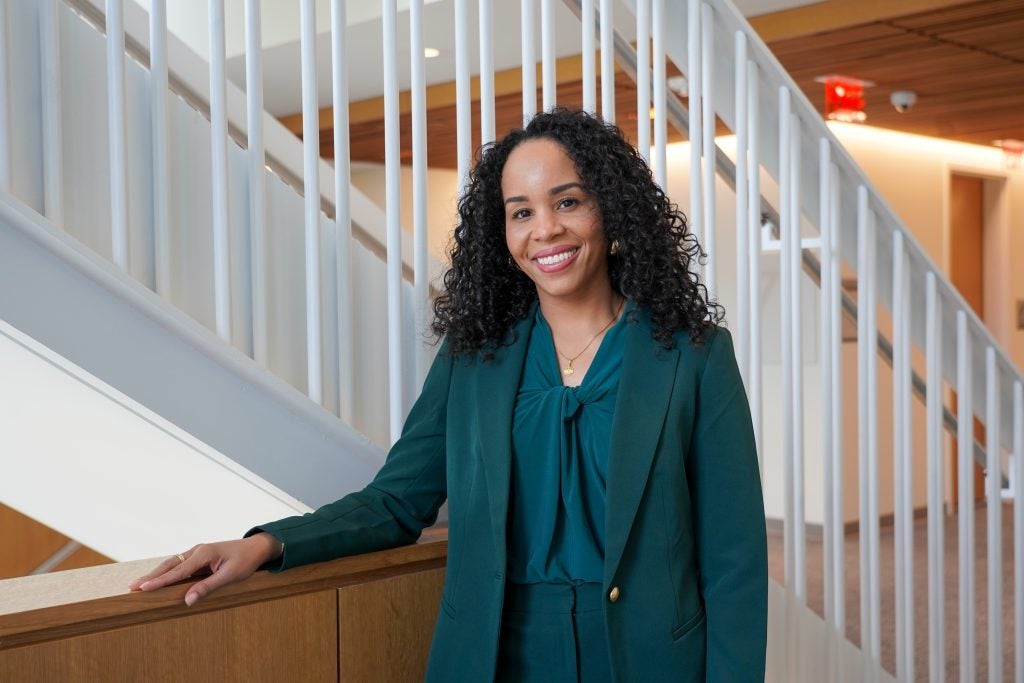
It’s a trend that concerns Andrea M. Headley, who leads the Evidence for Justice Lab at the McCourt School of Public Policy.
“The result is a dangerous mismatch: technologies that operate at scale, at speed and often with limited transparency are being adopted without systematic evidence of how they work in practice, how they are experienced by those most affected or where human judgment remains essential to fair outcomes.”
With the Magis Prize, Headley will continue research on the use of AI in criminal justice systems around the country and how people who interact with or work within this system view the use of AI in this space.
Her lab recently developed the Justice and AI Tracker to map where and how AI is being used across the 100 largest U.S. cities. Headley will use the Magis Prize to expand her tracker to cover 350 cities and 150 counties, supplying more data to pinpoint trends in how the technology is used in criminal justice systems nationwide.
In addition to the tracker, Headley will conduct a qualitative study to understand the lived experience of criminal justice employees and justice-impacted community members. She plans to conduct research in the field and partner with local governments and community organizations to identify participants, including populations with more experience with the criminal justice system but who are often underrepresented.
“Ultimately, the findings have the potential to impact the design of governance models that ensure AI technologies serve the public good, promote transparency, foster accountability and are more inclusive and ethical, particularly in historically inequitable policy areas,” said Headley in her research proposal.
Keeping Private Thoughts Private
With digital technology always in the palm of our hands, it can sometimes feel like algorithms have become so good that they can read our minds.
It’s not hard to imagine a world where digital technology can substantially influence what people buy or who they support in an election — to the point where people are no longer really making their own decisions, said Sean Aas.
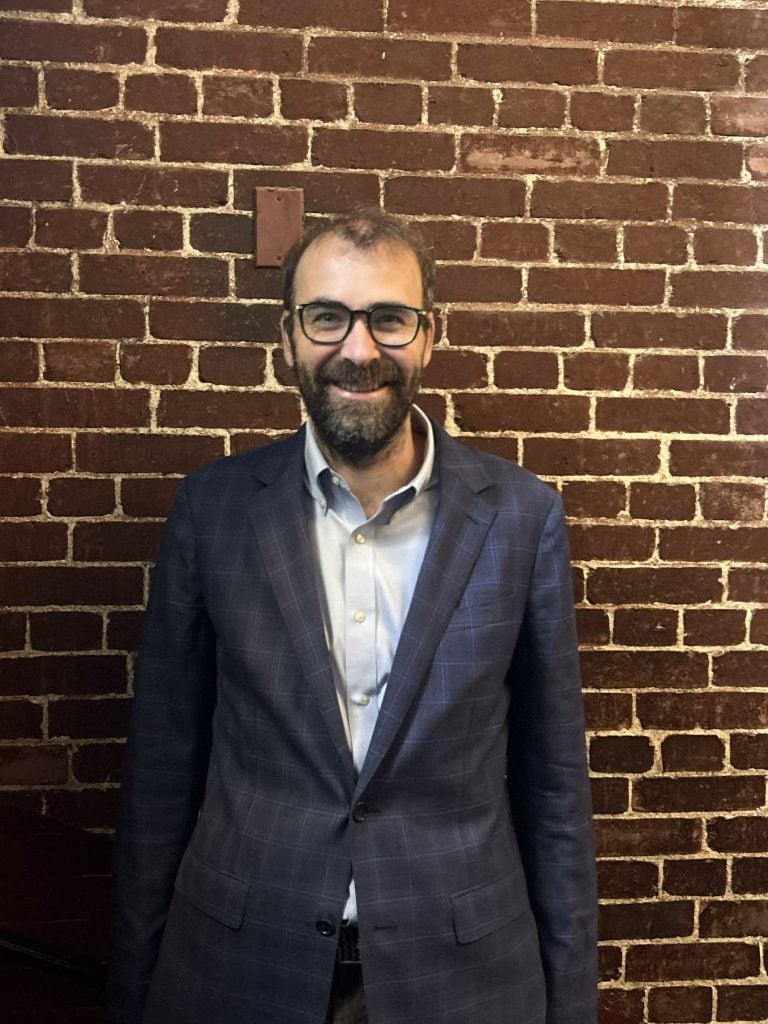
For Aas, the rapid pace at which technology is advancing is threatening our ability to make our thoughts our own, or, as he calls it, our mental integrity. Aas believes the unprecedented moment we live in calls for a new understanding of what’s right and wrong when it comes to influencing and interpreting others using digital technology.
“What is needed, in response, are ethical protections and socially enforced norms to tell us when and how we may and may not influence and interpret each other,” he said.
As a recipient of the Magis Prize, Aas will explore the ethics around these digital technologies and develop a new framework in which to ground these conversations. He plans to produce a series of research articles to define and explore his approach to mental integrity and how society can pursue reforms to protect people’s freedom of thought.
Aas also plans to use his Magis Prize to host an interdisciplinary summit that explores how humanity’s mental integrity is threatened and how to protect it. As part of the conference, Aas will recruit students to help organize the event and present their own research and participate in one-on-one mentoring sessions with experts.
“Eventually we will need a new social compact to make this brave new technological world a livable one,” he said. “To know how to build this compact, in a way that respects justice and promotes the common good, we will need a better understanding of what values, exactly, are threatened by technologies that radically increase the permeability of our minds.”