Category: Georgetown Faces, Spirit of Georgetown
Title: College Opened Up Her World. She Now Helps Hoyas Expand Theirs
Date Published: August 6, 2026
This story is part of Georgetown Faces, a storytelling series that celebrates the beloved figures, unsung heroes and dedicated Hoyas who make our campus special.
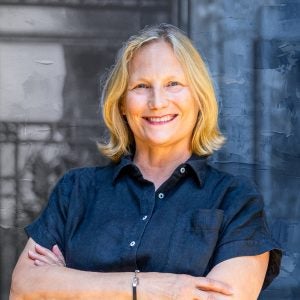
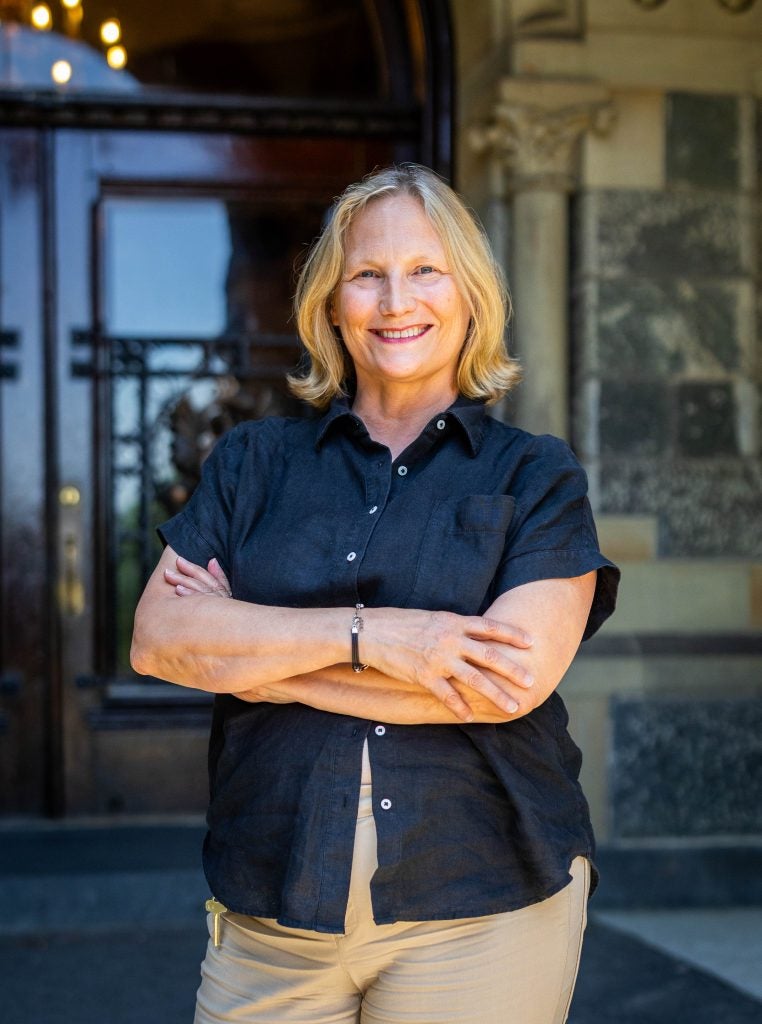
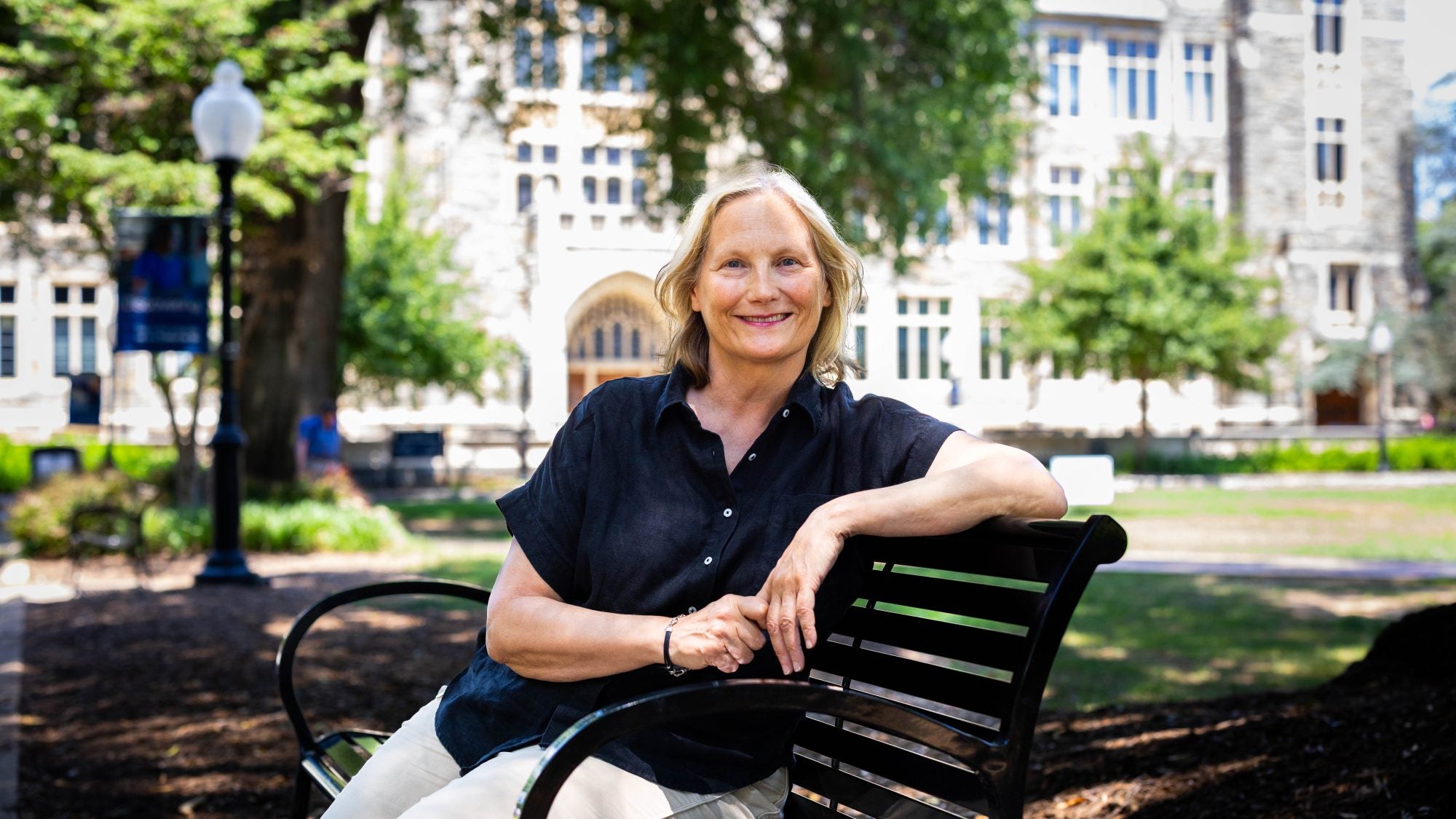
Kelly Rankin (G’24) took an untraditional path to college.
The Toronto native started working at the age of 14. She arranged flowers, potted plants, and later, bartended, served and managed a hotel restaurant. She was supporting herself, but hungered for something more.
So when she was 29 years old, Rankin enrolled in college. And it was the best thing she ever did.
“I wanted to extend it as long as I could,” said Rankin, a first-generation college student who went on to earn her master’s from Georgetown. “I felt a freedom to just explore things.”
Today, Rankin helps students explore their faith in a university setting. As communications and outreach manager for Campus Ministry, she helps students discover the university’s faith resources, supports Georgetown’s six chaplaincies, organizes events like Chaplains’ Tea, and promotes Campus Ministry through websites, newsletters, social platforms, a blog and feature stories.
Rankin said she’s been drawn to working at a university, particularly knowing the gifts it gave her.
“A university ought to be a place for open thinking and dialogue,” she said. “It’s a special four years in someone’s life because you can really see yourself in the world and what that means to you.”
Leading up to Georgetown, Rankin studied philosophy and visual studies at the University of Toronto, where she also worked for a computer scientist and the Office of Strategic Communications. She later worked for Fairfax County Public Schools’ internal communications team.
Rankin joined Georgetown in 2017, and in the years since, has accompanied students on immersive learning trips to Spain and Cuba, supported student groups such as the Native Student Engagement Fellows in creating a space of belonging and connection for Native American Indigenous students, and partnered with Student Affairs to introduce students to Campus Ministry.
“I’ve had some experiences that I think not a lot of people can say,” she said. “I think it’s really kind of remarkable.”
Learn more about Rankin’s path to Georgetown, the best part of her job and the remarkable experiences she’s had since.
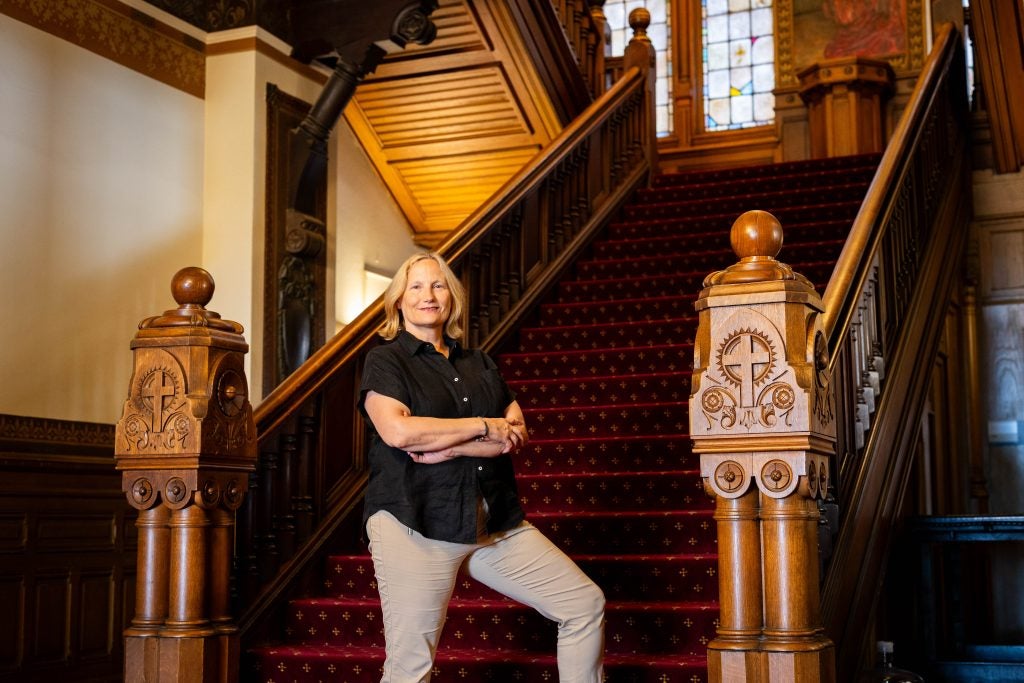
I used to work at a flower shop: When I finished high school, the shop sent me to a design school in Cleveland to learn floral design. I made large arrangements for birthdays, weddings, funerals, Christmas, Valentine’s Day, Easter and Mother’s Day. The holidays would come, and it would be the equivalent of our back-to-school time three or four times in a year. It was pretty grueling, and I was on my feet all day.
I went to college when I was 29: I was the first in my family to go to university. After I finished high school, my parents wanted me to go to college and get a good job. That path to me didn’t appeal to me; I was already working and making good money. I worked as a server, then bartender and eventually worked at the Hard Rock Cafe in Toronto. We often hired university students who were there for summers between their school years. It was here when I sensed I needed something more than just a good job.
A mentor told me: “You don’t go to university because you know what you want to do. You go because you don’t know what you want to do.” You find out who you are, what your interests are, what you want to do. That’s when I decided to go.
When I discovered philosophy: My mind went, “Oh my God, finally, we’re here.” I was literally like a dog with a bone, like, “Let’s get into this.” [Philosophy] opened up so much in terms of what it meant to think and learn. It broadened my perspective of how one engages in the world and with other people.
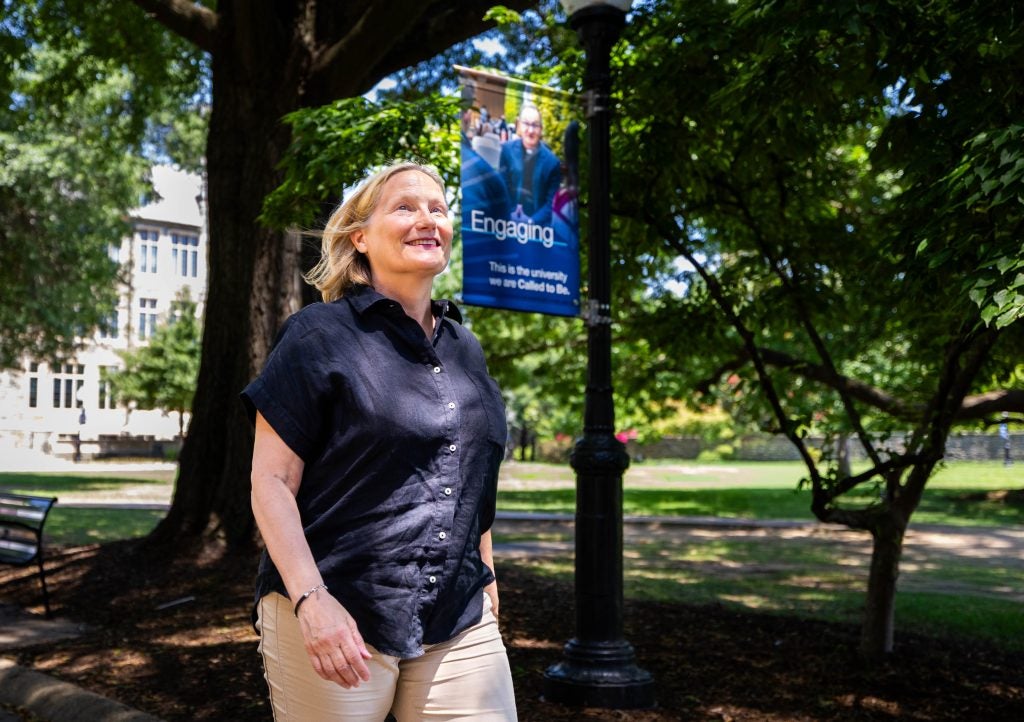
What makes me tick at work: We have offices on both campuses, including six chaplaincies that are home to nine religious and spiritual traditions. Talk about a prism of thinking. I think that’s part of the charm of working at a university — everybody you encounter is smart and has their own take on things. It’s this microcosm of different ways of engaging in the world, different ways of being in the world.
My favorite part of my job is this one moment: When young people come to university, sometimes they are part of a religious tradition, sometimes they’re not. Sometimes if they are, they think, “Mom and dad aren’t here. I don’t have to…” Then at the end of their first year, they’re noticing, “Something is missing.” And they go back to that tradition.
At the end of their four years here – and this never fails – there’s always at least one student who talks about how much of a difference that made to them and their faith. They came back and did it on their own terms and made it their own, which is in essence what being at university is about. Whenever that happens, that really excites me. It’s like, yes, that’s what we’re here for.
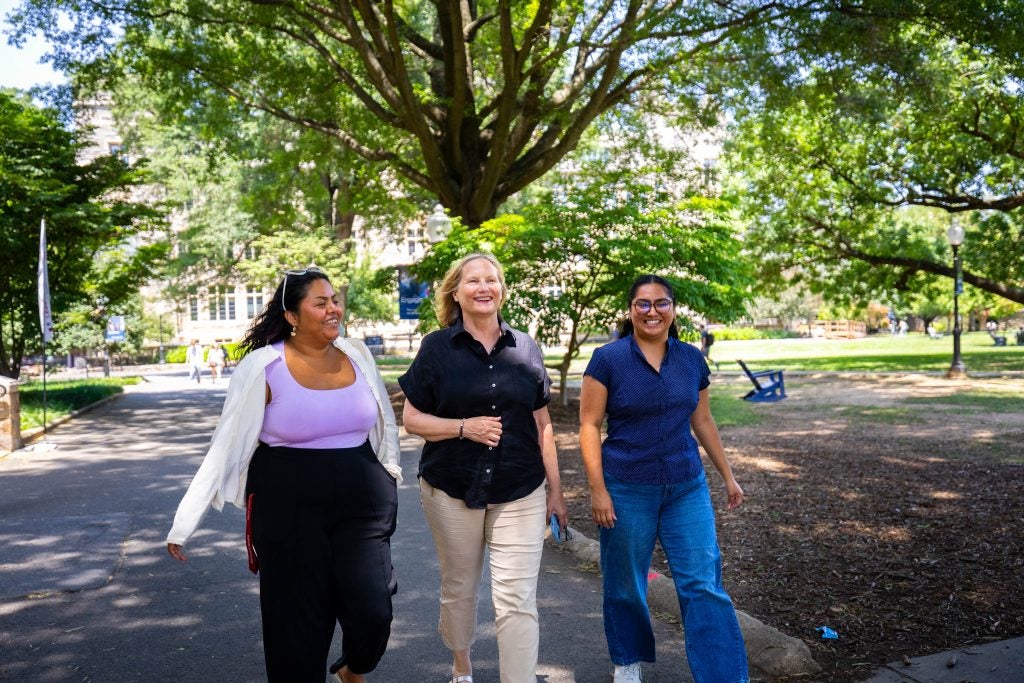
A memorable moment in Spain: I went on one of the first Magis Immersion Spain trips during the Ignatian Year, the 500th anniversary that marked St. Ignatius’ transformation from soldier to pilgrim. Professionally, it was a learning experience; personally, it was deeply moving. Following the path of St Ignatius with colleagues and students to learn more about his life through the places he traveled was unlike anything I had experienced. Sitting in the abbey square at night in Montserrat, surrounded by mountains, listening to students share their reflections on the day, and the depth and the thoughtfulness of what they said, I remember thinking, Yeah, we’ll be okay. These people are going to be in charge one day, and we’ll be okay.
Where you’ll find me outside of work: This year I’ve taken up hiking, which I really loved. I went on a Zen hiking retreat with a couple of friends in California in March. [In June], I drove to Canada on my holiday, so I put in a couple of nights of camping and hiking for myself on the way up. I did that on my own, another first for me. It was a little intimidating, but I eventually relaxed and enjoyed it.
Sometimes I paint: Art keeps me grounded, so sometimes you’ll find me at a museum or art show, and other times I’m making my own art. My recent obsession has been mixed media, creating works with paper, paint, ink, and pastels.
What makes college so special: Students are leaving their parents’ home and stepping out into the world. The university, in my mind, is that bridge. I know that can sound clichéd, but I honestly believe that. To be exposed to so many things, people and ideas is where transformation begins. College is a good place to learn about the process of transformation, learning to discern while the ground beneath your feet is shifting. That’s a skill you rely on when encountering meaningful change later in life.