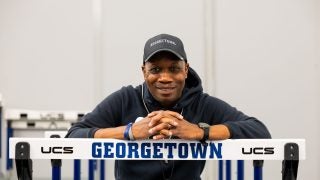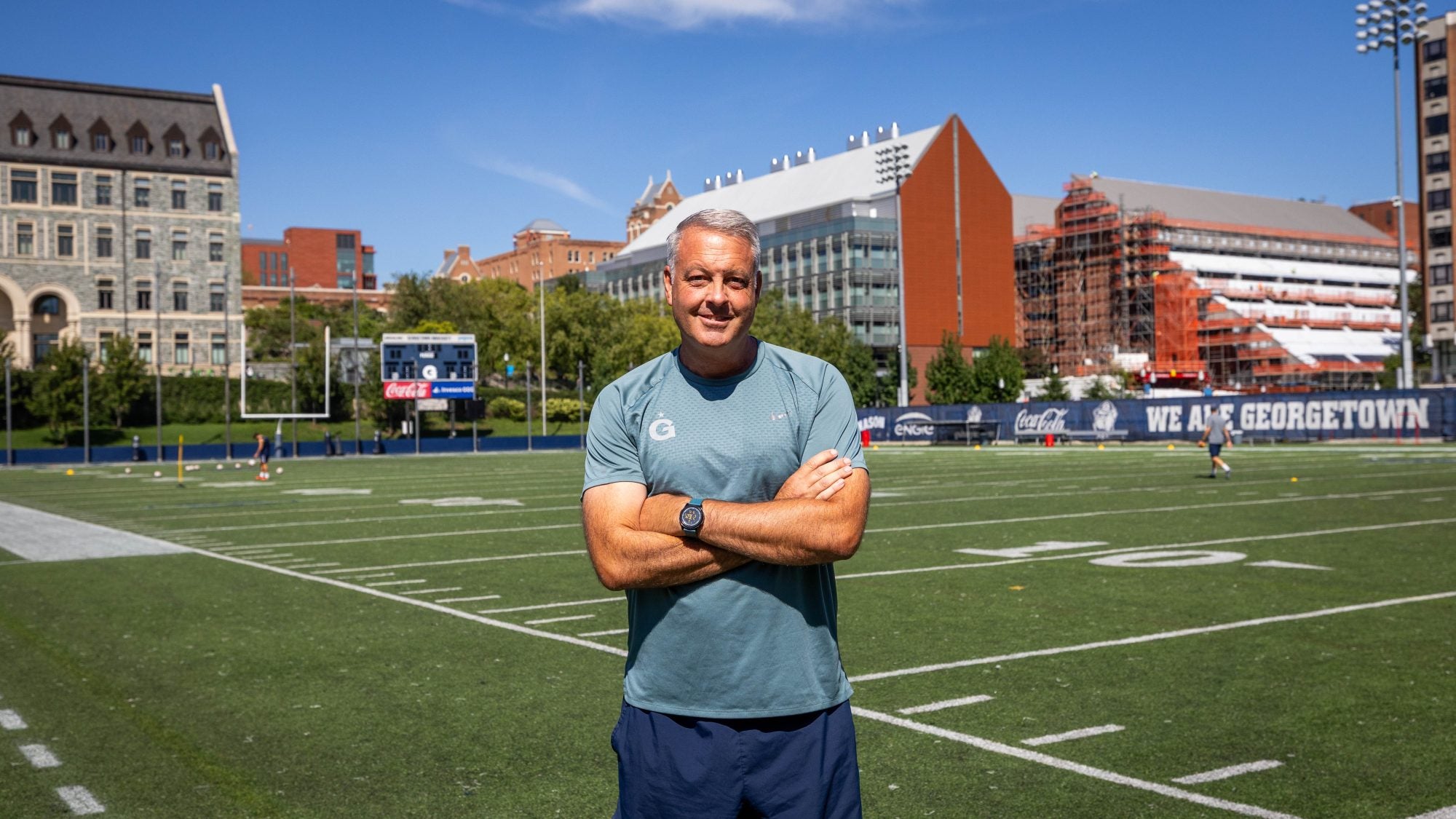
Brian Wiese, head coach of Georgetown’s men’s soccer team, wanted to get on the pitch badly as a kid.
So badly that he was willing to play against kids twice his size. That meant juking around his age to play goalie for his brother’s U10 soccer team when he was only 5 years old.
“They needed somebody to shoot on, so they stuck me into a net and smashed balls at me,” Wiese said. “When the referee would ask my brother if this kid was old enough to be playing, he’d be like, ‘No, no, he is. He’s just really small for his age, and he’s very sensitive about it, so don’t bring it up.’”
His nickname on the team: Anchovy.
But Wiese eventually caught up in size and loved soccer so much he stuck with the sport, playing for Dartmouth at the collegiate level.
While a product design graduate student at Stanford, Wiese joined his former college coach, who was then leading the Stanford Cardinal, to coach the goalkeepers. The experience kicked off his coaching career, which led to a successful assistant coaching stint at Notre Dame before landing on the Hilltop in 2006.
Today, Wiese is in his 21st season at the helm of Georgetown men’s soccer.
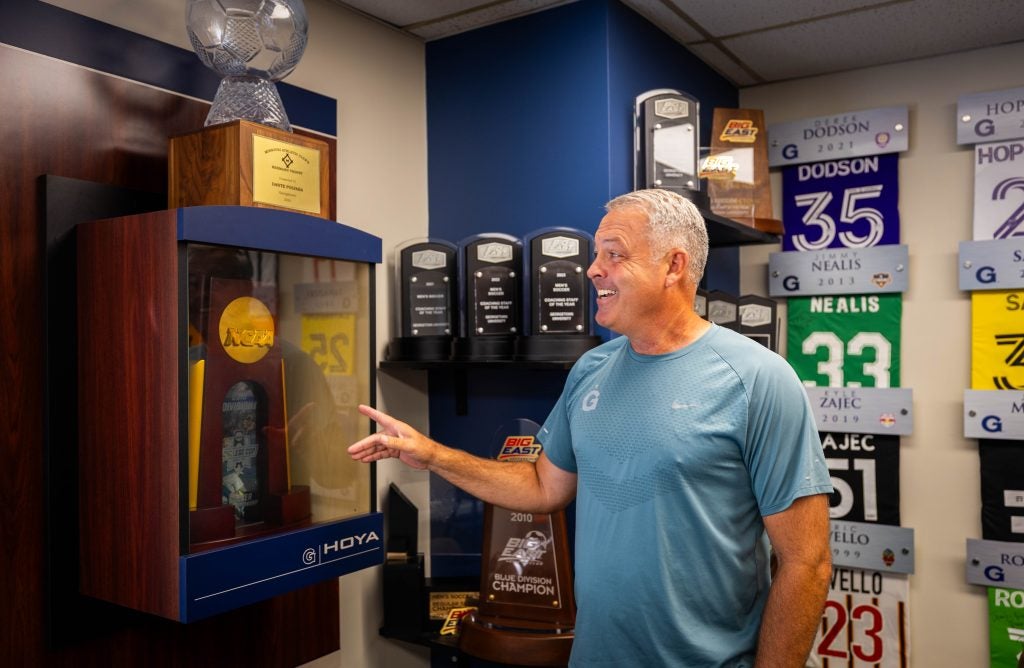
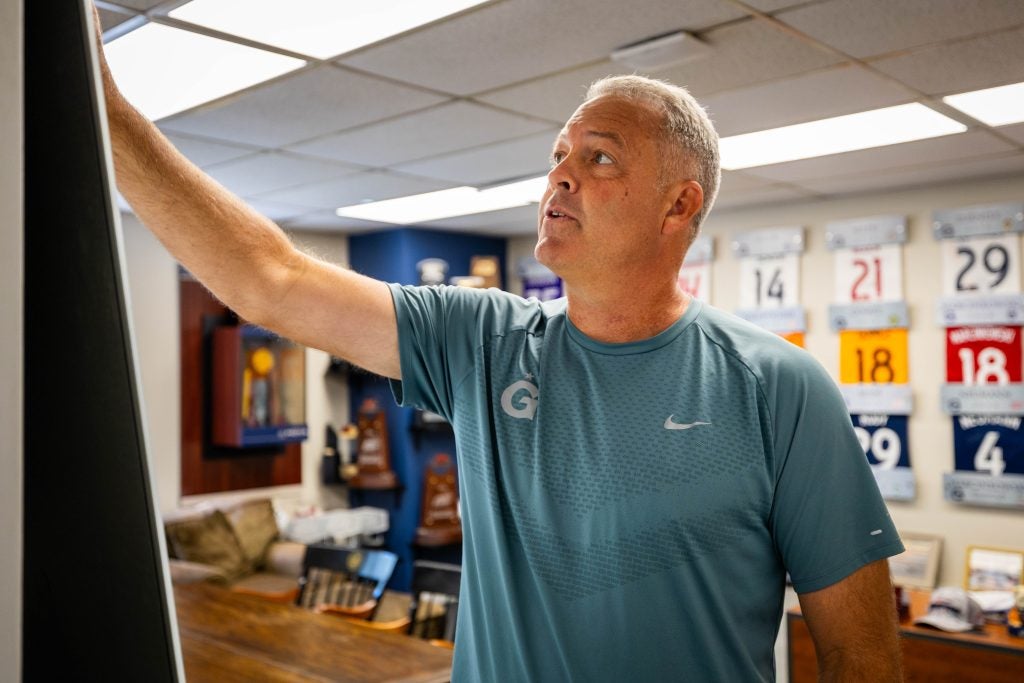 After two decades, Wiese has become the winningest coach in program history and has racked up accolade after accolade, securing 16 Big East championships and 15 NCAA tournament appearances. Under his tutelage, 44 Hoyas have signed contracts with Major League Soccer teams. In 2019, Wiese led the Hoyas to the program’s first national championship.
Coming off a Big East championship in 2025, Wiese and his staff are hunting for another berth in the NCAA tournament and a national title in 2026.
Get to know Georgetown’s longtime soccer coach, why he still loves coaching the Hoyas 20 years later and his experience at the World Cup this summer.
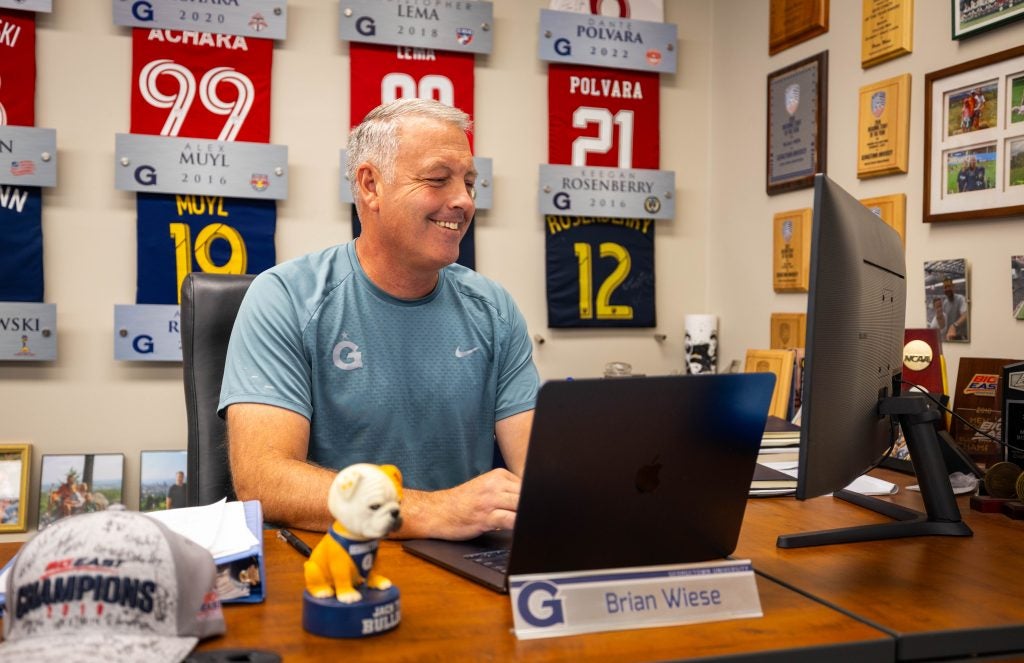
My first coaching gig: I picked up some knee conditions that sidelined me for the majority of high school. But even during that time, I wanted to stay around the game. My physics teacher’s son had a U9 team, and he knew nothing about soccer, so he asked if I could coach his team, and I had a great time doing that.
How I made coaching a career: By sheer alignment of the universe, the coach I played for at Dartmouth, Bobby Clark, took over the men’s program at Stanford the exact same time I was going in to do my master’s program. He said, ‘Why don’t you help me out and coach the goalkeepers while you’re doing your master’s program?’ Long story short, at the end of the program, I said, ‘Well, I really like this coaching thing a lot more than the engineering thing, so how can I get into that?’ That started me off on this career path that’s been a real blessing for me.
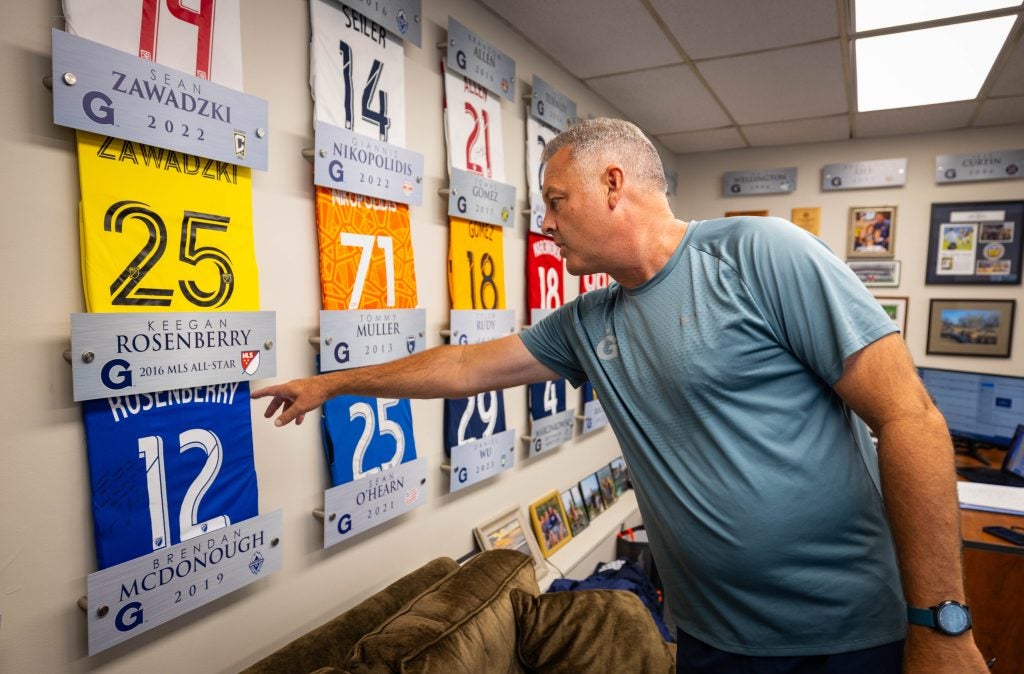
How I made it to Georgetown: I had been an assistant for five years, and Bobby Clark moved to Notre Dame and took me with him. Bernard Muir, who was the athletic director at Georgetown at the time, spent some time at Notre Dame when I was there and got to know me when he was an associate athletic director. When they were looking for a head coach at Georgetown, he called and asked if I would be interested. For some reason, they picked me over some other really good candidates. I was a young coach, 32 at the time, and had no head coaching experience, but I was ready to give it a try. It was a dream come true to have the opportunity to move to DC.
Why I love to coach: You get to know these kids as recruits, as maybe 16-year-olds. You pick these guys as recruits because you think they have potential, they have character, they have talent, they have the aptitude to be at a place like Georgetown. When they come in, it’s super fun to put a team together, to figure out how to create a culture that’s positive and competitive. How do you get that group of 25 kids all pushing together and loving each other and competing hard? Seeing the individual growth of each of those kids over their journeys is amazing.
How my players would describe my coaching style: One of the great things I did at Stanford was that I took an improv class. That skill set you learn in that improv setting allows you to have your own ideas and go, but you’re very open to what’s going on around you. We try to create an environment where that’s the case, being pliable to absorb good ideas into what you’re doing.
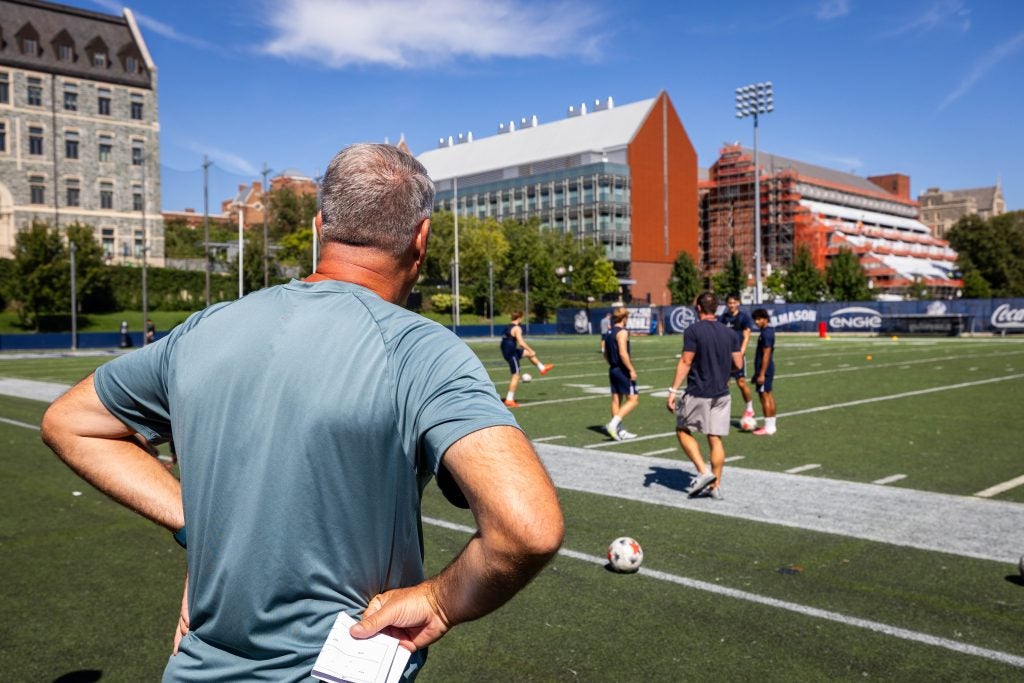
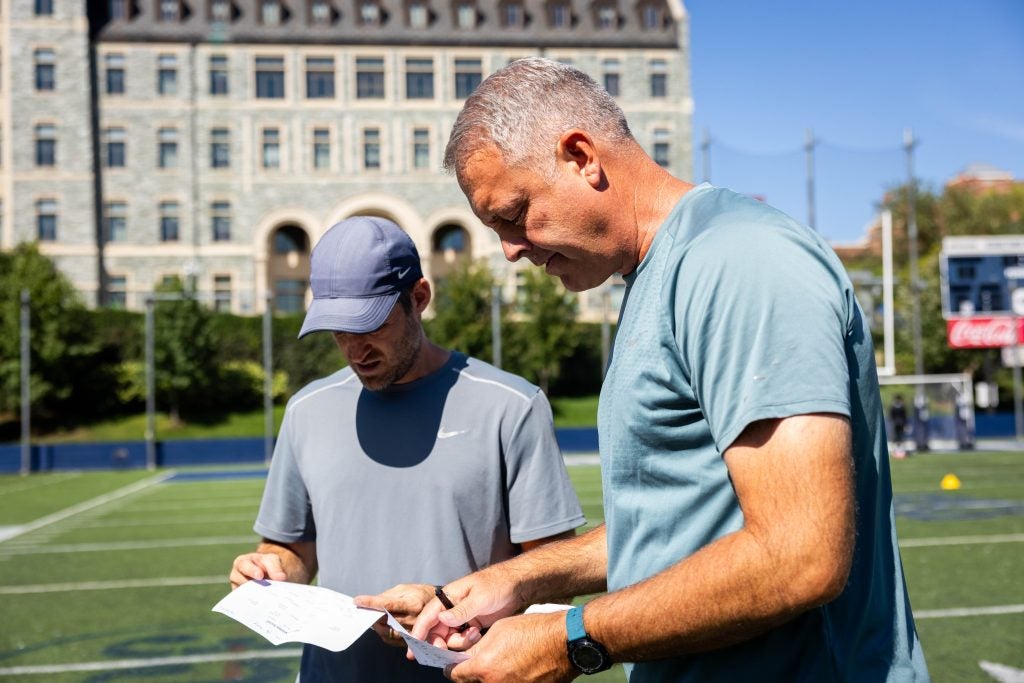
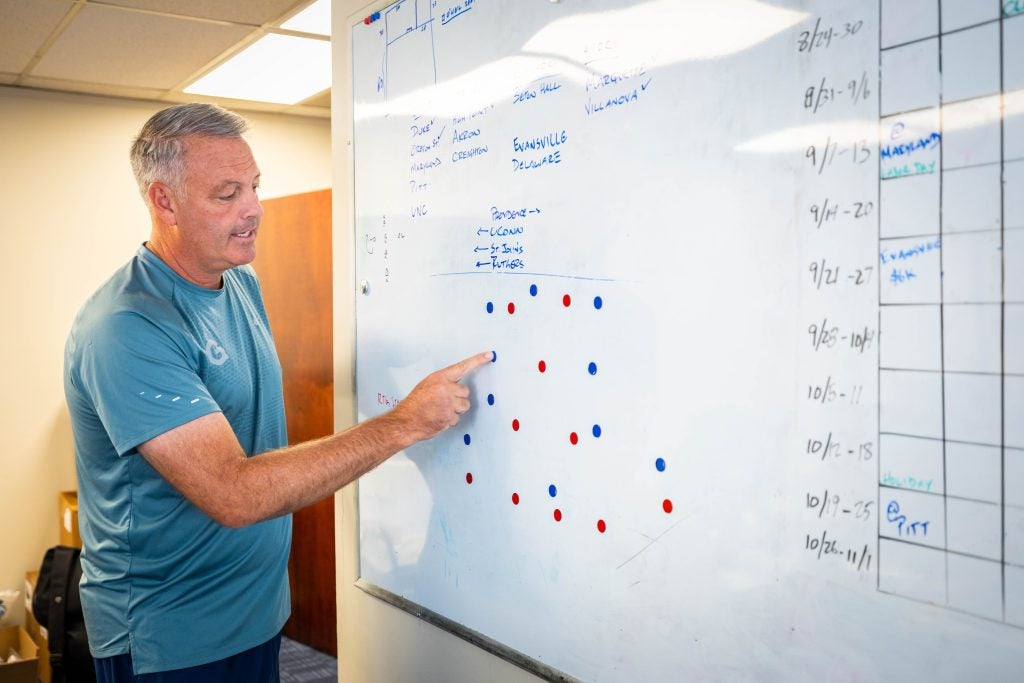 My proudest moment as the head coach:
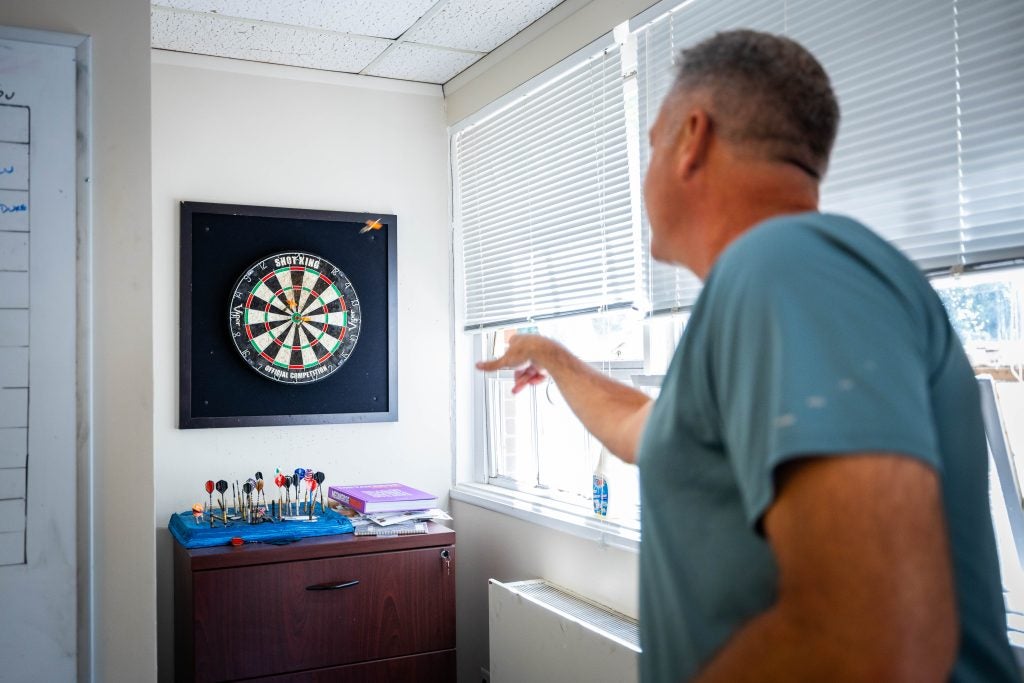 My time off the pitch: