Monuments over a river with a bridge
Category: Discovery & Impact

Title: Books, Songs, Movies and Podcasts to Celebrate America’s 250th Anniversary

On July 4, Americans celebrate the 250th anniversary of our nation’s founding. 

Amid fireworks and parades, the U.S. commemorates the day 250 years ago when the Continental Congress unanimously adopted the Declaration of Independence, proclaiming freedom from Great Britain. 

On the semiquincentennial, we reached out to professors across Georgetown to learn more about America’s early roots and its complex history since. Read on for professors’ book, podcast, film, music and media recommendations to deepen your understanding of U.S. history and culture. 

As Phil Sandick, associate teaching professor, said, “At 250, we need to remember that the American story is never finished. It’s still recording.”

A musical fanfare

Fanfare for the Common Man

by Aaron Copland

Copland was about as close as the United States has come to a composer who sought to capture how the country might imagine itself, like Handel for Great Britain or Tchaikovsky for Russia. “Fanfare for the Common Man” is overplayed at major American ceremonies perhaps, but it is still a noble and uplifting celebration of what free people can achieve in a free republic. It is the antithesis of empire and overblown greatness, a bold, transcendent celebration of the regular and everyday. 

–Charles King is a professor of international affairs and government in the School of Foreign Service and College of Arts & Sciences. 

A pamphlet

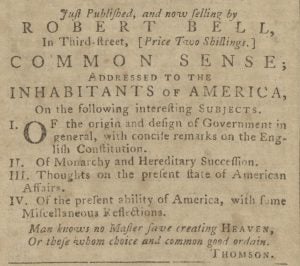
A parchment from Thomas Paine's Common Sense

Common Sense

by Thomas Paine

As a professor, I always encourage my students to go back to the original source material. The two most influential texts in the public pamphlet debate at the time of the Revolution were John Dickinson’s Letters From a Farmer in Pennsylvania (1767-1768), written in response to the array of new duties imposed on goods by the British government, and Thomas Paine’s Common Sense (1776), which moved the needle of American colonial opinion towards independence. Both are incredible works by great writers, and speak to the richness and depth of American thought. 

–Richard Elliott is an assistant teaching professor of government in the College of Arts & Sciences. Photo courtesy of the Library of Congress.

Films

A close-up of a sign that says "Nashville Music" in red letters

Nashville (1975)

By Robert Altman

Nashville follows the intersecting lives of 24 different people at the heart or on the periphery of the city’s country-western scene. The music is incredible, but Nashville isn’t about the music; it’s about the conflicting desires and fears that drive American pop culture. Its plot deals with real conflicts and disappointments, even tragedy, but as the critic Pauline Kael wrote in her review of Nashville, “I’ve never before seen a movie I loved in quite this way: I sat there smiling at the screen, in complete happiness. It’s a pure emotional high, and you don’t come down when the picture is over; you take it with you.” 

– Caetlin Benson-Allott is a professor in the Department of English and in the Film and Media Studies program in the College of Arts & Sciences

***

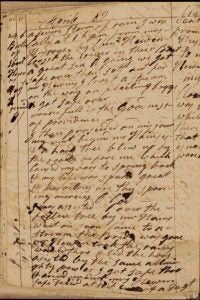
Handwriting from a diary in the 1700s

A Midwife’s Tale

The 1998 film A Midwife’s Tale follows the life of Martha Ballard, a Connecticut midwife and healer, who kept a diary of her work from 1785, when she was already 50 years old, until she died in 1812. The film is based on an extraordinary 1990 book of the same title by pioneering women’s historian Harvard professor Laurel Thatcher Ulrich. To an untrained eye, the journal is terse and unrevealing. 

But through careful archival work and interpretation, Ulrich was able to tell a fully-realized story of early American life, medicine, childbirth and motherhood. It also showed readers that the idea that women in the past were lost to history, or unimportant, was untrue. It’s a classic.

– Katherine Benton-Cohen is a professor of history in the College of Arts & Sciences

Podcasts

A close-up of Benjamin Franklin's eyes from the dollar bill

Ben Franklin’s World

A terrific podcast for early American history is Ben Franklin’s World. Liz Covart, the host of the podcast, talks to professional historians about their work in a way explicitly designed to make connections with non-specialists. She invites her guests to share their findings as well as important elements of the research process — how they know what they know, interesting and unexpected sources, lingering challenges — in ways that are engaging to other scholars, students, and a general public interested in early American history.

– Alison Games is the Dorothy M. Brown Distinguished Professor of History in the College of Arts & Sciences

***

Two men interview each other in a recording studio

This American Life and StoryCorps

In my Writing and Culture seminars, I always return to public media, especially public radio and the podcasting it unleashed. This American Life and StoryCorps embody that spirit of community engagement through thousands of hours of listening pleasure.

StoryCorps is a national archive of ordinary people interviewing each other about the extraordinary experiences they’ve had, while This American Life locates research questions inside car dealerships, school cafeterias, neighborhoods, relatable situations. What I admire most about these programs is that every segment, every episode, is a small act of collective invention. 

At 250, we need to remember that the American story is never finished. It’s still recording.

–Phil Sandick is an associate teaching professor in the Department of English and program director of the M.A. in Engaged & Public Humanities. Photo courtesy of StoryCorps. 

Books

The cover of a Mark Twain book

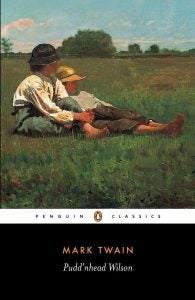
Pudd’nhead Wilson (1894)

by Mark Twain

Any list of deep reflections on U.S. culture should include something by Twain, one of our first great cultural critics. And Pudd’nhead deserves inclusion for its exploration of race and slavery, defining features of U.S. history. While Twain’s approach is marked by the context of the late 19th century, its ambiguities speak to enduring concerns. But mostly I include it for Pudd’nhead’s unforgettable first words in the book: “I wish I owned half of that dog.” For better or worse, sometimes half a dog is better than none.

Bryan McCann is a professor in the Department of History and vice dean for faculty affairs in the College of Arts & Sciences
A book cover that says "The Rediscovery of America"

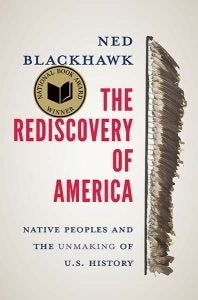
The Rediscovery of America

by Ned Blackhawk

Ned Blackhawk’s The Rediscovery of America challenges us to reframe our national story with Native people at its center, as a long history of encounter, dispossession, sovereignty and survival. More a synthesis than a work of original research, the book builds on a generation of scholarship to demonstrate that Native nations were not peripheral to the nation’s founding, but instead were central to the development of our constitutional structure and American democracy itself.

–Kevin Arlyck is the associate dean for research and academic programs at Georgetown Law. Photo courtesy of Yale University Press.
A book cover with the title "Huey Lewis"

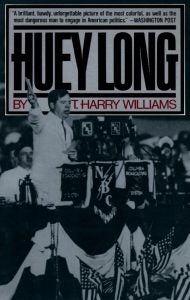
Huey Long

by T. Harry Williams

Huey Long, a former governor and U.S. senator, was a true populist, attacking elites, focusing on outrage and demonizing his enemies. It’s a great story, and one that complicates our view of how democracy does — and does not — work.

– Michael Bailey is the Colonel William J. Walsh Professor of American Government in the Department of Government and the McCourt School of Public Policy


A letter

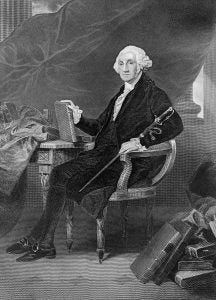
A black-and-white engraving of George Washington

George Washington to the Hebrew Congregation in Newport, Rhode Island

August 1790

The letter is one of several documents from Washington’s presidency which demonstrated the nation’s commitment to religious liberty. It also shows the nation’s religious and ethnic diversity from its earliest days, as well as its welcoming of “strangers,” that is, immigrants. The letter’s expression of religious freedom and of welcoming the stranger is still bracing today, as is the contrast with the nation’s treatment of African Americans.

– Katherine Benton-Cohen is a professor of history in the College of Arts & Sciences

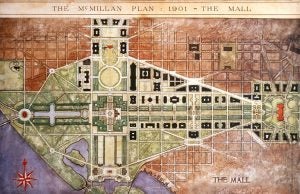
A park plan

A park plan of Washington, DC, from 1901

The McMillan Plan

The McMillan Plan, released in 1901 — now 125 years old — marks a perfect mid-point in our nation’s 250-year history. The visionary landscape architect and urban planner Frederick Law Olmsted Jr., serving on the Senate Parks Commission, authored the plan’s comprehensive and revolutionary approach toward integrating natural systems into cities, leveraging the nation’s capital as a vehicle for civic innovation.  

As an urban planning model, the McMillan Plan laid the foundation for cities across the United States to build extended park systems that harnessed local ecology as green infrastructure. Perhaps more importantly, the McMillan Plan created an American paradigm of democratic space that transcended false dichotomies of nature and civilization. At 250, as we explore new frontiers of climate change and civic expression, we can take stock in our urban park systems as a great American tradition and a common ground where we can further a more perfect union.  

– Uwe Brandes, a professor and faculty director of the Urban & Regional Planning Program in the School of Continuing Studies and faculty director of the Georgetown Global Cities Initiative. The original McMillan Plan is available to view in the Lauinger Library’s special collections. Photo by the National Capital Planning Commission.