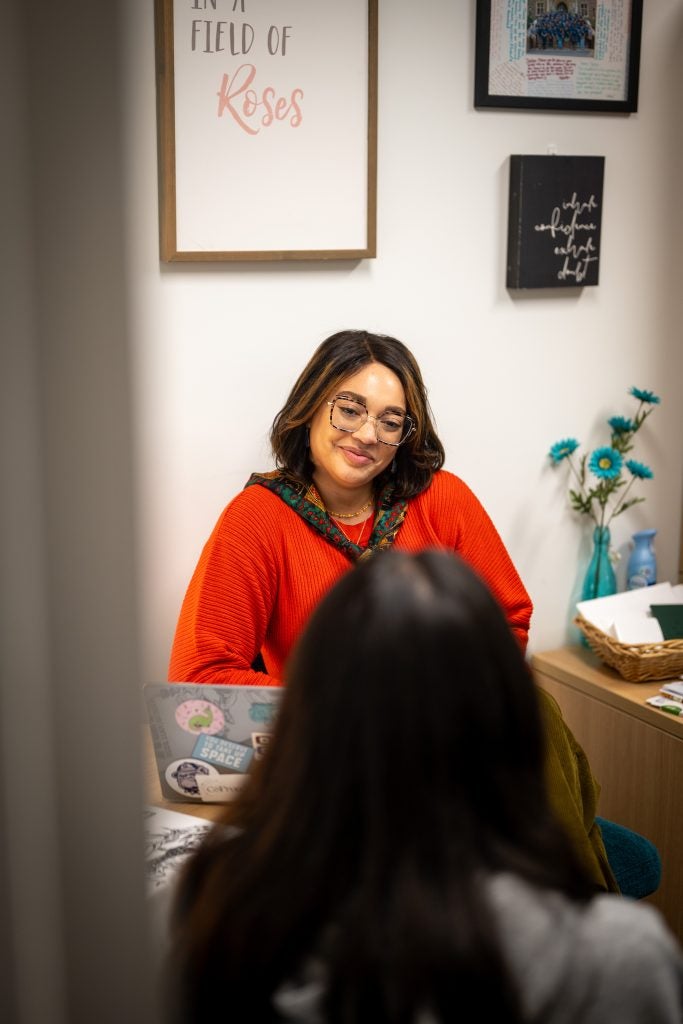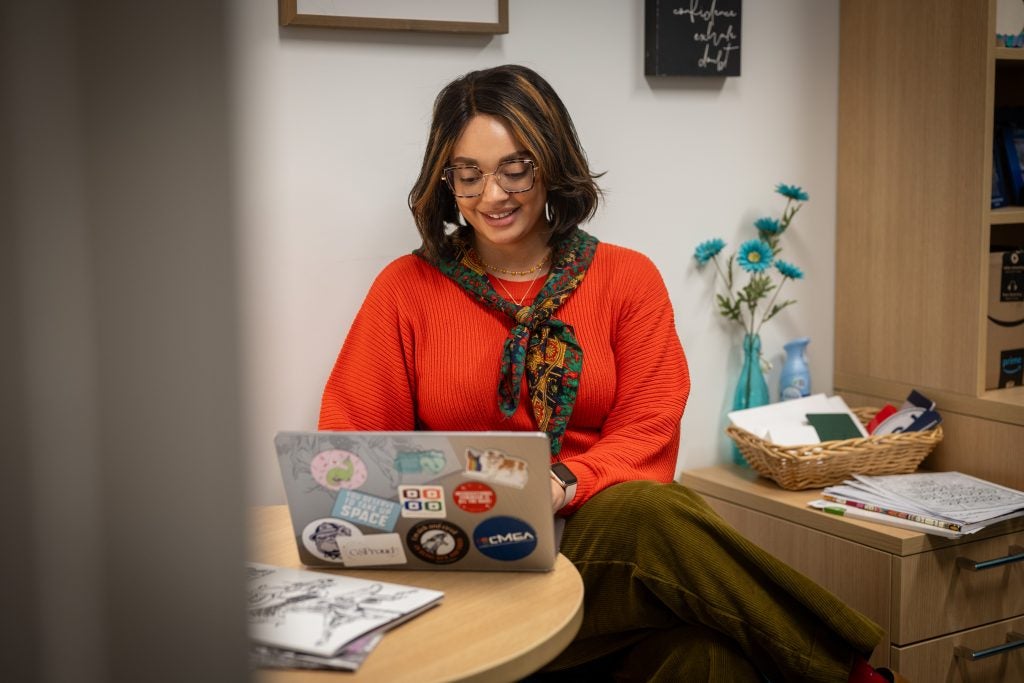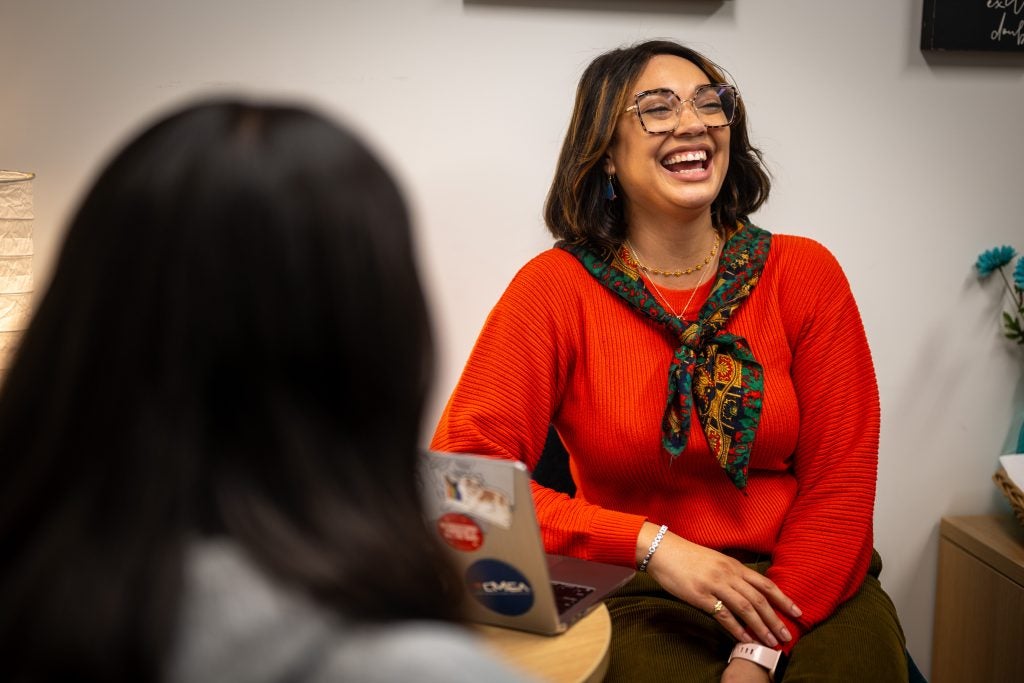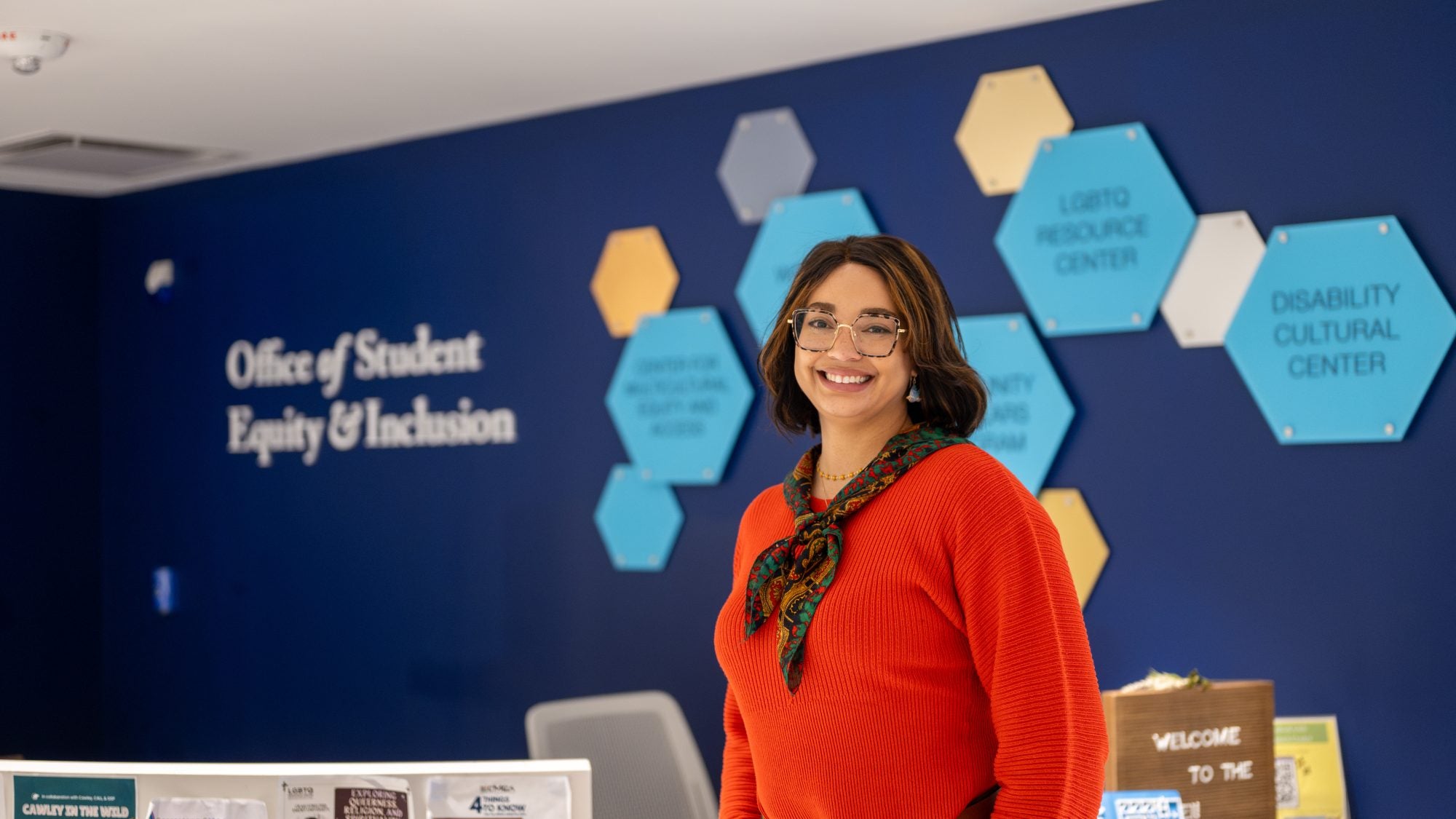
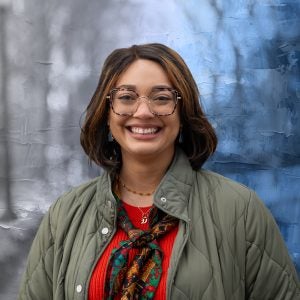
In her office, Daelyn Moon keeps cushy chairs and a few magazines for students who may wander in. She wants them to have a place to rest, even if she’s locked into work herself.
“The best part of the job is that they know my office, our department, is a landing space for them,” she said. “They can just be and catch their breath.”
Moon, the assistant director for academic success in the Center for Multicultural Equity and Access (CMEA), knows firsthand the importance of creating these spaces.
The California native attended Loyola Marymount University, a Jesuit institution in Los Angeles. As a first-generation college student, she found the transition to college tough. But she found support in a program for first-generation college students, similar to the one she helps run at Georgetown.
She also found a home in the university’s student affairs offices, where she worked. The team there helped her navigate college, access resources and gave her a space to camp out before she commuted home.
“This group of professionals ushered me through my collegiate experience,” she said. “If there was after-office hour programming, they would let me come, hang out, wait out traffic, grab dinner, the whole nine yards.”
Gradually, Moon realized she wanted to help fellow students access the same resources and support she did. She earned her master’s in higher education and student affairs from Loyola University Chicago and, after working for Louisiana State University, joined Georgetown in 2020.
Since arriving on the Hilltop, Moon has designed the curriculum for the Community Scholars Program’s five-week summer program, which helps first-generation and limited-income college students transition to college. Last summer, she designed a new curriculum for CMEA’s Total Hoya Readiness: Introduction to Vocation & Excellence, a pre-orientation program that helps first-year and transfer students find community and support on campus.
In addition to her daily work ensuring that students have the resources they need – tutoring services, loaner laptops, skill-building workshops and seminars – and supporting the Community Scholars Program – she’s been presenting on her work at national conferences.
For Moon, this work is a vocation. She shares many of the same experiences with the students she cares for. And she knows how to find the tools to meet them where they are.
“This work is deeply personal, but also because of a shared lived experience, it allows me to be a much better advocate in my role,” she said. “The day-to-day is around programming and advising, but the magic and the vocation of what I’m doing is in the minutia and the intersections of my students and their identities and what they’re experiencing at the university.
“I truly mean it and believe it when I say I’m walking with students in their collegiate journey. I’m right there side-by-side with them.”